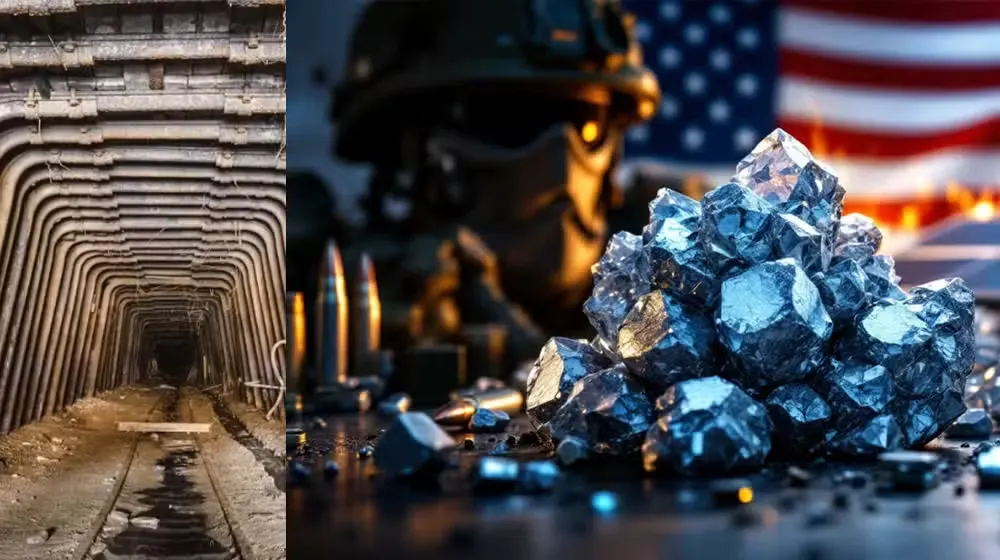
Islamabad: The Pakistan antimony supply to the US is gaining strategic significance as Washington accelerates efforts to diversify critical mineral supply chains and reduce dependence on China, which currently dominates global antimony processing.
Antimony is a critical mineral widely used in missile systems, defense equipment, batteries, semiconductors, and flame retardants, making it essential for national security and advanced manufacturing.
Rising Antimony Prices Reshape Global Critical Minerals Market
Global antimony markets have experienced sharp volatility over the past year. Prices of antimony trioxide have surged to nearly $40,000 per tonne, compared with about $26,000 in September 2024, driven by supply constraints and growing defense demand.
The price rally has intensified US efforts to secure reliable, non-Chinese sources of antimony, pushing Pakistan and the broader South Asian region into sharper focus.
Pakistan Antimony Reserves Draw Growing US Interest
According to the US Geological Survey (USGS), Pakistan holds approximately 1% of global antimony reserves and currently produces a relatively small volume. However, industry analysts say Pakistan’s geological potential, coupled with rising global demand, makes it an increasingly attractive supplier.
Pakistan-based mining company Himalayan Earth Exploration has reported growing inquiries from American buyers seeking long-term contracts under the expanding Pakistan antimony supply to US framework.
US–Pakistan Cooperation on Critical Minerals Expands
At the policy and corporate level, interest in Pakistan’s antimony sector has gained momentum. Intermediaries have proposed establishing a dedicated export terminal to ship antimony directly from Pakistan to the United States.
In parallel, US firm Strategic Metals has agreed to collaborate with Pakistan on the exploration and development of critical minerals for defense, aerospace, and technology industries, further strengthening bilateral mineral cooperation.
Value Chain Challenges Limit Pakistan’s Earnings
Despite rising international interest, Pakistan remains positioned at the lower end of the antimony value chain. Most production comes from small-scale mining operations, with limited domestic refining or smelting capacity.
As a result, raw antimony often leaves Pakistan at prices far below global market levels, limiting the economic benefits of the growing Pakistan antimony supply to US buyers.
China’s Dominance and Traceability Concerns
Globally, China controls the majority of antimony refining and processing capacity, with only a handful of smelters operating outside the country at commercial scale.
There are also concerns about traceability, as some antimony marketed as Pakistani is reportedly mined in Afghanistan and transported across the border through informal channels. Analysts say improved regulation and certification will be essential to meet US procurement standards.
Strategic Opportunity for Pakistan’s Mining Sector
Although antimony prices have eased slightly as new supply emerges from Southeast Asia and buyers explore substitutes, US strategic interest in Pakistan remains strong.
Experts believe that if Pakistan invests in local refining, traceability systems, and export infrastructure, the Pakistan antimony supply to the US could evolve into a high-value strategic partnership, strengthening Pakistan’s role in global critical mineral supply chains.
