The United States has extended its travel restrictions, barring citizens from seven additional countries, including Syria, from entering the country.
The move, announced by the White House, also imposes full entry bans on Laos and Sierra Leone, which had earlier faced only partial restrictions.
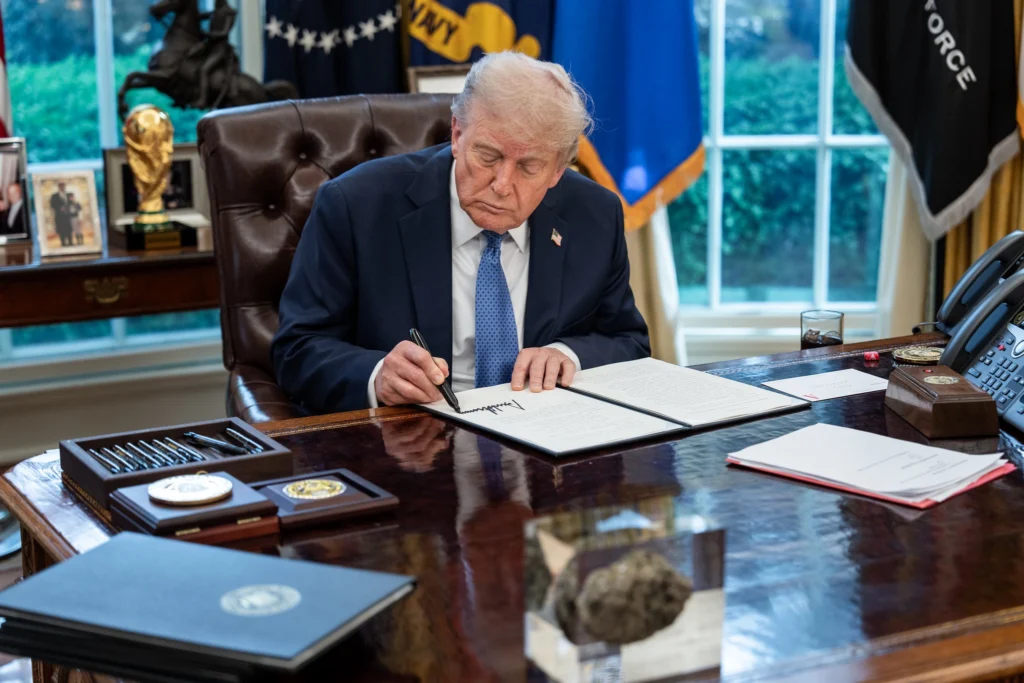
President Donald Trump signed a proclamation stating the expansion was intended to address “demonstrated, persistent, and severe deficiencies in screening, vetting, and information-sharing” to protect national security and public safety.
The new restrictions will take effect on January 1.
Under the updated rules, nationals from Burkina Faso, Mali, Niger, South Sudan, and Syria, and holders of Palestinian Authority-issued travel documents will face full entry prohibitions.
The expanded measures come on top of a prior ban affecting 12 countries, with partial restrictions already in place for 15 more, including Nigeria.
The administration cited concerns over Syria’s passport and civil documentation systems, pointing to “inadequate central authority” and insufficient screening and vetting procedures, despite ongoing cooperation between the United States and Syrian authorities.
The move comes amid heightened tensions following an attack in Syria that killed two US Army soldiers and a civilian interpreter.
Speaking about the incident, Donald Trump described it as “terrible” and warned of “very serious retaliation” against the perpetrators.
Earlier this year, the Trump administration implemented broad travel bans targeting immigrants and non-immigrants, including tourists, students, and business visitors, citing terrorism and security risks.
Trump has repeatedly emphasized immigration enforcement since returning to office in January, deploying federal agents to cities and tightening asylum rules at the US-Mexico border.
The expansion of entry restrictions also comes in the wake of a shooting in Washington, DC, that claimed the lives of two National Guard members.
The suspect, an Afghan national who had entered the US in 2021 under a resettlement program, prompted the president to pledge a “permanent pause” on migration from what he described as “Third World Countries,” though he did not specify which nations were included.
