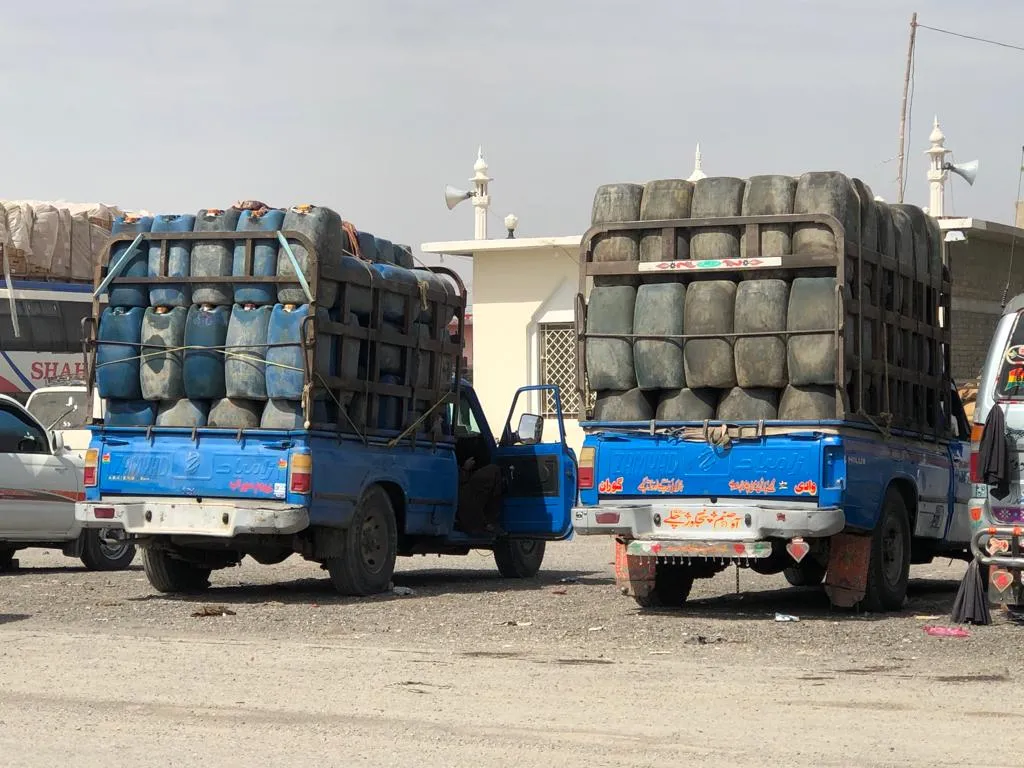
Officials in Gwadar have imposed an immediate ban on oil-laden vehicles, particularly Zamyad trucks and similar carriers, from transporting fuel between Jiwani, Paanwaan, and Gwadar city.
The district administration issued a formal notice warning drivers and transporters to avoid traveling toward Jiwani. Officials cautioned that any vehicle violating the ban would face strict legal action, including instant confiscation by law enforcement agencies.
Police, the Pakistan Coast Guard, and the Frontier Corps have been instructed to enforce the restrictions without exception.
Crackdown against fuel-smuggling network
The decision comes amid renewed efforts to dismantle a fuel-smuggling network that has long drained the national treasury. A 2020 inquiry estimated that smuggling of Iranian oil into Pakistan was worth over Rs. 250 billion annually.
A more recent intelligence assessment, issued in April 2024, reported that nearly 10 million litres of Iranian petrol and diesel were being smuggled into Pakistan every day, resulting in a massive revenue loss of more than Rs. 227 billion.
The major gap in fuel prices between Pakistan and Iran continues to make smuggling highly profitable. One of the main routes identified runs through the sea corridor from Sistan, Iran, where speedboats carry fuel-filled cans across the water and up the Dasht river to Jiwani.
Officials say thousands of boats operate in this network, supported by coastal storage points and roadside hotels.
Once offloaded, the fuel is shifted onto modified trucks and taken to areas near Gwadar before being moved further inland in non-customs-paid vehicles to other parts of Balochistan, as well as Punjab and Sindh.
While many locals rely on this trade for survival, authorities note that the illegal fuel economy also undercuts lawful businesses, encourages tax evasion, and strengthens organized crime across the province.
Disruptions to smuggled supplies have earlier triggered region-wide crises. During heightened tensions between Iran and Israel earlier this year, the inflow of Iranian fuel dropped sharply, forcing 60–70 percent of petrol pumps in border districts to shut down.
Areas including Turbat, Gwadar, Panjgur, Chagai, Washuk, and Mashkail also experienced food shortages due to their dependence on Iranian goods.
Despite repeated attempts by successive governments to curb the illegal trade, fuel smuggling remains persistent. Last year, Prime Minister Shehbaz Sharif directed the Balochistan government to intensify measures to stop smuggled petroleum products from leaving the province.
In August, the federal government took another step by passing legislation in the National Assembly to digitally track petroleum products from source to sale, aiming to reduce smuggling and adulteration across the supply chain.
