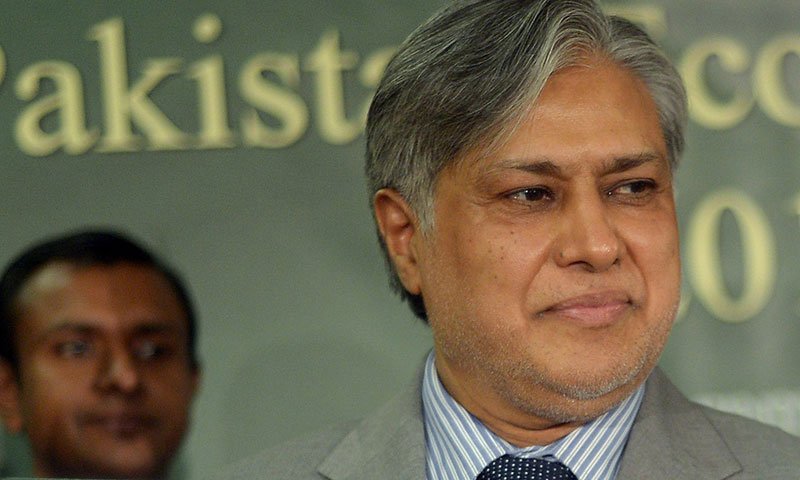
Finance Minister Ishaq Dar said on Friday China had rolled over a $2 billion loan that matured last week, providing relief during an acute balance of payment crisis. Finance minister confirms a $2b loan rolloverby China.
Locking in a rollover had been critical for Pakistan, where reserves have dipped to just four weeks’ worth of imports, and talks over an International Monetary Fund (IMF) bailout tranche of $1.1 billion have hit a stalemate.
“I am happy to confirm that this had been rolled over on March 23,” Dar told parliament, referring to the maturity date. He said all concerned documentation had been completed.
Neither the government in Beijing nor the Chinese central bank responded to requests for comment on the rollover.
Dar’s comments were the first official announcement of the rollover after the loan matured. Dar did not give the new maturity date or other terms of the arrangement.
A top finance ministry official told Reuters on Wednesday that a formal confirmation of the refinancing would be made after the process was completed.
One of the IMF’s conditions for the release of the next tranche is an assurance of external financing to fund Pakistan’s balance of payments. Finance minister confirms a $2b loan rolloverby China.
Longtime ally Beijing has provided the only help Islamabad has gotten so far, with a refinancing of $1.8 billion credited last month to Pakistan’s central bank.
In its monthly Economic Update and Outlook, the Finance Division of the government noted that Pakistan was currently confronted with a shortage in external liquidity.
Islamabad has been negotiating with the IMF since early February for the release of $1.1 billion from a $6.5 billion bailout package agreed upon in 2019.
To unlock the funding, the government has cut back on subsidies, removed an artificial cap on the exchange rate, added taxes, and raised fuel prices.
“Through demand management policies, the government is trying to limit the current account deficit, which will not transfer further pressure on dwindling reserves,” read the report.
It added that inflation, which is already running above 30%, a nearly 50-year high, is expected to stay elevated.
The report cited market frictions caused by relative demand and supply gaps of essential items, exchange rate depreciation, and the recent upward adjustment in prices of fuel as reasons behind higher inflation expectations.
Read more: IMF delay has nothing to do with nuclear programme: Ishaq Dar
