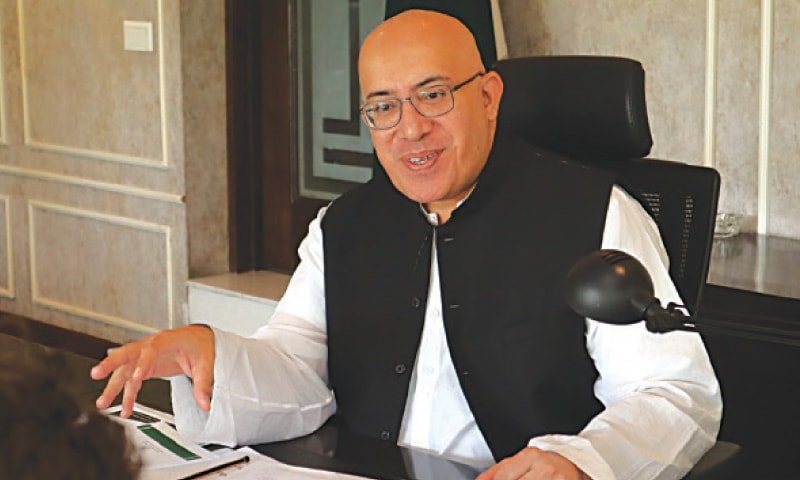
LCCI president opposes the import of expensive vehicles. Mian Nauman Kabir, President of the Lahore Chamber of Commerce and Industry, says the government should limit non-essential and luxury imports, work on a currency swap with China, and focus on a clear policy of import substitution and export growth to curb the rupee’s depreciation.
Mian Kabir remarked in an interview with 24 Digital that the import of automobiles (Completely Built Units) and cell phones should be prohibited immediately.
During the 2020-21 fiscal year, Pakistan imported 368 million dollars worth of automobiles and 1.9 billion dollars worth of mobile phones.
The LCCI president emphasized the importance of focusing on import substitution and diversification of exports in terms of products and markets in order to reduce reliance on foreign loans.
LCCI president opposes the import of expensive vehicles.
He noted that now, textiles, rice, and leather account for over 70% of Pakistan’s exports, but that this needs to be diversified to include pharmaceuticals, engineering, and Halal food, among other things.
Mian Nauman Kabir was asked a series of questions about the economy of the country. The following is the full text of the questions and answers:
Q. The economy is deteriorating, and foreign loans are increasing with time. What do you think went wrong, in your opinion? What are the government’s significant blunders?
Answer: The astronomical rise in foreign loans signals a slew of issues in our economic structure. As of September 2021, the total external debt and liabilities of Pakistan have surpassed 127 billion dollars, according to statistics from the State Bank of Pakistan. The fundamental root of the problem is that revenue collection falls well short of expenditures, forcing the government to rely on foreign loans. The following are the primary causes of the extravagant increase in foreign loans:
1) Inadequate tax revenue collection, which accounts for less than 10% of GDP, the lowest in the region;
2) A large trade deficit is a result of stagnant exports and a rapid increase in imports. The trade deficit was roughly 20 billion dollars from July to November 2021 (exports 12 billion dollars, imports 32 billion dollars).
3) Foreign loans have increased as a result of the lack of stability in the exchange rate market and the significant depreciation of the rupee versus the dollar.
The lack of proper focus on import substitution, diversification/value addition in exports is one of the most significant mistakes committed in this regard. Furthermore, in terms of market diversification, we have not been able to diversify our exports.
The government has failed to implement a taxation structure that ensures equitable revenue collection across all sectors of the economy. We have also failed to implement significant changes to improve the business environment, resulting in a stagnation of foreign direct investment in Pakistan. It’s worth noting that net FDI inflows in 2020-21 were only 1.85 billion USD.
Q: What steps should be made to make the country self-sufficient and eliminate the need for foreign loans in the future?
A: Our economic policies should prioritize exports. To reduce our reliance on foreign loans, we must concentrate on import substitution and export diversification in terms of products and markets. Textiles, rice, and leather, which account for about 70% of Pakistan’s exports, are disproportionately concentrated in a few product lines.
Diversifying our exports is critical, with a particular focus on high-potential industries such as medicines, engineering, and Halal food.
In addition, an efficient tax system is required to provide equitable and adequate revenue collection from all sectors of the economy, including agriculture, services, and industry.
There is also a need for Smart Ease of Doing Business Reforms, which can improve the country’s business regulatory environment and lead to an increase in foreign direct investment inflow. In 2020-21, net FDI was only 1.86 billion dollars.
Q: What should be done to repay prior loans that have made the country a “hostage” in the current situation?
A: Immediate efforts should be done to strengthen the local currency and prevent further depreciation, as every depreciation in the rate of our local currency raises the cost of foreign loans.
Q: How do opposition parties’ protests, protracted marches, and strike threats affect the economy?
A: Such activities interrupt corporate operations and the entire supply chain, affecting domestic output and exports.
