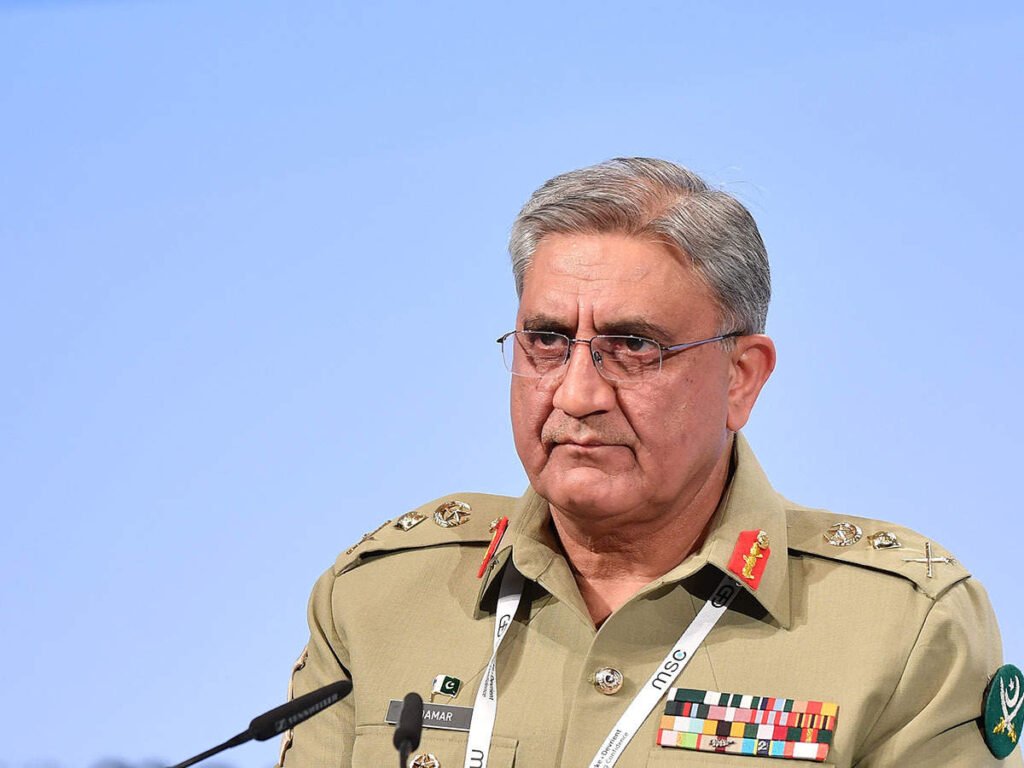
Chief of Army Staff General Qamar Javed Bajwa has reached out to Washington to request help in securing an early loan dispersal from the International Monetary Fund, Nikkei Asia has reported, as dwindling foreign reserves spark a scramble in Islamabad to avoid a default.
According to Nikkei Asia, Gen. Qamar Javed Bajwa spoke by phone with U.S. Deputy Secretary of State Wendy Sherman in a highly unusual move earlier this week, according to sources from both the U.S. and Pakistan.
The sources, who requested anonymity because they were not authorized to speak publicly, said Bajwa made an appeal for the White House and Treasury Department to push the IMF to immediately supply nearly $1.2 billion that Pakistan is due to receive under a resumed loan program.
On July 13, the IMF granted Pakistan “staff-level approval” for the loan in question. However, the transaction, which is part of the IMF’s $6 billion Extended Fund Facility for Pakistan, will not be executed until the IMF’s executive board gives final clearance.
The IMF will be on vacation for the next three weeks, and its board will not meet again until late August. According to an IMF official who spoke on the condition of anonymity, no specific date has been established for announcing the loan approval for Pakistan.
Time is of importance for Islamabad, as the Pakistan rupee falls freely versus the US dollar in interbank trading.
Without an immediate lifeline, Pakistan’s inflation-ravaged economy would continue to bleed. The rupee has been falling against the dollar, and the country now has less than $9 billion in foreign reserves, enough to cover two months of imports. S&P Global cut Pakistan’s outlook to negative from stable on Thursday.
According to the IMF official, there is a significant disparity between staff and board approval. “Our stakeholders, the countries that vote on whether they approve this or not, make the final choice,” the official explained. “This is a distinction. So, rather than the staff level agreement, the legally binding step is board approval.”
The United States is the largest shareholder in the fund, which was established in 1945. While Washington has previously voted to assist Pakistan, the Trump administration has openly expressed concerns about the government using IMF loans to repay China.
With similarities to Pakistan’s crisis-ridden neighbor Sri Lanka, the risks of default for the nuclear-armed Islamic republic have risen. Pakistan has a population of approximately 220 million people, borders with China, India, Iran, and Afghanistan, is fighting terrorism, and is located at the confluence of the Persian Gulf and the Indian Ocean.
Bajwa’s petition follows previous discussions in July with senior civilian Pakistani and American officials, none of which resulted in early delivery of funding.
“Several senior Pakistani officials have met with the United States and other key stakeholder nations in the IMF and World Bank in the last week to express concerns about the timing of IMF Executive Board decisions, pressing for an expedited review of Pakistan’s progress on prior actions,” according to an official familiar with the proceedings.
According to insiders, the lack of progress in those discussions prompted Gen. Bajwa to approach Washington after other representatives were unable to deliver.
Pakistan is one of the most bailed-out countries in the world. Since 1958, the country has participated in 22 different IMF programmes, although just one has been completed. That was in the 2000s when a military administration dominated the country.
As the rupee fell to all-time lows – its worst performance since 1998, when Pakistan tested nuclear weapons and lost investor confidence – it was unclear whether Gen. Bajwa had succeeded in persuading the US government.
While those knowledgeable about the exchange acknowledged that the currency and foreign reserves conditions were concerning, they also reported progress on the IMF financing arrangement. “If the administration can get through this difficult month, there are good prospects to stabilise the economy,” one official said.
Meanwhile, the governor of Pakistan’s central bank has publicly stated that the risk of default is exaggerated. Gov. Murtaza Syed has told the media that the state’s financial needs for the next year will be addressed. He admitted that Pakistan would prefer to receive IMF cash sooner rather than later, but he also stated that Islamabad is negotiating with Saudi Arabia and China – two countries that Gen. Bajwa just visited – to secure additional funding.
