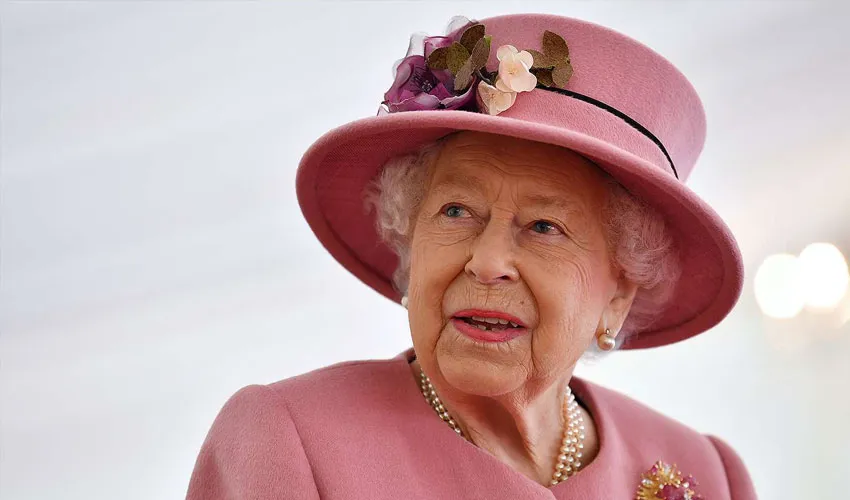
A revelatory new biography has cast aside the velvet curtain surrounding the late Queen Elizabeth II’s twilight years, painting a portrait of a monarch whose iron will and commanding presence never wavered—even as her body betrayed her.
Despite debilitating mobility challenges, the Queen refused to countenance abdication, steering the British monarchy through turbulent national transitions with a discipline that her biographer calls nothing short of remarkable.
Royal author Robert Hardman, in his newly released work Elizabeth II: In Private. In Public. Her Story, offers an unprecedented glimpse into the final chapter of Britain’s longest-reigning sovereign. Far from a ceremonial figurehead coasting toward the finish line, Hardman’s Queen emerges as a tenacious leader who wielded her authority with undiminished force until her last days.
A Reign of Unprecedented Transformation
Hardman draws a sharp contrast between Elizabeth II and every British monarch who preceded her. Unlike her forebears, whose reigns were largely defined by static empires and colonial certainties, Elizabeth II presided over nothing less than Britain’s metamorphosis from a fading imperial power into a modern, multicultural constitutional state.
The biography argues that navigating this transition—through decolonization, geopolitical realignment, and the digitization of public life—required a monarch who understood both tradition and the relentless pressure to adapt. The Queen, Hardman contends, provided precisely that equilibrium.
Strength Amid Physical Decline: ‘No Discussion of Abdication’
Perhaps the most striking revelation concerns the Queen’s final years, when she was well into her late nineties and visibly hampered by what palace statements euphemistically termed “episodic mobility issues.”
According to Hardman, there was never any serious discussion of abdication—not from the Queen herself, nor from the senior advisors who knew her best. The author emphasizes that while her physical presence at public engagements necessarily diminished, her authority remained “undimmed.”
This distinction is crucial: Elizabeth II did not confuse the frailty of her legs with the strength of her office. She continued to review state papers, grant audiences, and make consequential decisions with the same rigorous attention to detail that had defined her since 1952.
“She was not a monarch in decline,” Hardman writes. “She was a monarch adapting—and refusing to surrender a single ounce of constitutional responsibility.”
The Duty Above All: A Symbol of Unyielding Stability
The biography repeatedly returns to a central theme: duty as identity. For Elizabeth II, the Crown was not a job but an existential commitment. Her ability to appear—even in a reduced capacity—at investitures, diplomatic receptions, and national commemorations is presented not as mere photo opportunity but as a deliberate, almost defiant assertion of continuity.
Hardman notes that the Queen personally insisted on continuing certain rituals long after palace physicians advised against them. Her famous smile, in these final years, often masked significant physical pain. Yet she considered the alternative—a visibly absent sovereign—as far more damaging to the monarchy’s mystique.
The Legacy of 70 Years: Stability in a Stormy Century
Queen Elizabeth II, who passed away in September 2022 after a remarkable 70-year and 214-day reign, is now widely regarded by historians and constitutional experts as one of the most successful monarchs in British history. Her leadership is remembered for three pillars:
| Pillar | Description |
|---|---|
| Stability | She served as an apolitical anchor through 15 prime ministers, from Winston Churchill to Liz Truss |
| Continuity | The Crown remained a unifying symbol despite decolonization, social upheaval, and Brexit |
| Adaptation | She quietly modernized the monarchy’s public image while preserving its essential mystique |
Hardman’s biography reinforces that these achievements were not accidental. They were forged through decades of discipline, emotional restraint, and an almost superhuman sense of obligation.
What the Book Reveals That Others Haven’t
Unlike previous biographies that focus on the Queen’s early or middle reign, Elizabeth II: In Private. In Public. Her Story dedicates substantial space to her final years—a period often glossed over in favor of younger, more dramatic chapters.
Hardman draws on interviews with palace insiders, courtiers, and family members to reconstruct how the Queen navigated the COVID-19 pandemic, the death of Prince Philip, and the gradual handover of duties to King Charles III.
The portrait that emerges is not one of a fragile grandmother fading gently into history. It is the image of a sovereign who, until her very last breath, understood that the Crown does not accommodate frailty—it demands performance. And Elizabeth II performed, brilliantly, to the end.
