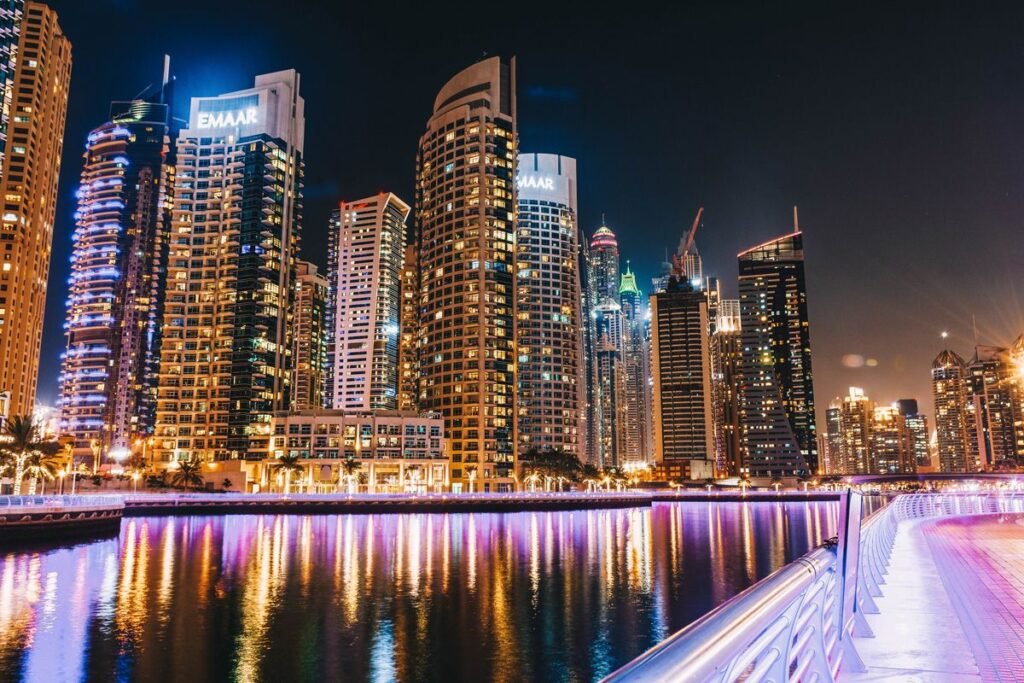
We present you risks and benefits of living in Dubai 2025.
Why people leave their home country? Well, this is a very subjective question. But the increasing economic woes and growing surveillance in Pakistan compelling individuals to relocate their families.
The idea of a new come may fascinate someone but it’s not without risks.
Dubai, a dazzling beacon in the United Arab Emirates, has recently emerged as a highly sought-after country.
Dubai offers a compelling mix of career prospects, enhanced living standards, and an entirely new cultural experience.
Its unique blend of traditional Eastern values and modern Western amenities creates an intriguing environment.
Meanwhile, it’s important to carefully consider both the positives and negatives before making such a significant decision.
In this article, we will explore a balanced view of what life in Dubai truly entails for a Pakistani citizen.
From the clear blue skies and high-paying job opportunities to the permit procedures and extreme summer heat, we’ll explore the realities of living in Dubai, using both factual information and personal experiences.
An overlook of Dubai
As the second-largest emirate in the United Arab Emirates, Dubai is a home to the tallest building in the world, the largest shopping mall, and even the largest artificial islands.
But apart from these iconic landmarks, Dubai is a multicultural city with residents hailing from all corners of the globe, creating a cosmopolitan atmosphere that is as diverse as it is dynamic.
The lifestyle in Dubai is one that seamlessly blends tradition with modernity.
With an array of high-end restaurants, vast shopping centres, and outdoor adventures at your fingertips, there’s never a dull moment in this city.
And let’s not forget the wealth of career opportunities across diverse sectors, making it a professional hub for many.
Let’s have a deeper look into the key benefits and potential challenges that come with moving to Dubai.
The benefits of relocating to Dubai

The city of Dubai offers a host of benefits that make it an attractive destination for many individuals and families alike.
These advantages range from an ideal climate to a thriving job market, a tax-free income, and much more.
Let’s take a closer look at these perks that make the city stand out as a desirable place to live.
Beautiful weather – Sun-seeker’s paradise

The weather in Dubai is best in the world due to its year-round sunshine.
With over 300 days of unbroken sunshine each year, this desert city is a sun-seeker’s paradise.
For approximately eight months of the year, from October to May, Dubai enjoys a comfortable climate, with temperatures typically ranging between 20°C to 30°C (68°F to 86°F).
During this period, the city boasts cloudless blue skies and pleasant sea temperatures, perfect for taking advantage of the city’s beautiful beaches and outdoor activities.
Life in Dubai means you’ll have the weather and amenities to spend most of your time outdoors, whether you’re basking by the sea, enjoying a round of golf, or simply sipping coffee at a sun-drenched café.
The enviable climate truly sets Dubai apart and offers a substantial upgrade from the often unpredictable and rainy weather in the UK.
Meanwhile, it’s important to mention here that Dubai’s weather isn’t perfect all year round.
The summer months can bring intense heat, but more on that later in our ‘cons’ section.
For now, if you’re a sun-lover, Dubai’s predominantly sunny and dry climate might just be a significant point in its favor.
Job opportunities

Dubai lists among the top countries where abundance of opportunities are waiting for the individuals.
The city serves as a business hub for the Middle East and beyond, hosting regional offices for many international corporations.
The strong presence of global companies in sectors such as finance, technology, construction, hospitality, and retail, provides a plethora of job openings for ex-pats.
Whether you’re a seasoned professional looking to advance your career or a recent graduate seeking an exciting start, Dubai’s vibrant job market offers potential for growth and professional development.
The city’s strategic location and importance in global business make it an exciting place to work and build valuable international experience.
No income tax

An attractive aspect for many professionals going to Dubai is the absence of income tax.
The earnings you make from your employment are not subject to any form of tax, which can significantly boost your take-home salary compared to other countries with high income tax rates, like the UK.
This policy extends to corporate taxes as well, with companies in many sectors enjoying a tax-free environment.
This not only attracts businesses to set up in Dubai but also indirectly benefits employees as companies are often able to offer competitive salaries and benefits.
Quality education
For families considering Dubai, the education system is an important consideration.
Fortunately, Dubai boasts a high standard of education, particularly in its international schools.
Many of these schools adhere to the British education system, with the National Curriculum of England taught in primary schools and IGCSE and A-Level qualifications offered at the senior level.
Do note that education isn’t free for non-citizens in Dubai, and the costs for private schooling can be substantial.
However, the quality of education and facilities offered often make it a worthwhile investment for many families.
Quality social life

Dubai gives a vibrant social scene, with an array of activities and venues to suit all tastes.
Whether you are a foodie, a sports enthusiast, or a social butterfly, Dubai has something for you.
Expats often enjoy joining private beach clubs, sports groups, and social clubs to make new friends and enjoy their downtime.
The city is home to a variety of restaurants offering cuisines from all over the world, high-end shopping centers, art galleries, music festivals, and more.
Not to mention the host of events and concerts by international artists that the city attracts.
Moreover, the city is renowned for its nightlife, with a plethora of clubs, bars, and entertainment venues to choose from.
So, whether you prefer a quiet evening out with friends or dancing the night away, Dubai’s vibrant social scene won’t disappoint.
Low transport costs
The cost of operating a car in Dubai is inexpensive thanks to the incredibly cheap price of petrol.
Taxi fares are also cheap, and the government is also making a major investment in improving public transportation.
The risks of moving to Dubai
Benefits and risks go hand in hand. Dubai isn’t all about benefits; it has many cons as well. So it’s important to know about the challenges if you are planning to move to dubai.
In this section, we’ll discuss some common issues faced by expats, helping you gain a realistic picture of what life in Dubai could entail.
Permit is a must
Living in Dubai involves dealing with a range of permit procedures.
You will need permits or licenses for a variety of everyday aspects, including getting a job, driving a car, and even purchasing alcohol.
While these processes may initially seem overwhelming, understanding what they entail can make them more manageable.
A residence visa, for example, is necessary for anyone planning to live in Dubai, and it typically requires sponsorship from an employer or a family member who resides in Dubai. Obtaining this visa involves submitting certain documents and undergoing a health check.
Next comes the Emirates ID, a legal requirement for all residents of the UAE. This card contains vital biometric and personal data and is used in all dealings with government departments.
If you plan to drive in Dubai, it’s no surprise that you will need a local driving license. Some nationalities, including the UK, can simply exchange their existing license, while others might have to take driving lessons and pass a test.
Understanding and navigating these permit procedures is crucial to your move, so it’s best to thoroughly research and prepare for this bureaucratic aspect of living in Dubai.
Premarital cohabitation
Dubai’s legal system is rooted in Islamic law, which has implications for personal relationships.
One of these is that cohabitation by unmarried couples is technically illegal.
While in practice this law is often overlooked, particularly in expat communities, it’s important to be aware of it.
If you’re moving with a partner to whom you’re not married, it’s worth understanding this aspect of Dubai’s law.
While many unmarried couples do live together in Dubai without issue, there can be legal complications, particularly if a dispute arises or if the relationship is made public.
Rent can be expensive
If you are relocating from a regional area in the UK rather than from Central London, you may find that rents are expensive. The average rental for a one-bedroom apartment in Dubai is about £1,614.65, while rents average about £2,791.93 for a three-bedroom apartment.
These figures drop as you look outside of the city centre, with the average one-bedrookm costing about £915.82 a month, and an average three-bedroom apartment costing £1,716.71 a month.
Living in Dubai can be expensive, even though there are fewer deductible taxes, property costs can become an expensive necessity.
On top of housing, costs for education, healthcare, and everyday goods and services can add up.
Therefore, while you might be earning a tax-free salary, it’s worth factoring in these costs when considering your potential lifestyle in Dubai.
Extreme heat
Heat is a problem in Dubai.
While the climate in Dubai is pleasant for most of the year, the summer months (June to September) can be intensely hot.
Daytime temperatures can exceed 40℃, which can be quite uncomfortable and necessitates a lifestyle adjustment.
During this period, most activities shift indoors or are scheduled for early morning or late evening.
Many expats also plan their annual leave during this time to escape the heat.
While air conditioning is widely available and makes the heat bearable, it’s an aspect to consider if you’re not a fan of hot weather.
Censorship and internet restrictions
In Dubai, the government exercises some degree of control over media content, and there are internet restrictions that may affect your browsing experience.
Certain websites and applications, such as VoIP services like Skype and WhatsApp, are blocked. This may influence how you communicate with family and friends back home.
Restricted alcohol consumption
While alcohol is available in licensed venues in Dubai, the public consumption and transport of alcohol are strictly controlled, and a license is required for purchasing alcohol from stores.
These restrictions might be surprising for UK citizens, who are used to more relaxed rules surrounding alcohol.
No political freedom
Lastly, the United Arab Emirates is a monarchy with limited political freedoms.
While this might not directly impact your daily life, it’s a significant difference from the democratic system in the UK that’s worth considering.
Adding these factors helps us present a more balanced view of what living in Dubai entails.
It’s important to remember that everyone’s experience will be unique, and what poses a challenge to one person might not be a problem for another.
Ultimately, being prepared and understanding the lifestyle changes can help smooth the transition.
In the end, only you can decide if it’s right for you to relocate to Dubai or not.
