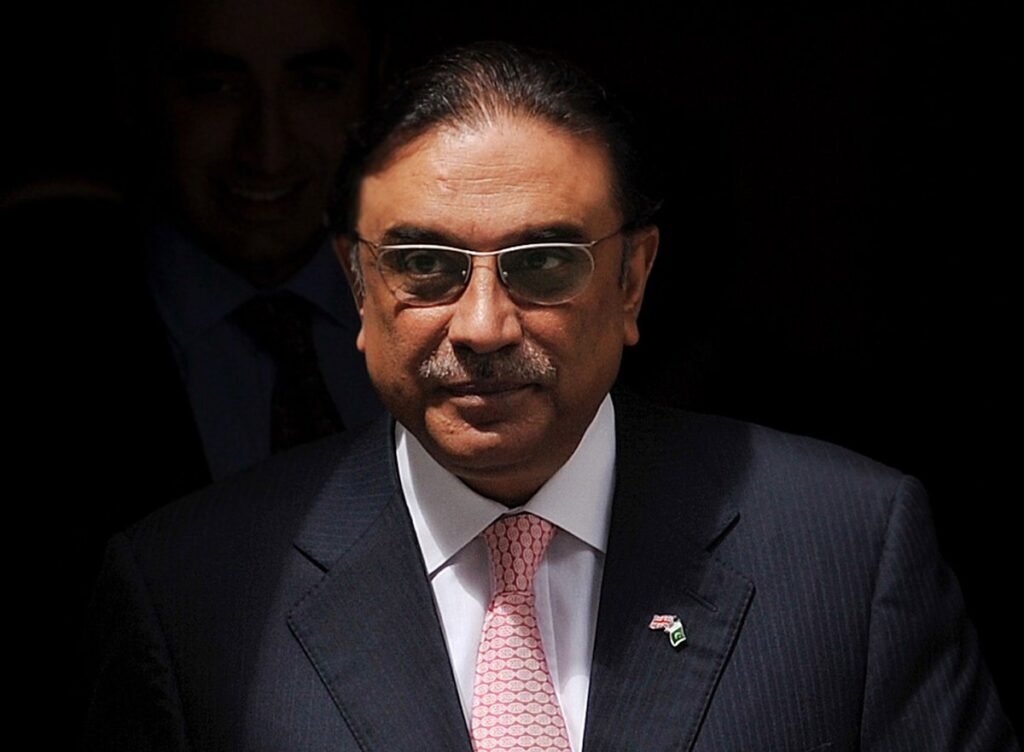
President Asif Ali Zardari has been granted presidential immunity in two high-profile corruption cases including Toshakhana and Park Lane references, leading to the halt of legal proceedings against him.
The Accountability Court, invoking Article 248 of the Constitution, has suspended hearings in both the Park Lane and Toshakhana references, providing a shield against criminal proceedings while in office.
Park Lane Case: Allegations of Corruption
The Park Lane case implicates President Zardari, along with his sister Faryal Talpur and other associates, in a web of corruption allegations tied to fake bank accounts and financial misconduct.
Specifically, they are accused of siphoning funds through fraudulent means in connection with Park Lane Private Limited and Parthenon (Pvt) Limited.
The case centers on the alleged misappropriation of a substantial loan sum, reportedly amounting to Rs 1.5 billion, transferred from a bank to the company’s account.
Toshakhana: Failure to Deposit Luxury Gifts
In the Toshakhana reference, former heads of state, including President Zardari, face scrutiny for failing to deposit luxury vehicles and valuable gifts received from foreign dignitaries into the national treasury.
The National Accountability Bureau (NAB) contends that Zardari neglected to fulfill his obligation to deposit expensive cars received as gifts from Libya and the UAE during his tenure as president.
President Asif Ali Zardari has underlined the need for global efforts to address the challenge of climate change by adopting environment-friendly technology, promoting afforestation, and reducing greenhouse gas emissions. pic.twitter.com/euBS0kjf2P
— The President of Pakistan (@PresOfPakistan) May 10, 2024
Sources reveal that only a fraction of the total cost of the vehicles was reportedly paid through what are termed as fake accounts.
Successful Invocation of Presidential Immunity:
Judge Nasir Javed’s verdict to suspend proceedings underscores the protective shield afforded by Article 248 of the Constitution, which precludes any legal action against the President while in office.
The decision effectively grants Zardari immunity from facing trial or prosecution in these cases until his tenure concludes.
Notably, the prosecution did not contest the plea for immunity, signaling a consensus on the application of constitutional provisions.
Implications and Future Outlook:
As Asif Zardari gets presidential immunity in Toshakhana, it marks a significant development in Pakistan’s legal landscape, raising questions about the balance between executive privilege and accountability.
While the legal proceedings have been halted for now, the broader implications of this decision on the accountability mechanisms within the country remain subject to debate.
