We present you a comparison between Iranian and Israeli Air Defense capabilities. As Israel launches attack on Isfahan on Friday morning, renewed attention is being directed towards the contrasting air defense capabilities of both nations.
Iranian and Israeli Air Defense capabilities: A comparison
Let’s delve into the air forces and defense systems of Iran and Israel:
Iran’s Military Assets:
Iran’s air force, comprising 37,000 personnel, faces significant limitations due to decades of international sanctions that have restricted access to modern military equipment.
The fleet consists mainly of outdated strike aircraft, including a small number of F-4 and F-5 fighters, Sukhoi-24 jets, MiG-29s, F7s, and F14s acquired before the 1979 Iranian revolution.
In addition to manned aircraft, Iran possesses a substantial arsenal of unmanned aerial vehicles (UAVs) designed for offensive operations.
Analysts estimate that Iran’s drone fleet numbers in the low thousands. Furthermore, Iran boasts over 3,500 surface-to-surface missiles, although not all have the capability to reach Israel.
Air Defense Systems:
Iran’s air defense relies on a combination of Russian-supplied and domestically produced surface-to-air missile systems.
Notably, Iran acquired the S-300 anti-aircraft system from Russia in 2016, capable of engaging multiple aerial targets simultaneously, including aircraft and ballistic missiles.
Additionally, Iran has developed indigenous systems like the Bavar-373, Sayyad, and Raad to bolster its air defense capabilities.
However, the relative weakness of Iran’s air force, primarily dependent on aging aircraft like the Sukhoi-24s developed in the 1960s, underscores its limitations in comprehensive air defense compared to Israel.
Israel’s Military Superiority:
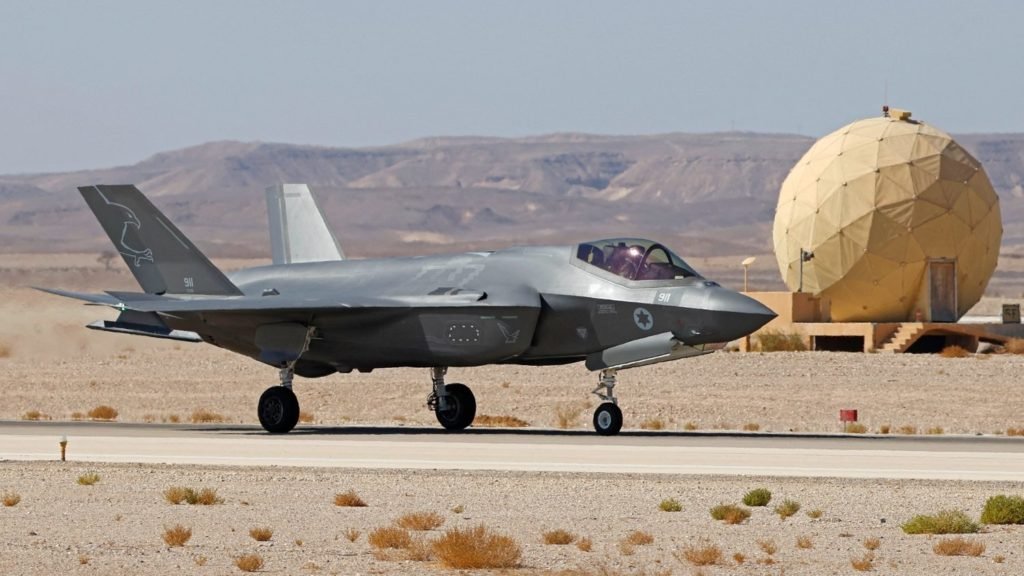
In contrast, Israel maintains a technologically advanced air force supplied by the United States.
This formidable air force includes hundreds of modern F-15, F-16, and F-35 multipurpose jet fighters, which played a crucial role in intercepting Iranian drones during recent hostilities.
Israel’s military prowess extends beyond its air force.
The country is a pioneer in drone technology, with sophisticated UAVs such as the Heron capable of extended flight durations.
Furthermore, Israel possesses advanced missile capabilities, with unconfirmed reports suggesting the development of long-range surface-to-surface missiles.
Aerial Defense Infrastructure:
Israel’s robust defense infrastructure is characterized by a multi-layered aerial defense system developed with U.S. support following the 1991 Gulf War.
This system includes the Arrow-2 and Arrow-3 interceptors for ballistic missiles, David’s Sling for cruise missiles, and Iron Dome for countering short-range threats like rockets and mortars.
The integration of these defense systems provides Israel with comprehensive protection against a wide range of aerial threats, contributing to its strategic advantage over Iran in terms of air defense capabilities.
Strategic Implications:
The contrasting military capabilities of Iran and Israel significantly influence regional dynamics.
Israel’s advanced air force and sophisticated defense systems position it as a dominant military force in the region, capable of effectively countering aerial threats.
Also read: Iran shoots down several Israeli drones: 10 points
In contrast, Iran’s reliance on outdated aircraft and a less comprehensive air defense infrastructure highlights its military limitations in the face of potential conflicts with more technologically advanced adversaries.
The recent exchange of hostilities between Iran and Israel serves as a stark reminder of the evolving security landscape in the Middle East, where military capabilities and strategic alliances play a critical role in shaping regional stability and security.
