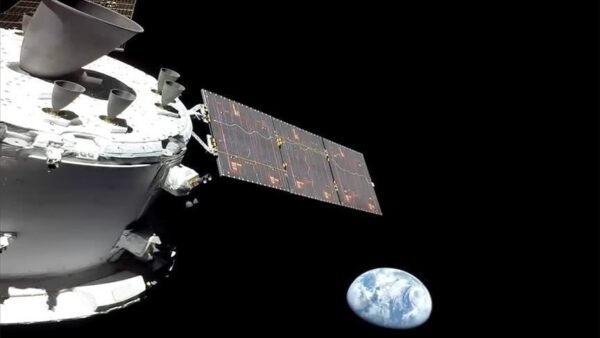
Since the world’s first artificial satellite was launched into orbit in 1957, thousands of fragments of space debris from unused satellites and rockets have risked collision with satellites and spacecraft in Earth orbit.
Space debris in orbit poses hazard to satellites, spacecraft. In addition to meteorites, there are also human-made debris in orbit. These include unused satellites and spacecraft as well as launching platforms.
The collision of two satellites results in a large amount of space junk. Also, some countries such as the US, China and India could use missiles to destroy their own satellites, which causes thousands of fragments to spread into orbit.
Currently, orbiting space debris poses no major risk to exploration attempts but is seen as a major threat to other orbiting satellites.
Every year, all satellites, including those of the International Space Station (ISS), have to move out of the way of all incoming space junk to avoid hundreds of collisions.
The ISS has maneuvered to avoid space debris 25 times since 1999. In 1957, the Soviet Union launched the first artificial satellite, Sputnik-1, into Earth’s orbit.
Since 1957, more than 6,050 rockets have been launched. It has caused 56,450 trackable space objects in orbit. About 28,160 of those objects remain in orbit and are tracked by the US Space Surveillance Network. Around 4,000 of them serve as active satellites.
More than 560 in-orbit fragmentation events have been recorded since 1961. Only seven of them were associated with collisions.
Space debris, also known as orbital debris, refers to man-made objects that are orbiting the Earth but are no longer functional or useful, such as old satellites, rocket stages, and fragments from past space missions.
Space debris poses a significant threat to satellites in orbit for several reasons.
Firstly, space debris can collide with functioning satellites at high speeds, which can cause damage or even destroy the satellite. Even small pieces of debris can cause serious damage to a satellite, as they are traveling at extremely high velocities and can hit with significant force.
Secondly, space debris can also cause problems for satellites indirectly by creating a cascade effect. When one piece of debris collides with a functioning satellite, it can create more debris and increase the likelihood of further collisions with other satellites. This can create a cascade effect that can ultimately lead to the creation of so much debris that entire orbits become unusable.
Finally, space debris can also interfere with satellite communication and other functions. Debris can cause signal disruptions or block transmissions, which can impact the reliability and effectiveness of satellite-based services such as GPS navigation, weather forecasting, and telecommunications.
To mitigate the risks posed by space debris, there are a number of measures that satellite operators and space agencies take. These include designing satellites to be more resilient to debris impacts, monitoring the space environment for potential threats, and developing plans to maneuver satellites out of the way of debris when necessary. Additionally, efforts are underway to reduce the amount of debris in space, such as through the removal of defunct satellites and other debris.
Also read: Pakistan’s gaming industry to generate $200 million in revenue
