Long gone are the throngs of protesters who occupied an area around the president’s office for months during Sri Lanka’s worst economic crisis since independence. Why Sri Lanka’s anti-government protests have gone silent.
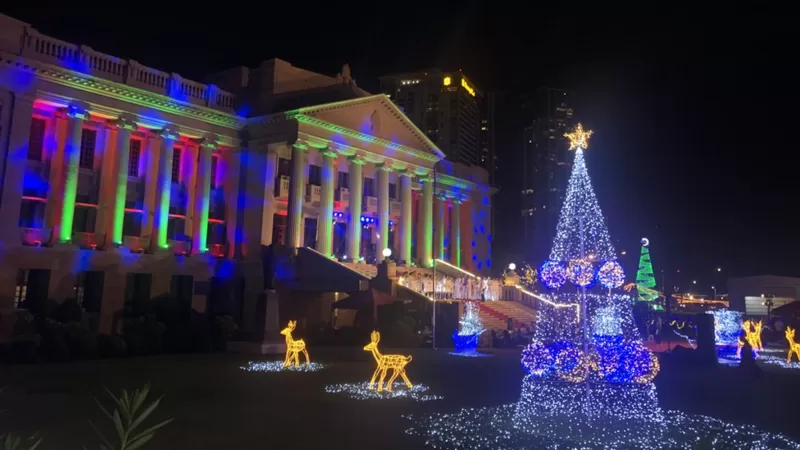
Instead a slew of carollers sang to the public from across the heavily-guarded fences of the Presidential Secretariat. Next to the building rose an 80 ft (24m) Christmas tree, the signature piece in a landscape dotted with décor, food stalls and musical shows. And as fireworks ushered in the new year, a massive crowd flocked to the oceanfront promenade known as Galle Face Green.
It was all part of a festive zone planned by the government as a year-end tourist attraction in the central business district of Colombo, Sri Lanka’s capital.
But for many locals, who used the site as their “ground zero” for Occupy-style protests from April to August and demanded their leaders resign, there is little to celebrate.
“It’s disgusting,” says Swasthika Arulingam. “It’s an indecent display of wealth that this country does not have, and of resources this country is denying to the weakest sectors of our population.”
The carnival lighting is particularly galling, she adds, given that the state-run electricity board has incurred a loss of 150bn Sri Lankan rupees (£344m) this year. Why Sri Lanka’s anti-government protests have gone silent.
The prospect of extended daily blackouts looms again. Food staples, transport fees and children’s school supplies are increasingly unaffordable. And the new year brings with it steep tax hikes that will only compound the misery.
There is “a kind of pseudo-stability” right now, Ms Arulingam says, but residents are under tremendous stress as it grows harder to make a living.
Through much of last year, Sri Lankans faced acute shortages of food, fuel and other basic supplies after a slew of government policies followed by the pandemic had depleted foreign reserves and left the country teetering on the edge of bankruptcy. Lengthy fuel queues and power outages sparked months of mass unrest, culminating in the storming and occupation of then-President Gotabaya Rajapaksa’s official workplace and residence in July, forcing him to flee the country.
Six months on, with more pain on the horizon, there have been calls for early elections. Mr Rajapaksa’s parliament-appointed replacement, Ranil Wickremesinghe, has largely demurred, but local government elections are expected to take place next month after a one-year delay.
Mr Wickremesinghe has also cracked down on the anti-government protest movement and its leaders, after vowing that he will not allow “fascists” to “tear up our constitution”.
