Default is the failure to make required interest or principal repayments on debt. Individuals, businesses, and countries can default on debt obligations. Failure to meet payments on a mortgage, student loan, or personal loan will affect an individual’s credit rating, and ability to secure future loans. Corporations may default by failing to meet coupon payments on bonds and sovereign default occurs when a country does not repay its debts.
A default is a missed or multiple missed payments on money that you have borrowed. An example of a default would be not paying your credit card bill or your monthly mortgage payment.
When you default on a loan, your account is sent to a debt collection agency that tries to recover your outstanding payments. Defaulting on any payment will reduce your credit score, impair your ability to borrow money in the future, will lead to fees, and possibly result in the seizure of your personal property.
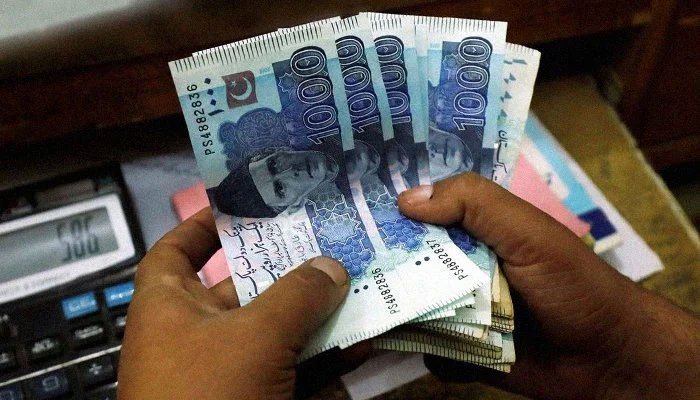
Simply put, if Pakistan defaults, it means it has failed to pay its debts because it does not have the dollars to do so. Consequently, Pakistan would be locked out of debt markets, possibly for years, and unable to import essential items such as petrol, gas, and vegetables. Without fossil fuels to generate electricity, there would be widespread blackouts and industry would grind to a halt.
Moreover, Foreign exchange reserves are the assets denominated in a foreign currency (the US dollar in this case) held by the State Bank of Pakistan (SBP). These include but are not limited to foreign currencies. The reserves are used to pay back debts owed by Pakistan, and for imports. Since Pakistan is a heavily import-dependent country and its imports outnumber its exports, the reserves are usually under pressure.
Not all of this is due to imports though. Foreign exchange reserves are also used by the SBP to influence the USD-PKR exchange rate. In the past, especially during Finance Minister Ishaq Dar’s previous stint, if the SBP wanted to bring down the exchange rate, it would release some of its reserves into the currency market. This would increase the supply and thus, cause the exchange rate to drop. However, under the most recent agreement with the International Monetary Fund (IMF), the government is bound to not interfere with the exchange rate.
In all that context, the default will affect our lives in all dimensions.
