A mystery Christmas legend is said to exist in an abandoned medieval village just 20 minutes south of Kilkenny, Ireland.
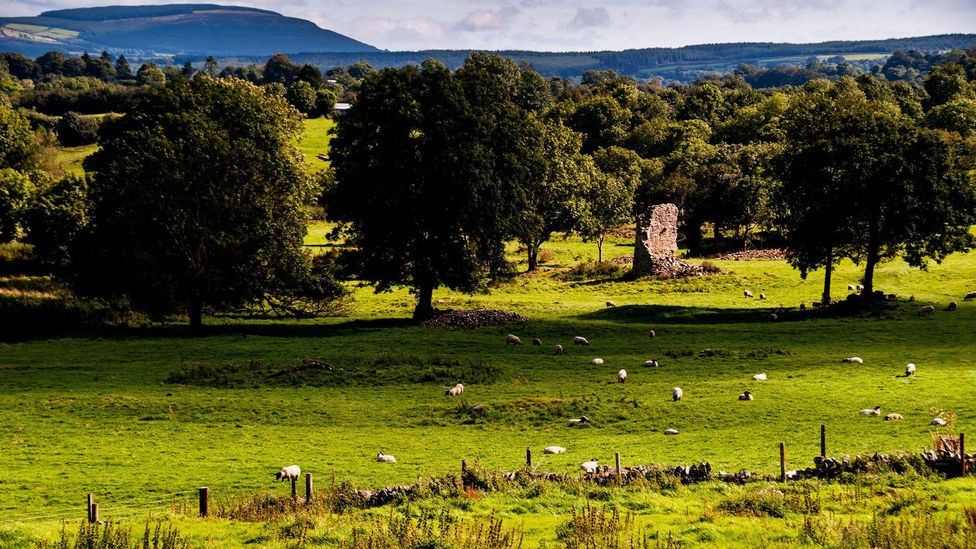
The remains of St. Nicholas Church rise over the family home of Maeve and Joe O’Connell amid lush highland fields scattered with grazing sheep and a cemetery with burials dating back to the 13th Century. Early estate residents, church members, and, according to local legend, St. Nicholas of Myra is among those lying here in peace. It was St. Nick who served as the model for Santa Claus.
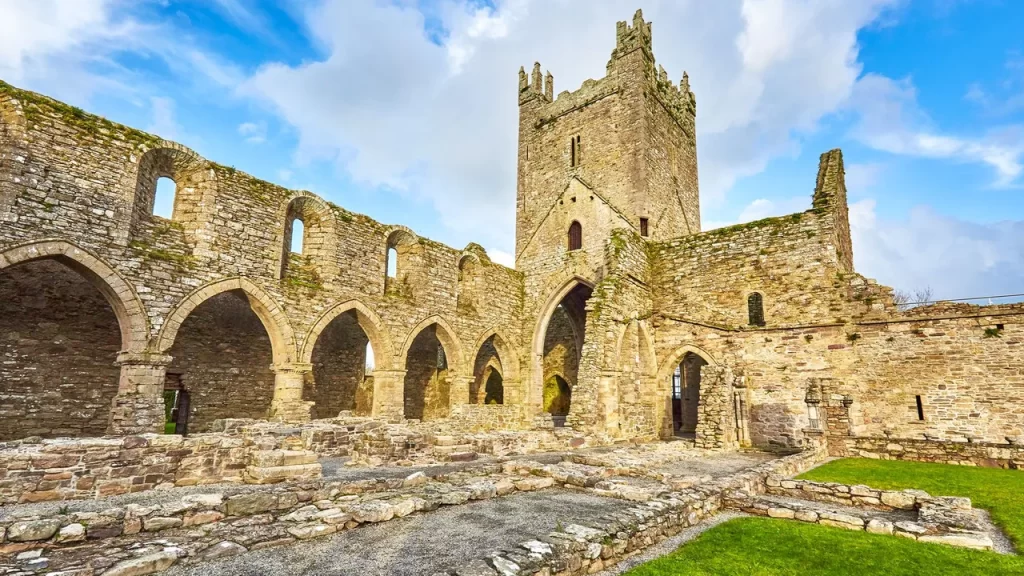
The O’Connells are the current proprietors and only (living) human occupants of Jerpoint Park, a 120-acre, derelict town from the 12th century in Ireland that is situated 20 kilometers south of Kilkenny. The town (formerly known as Newtown Jerpoint) is situated near the confluence of the River Nore and Little Arrigle River. It is believed that the Normans, who arrived in Ireland in 1160 CE, built the town. The town thrived throughout the 15th century, according to a protection plan created by Ireland’s Heritage Council. Archaeological evidence has shown residences, a marketplace, a tower, a bridge, streets, a mill, a water management system, and the neighboring Jerpoint Abbey, which is still standing today. But by the 17th Century, the inhabitants of the town had vanished, probably as a result of a mixture of violent invasions and a plague.
It’s unclear how the legendary resting location of Saint Nicholas ended up on a private farm that was once a ghost town. However, some people, the O’Connells included, think that the extraordinary assertion can be clarified by a local legend.
“Legend has it that it’s always been here,” Maeve said as she led me around the property, accompanied by Tim, her family’s friendly chocolate Labrador. She looked in the direction of an ornate stone effigy in the church graveyard. Depicted on the flat gravestone was the figure of a man standing with his hands together at the thumbs, palms facing outward, referencing the interred person’s charitable nature. “He’s giving,” she said.
Anyone who as a child received gifts from St. Nick—also known as Santa Claus, Kris Kringle, Father Christmas, and other nicknames will understand the symbolism without much explanation. — Despite the fact that Santa Claus still exists in the hearts of those who still believe, St. Nicholas of Myra, a real person, is the one who gave life to those fabled figures.
Nicholas was an orphaned child who donated his inheritance to the “needy, the sick, and the poor” prior to becoming a saint. He was born in the historic Roman city of Patara. He was elected Bishop of Myra, which is now a part of modern-day Turkey. He was present at the Nicaean Council in 325, which recognized Jesus as the Son of God, and he died there on December 6, 343, and was buried in Myra. Yet, the exact location of St Nicholas’ body today continues to puzzle scholars.
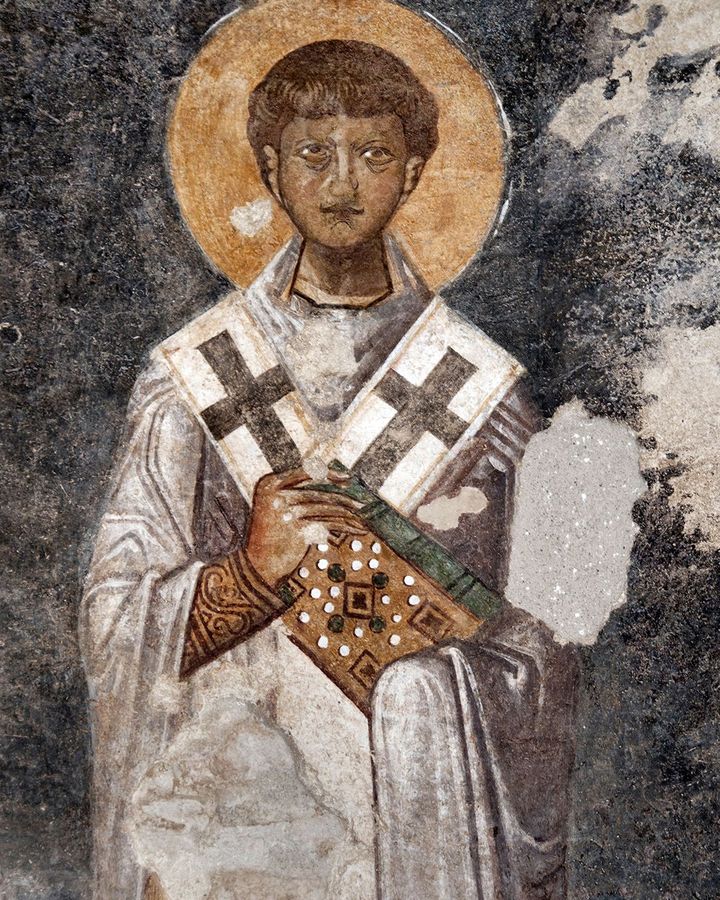
Some believe his tomb is intact below the floor of St Nicholas Church in Antalya, Turkey. Others claim his body was stolen and relocated to Bari, Italy, where it rests in a crypt under the Basilica di San Nicola. Further still, many hold that relics from St Nick’s body were snatched, and then sold, traded, or gifted to people and churches around the world.
Maeve leaned in and pointed to the effigy’s depictions of two male characters peering over St. Nicholas’ shoulders. She stated that they stand in for the two crusader knights who were allegedly in charge of bringing St. Nicholas’ body from his place of entombment in Turkey to Italy “for safekeeping.” According to folklore, the knights brought a relic from the saint to Ireland during their expedition. It ended up in St. Nicholas Church in Newtown Jerpoint and was later interred in the churchyard cemetery.
Maeve described how she and Joe came to be the owners of Jerpoint Park 16 years ago as Tim galloped over the cemetery grounds. It was an amazing day, to be honest with you,” she remembered. “We had bought the best example of an abandoned town, not just in Ireland, but in the British Isles.”
Jerpoint Park is currently a working farm and what Maeve called a “virgin site” that remains unexcavated. But some scholars point to one significant documented disruption of the property. “The site itself where the grave is now isn’t even the original location. It was moved in 1839,” said Nathan Mannion, head of exhibitions and programmes at EPIC, Ireland’s emigration museum. “So, where you see the headstone in Newtown Jerpoint now isn’t the original location.”
Mannion, recalls growing up with rumours of St Nick’s tomb at Jerpoint Park, which ignited his curiosity and a hunger for facts. “I’ve always been interested in history, of course,” he said, “and it’s led me to where I am.” Regarding the Jerpoint Park tomb’s contents, Mannion admits that without any physical evidence, “saying anything with any degree of certainty about this story is unlikely”. While some believe a relic of St Nicholas is buried there, he said that others think the grave is mismarked, and it actually contains the remains of a local priest. “You would think that when it was moved in 1839, they may have taken that opportunity to see what was exactly inside,” he wondered aloud.
Maeve said there are no plans to dig up the tomb, “The fact that there is an effigy – a lot of work has gone into presenting a relic, so obviously people cared enough to mark this site,” she said. “You wouldn’t just put a massive carved effigy to nothing. You know, like there’s got to be something.”
Mannion agrees that without removing the tomb, no one can truly know what is buried beneath the stone effigy. He pointed out that as long as people and objects have been revered as sacred, the holy relic trade has been a troublesome trade. Saints’ bodies wander the globe, but the only way to verify their veracity is to compare DNA samples to those of other known relics.
“So, I don’t know if I’ll be able to conclusively prove if Santa is real or not in Ireland. And I wouldn’t want to,” Mannion conceded.
Maeve makes the decision to believe while channeling the holiday spirit. And many of the 10,000 or more people who visit the St. Nicholas tomb in Jerpoint Park each year.
Even yet, Jerpoint Park isn’t exactly a popular Christmas trip as it isn’t open to the public then. However, Maeve said tourists are welcome to get in touch with Jerpoint Park directly to schedule private visits if they are available. Jerpoint Park is generally quiet in December. On the feast day of St. Nicholas, December 6, Maeve said she, Joe, and their two kids enjoy a quiet family gathering that includes “delicious” St. Nicholas spice biscuits. They spend time together as a family and spend Christmas with loved ones. “I love Christmas,” Maeve said. “It’s so magical, isn’t it?” she concluded.
The O’Connells believe part of St Nick is buried on this part of their land which is shown in an image below