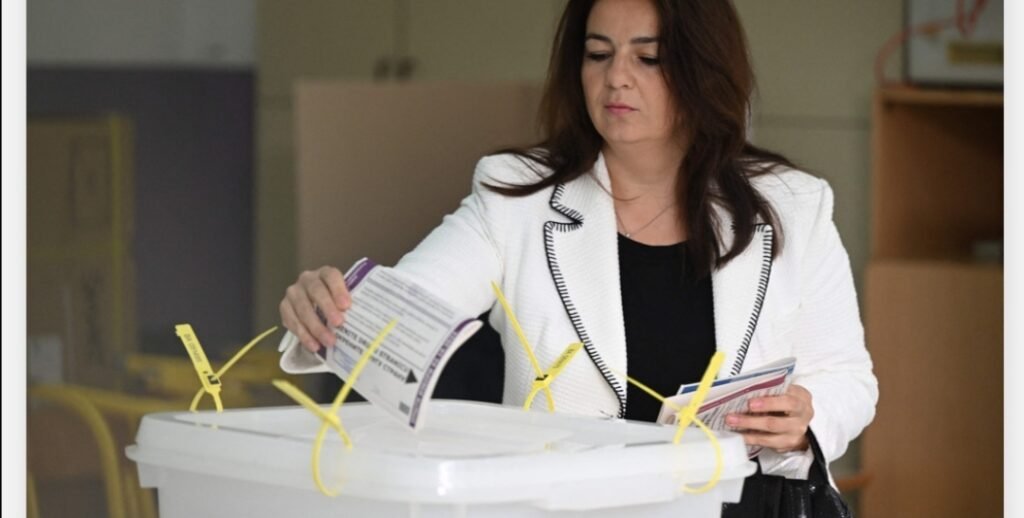
Bosnia heads to polls as ethnic tensions dominate vote
Bosnians go to the polls to select the country’s new collective presidency as well as lawmakers at the national, regional, and local levels on Sunday. They will choose between firmly established nationalist parties and reformists with an eye toward the economy.
In a country experiencing its biggest political crisis since the conclusion of its conflict in the 1990s, caused by separatist tactics of the Serb leadership and threats of blockades by Bosnian Croats, over 3.4 million people are eligible to vote.
Voting started at 7 a.m. (0500 GMT) and ends at 7 p.m. (1700 GMT). Political parties are anticipated to release their own results around 10 p.m. before the first official results are announced at midnight.
“I expect some changes at least for our youth,” said Mubera Sarac, a pensioner arriving at a polling station in Sarajevo. “It does not matter if old or new (politicians) win, they just need to change something in their minds for the sake of our young people.”
Bosnia is made up of two independent states: the Federation, which is shared by Bosniaks and Croats, and the Serb Republic, which is controlled by Serbs. Ten cantons further divide the Federation. In the north, there is also the impartial Brcko neighbourhood.
Hate speech and nationalist rhetoric predominated the election campaigning of the ruling ethnic parties, which focused more on protecting national interests and attacking opponents than on problems like unemployment and skyrocketing prices.
“Honestly, I don’t have high expectations,” said Nemanja Ratkovac, casting his ballot in the Serb Republic’s de facto capital of Banja Luka. “I think that neither of the (candidates) did much in this election campaign, except (speak) against each other.”
It has been challenging to predict the results of the election due to a lack of trustworthy surveys, but many observers think nationalist parties will continue to dominate and that the biggest shift may occur in the Bosnian Muslim, or Bosniak, camp, which is the largest.
Bakir Izetbegovic, the head of the largest Party of Democratic Action (SDA), is competing against Denis Becirovic of the anti-nationalist Social Democratic Party (SDP), whose campaign is backed by 11 civic-oriented opposition groups, for the position of Bosniak presidency member.
However, some polls indicate that separatist pro-Russian leader Milorad Dodik, who is running for president of the Serb Republic, is up against stiff competition from opposition economist Jelena Trivic. Observers predict that Serb and Croat nationalist parties will continue to hold onto power.
If moderate Zeljko Komsic is elected to the position of Croat presidency member, the Croat parties have threatened to obstruct the formation of a government after the voting.
They assert that they will not accept him as the real Croat representative because his victory would be based on votes cast by the majority of Bosniaks.
Bosnia heads to polls as ethnic tensions dominate vote
“I think that finally, after 30 years, it should be better for the people in whole of Bosnia,” said Milenko Crnjak, after he voted in the western town of Livno. “We have so much potential … but young people are departing and the old are staying and dying.”
