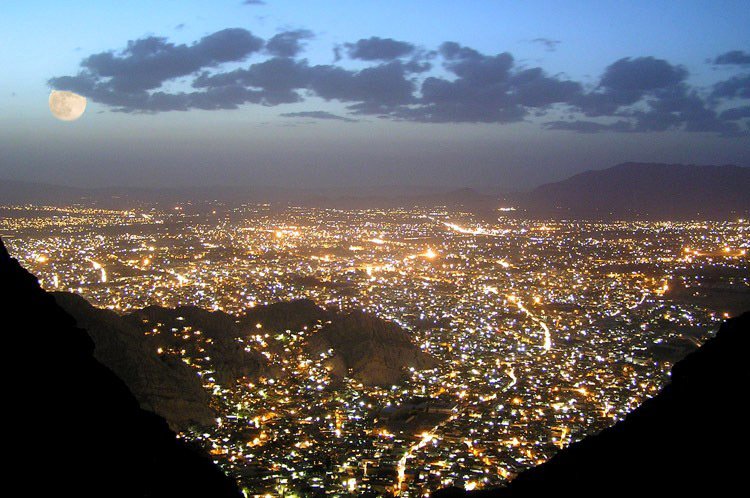
The purpose of this article is to assess the urbanization difficulties in Quetta City and its spatial dimensions. The article compiles essential data and information in order to assess the primary urban difficulties that the inhabitants of Quetta face. Similarly, the article discusses and investigates urban security as well as possible remedies. Urban concerns are becoming more prevalent by the day, owing to certain agendas. The current worldwide question concerns the application of appropriate ways of obtaining consumable resources in a city. It has become clear in Quetta that the value of a particular circumstance is effective in contributing to the growth of certain situations.
Quetta is the capital of Pakistan’s Baluchistan province. Quetta now has a population of almost 3 million people, nearly 140 years after its founding. The city’s capacity has been determined to be 30 times that of its initial capacity. Baluchistan is Pakistan’s largest province, accounting for 43 percent of the country’s total land area. Currently, the economy of the province is determined to be mostly reliant on the natural resources that are extracted by people. As per the study by Gazdar, Kaker, and Khan (2010), urban challenges are regarded as common in developing countries and cities because the urban network of the cities, villages, and towns is likely to encompass almost all of the aspects of the environment which shapes the economy, social and societal interactions. Urbanization is determined to be a vital aspect of a country’s economic progress, according to Crisp, Morris, and Refstie (2012); Hameed and Nadeem (2006). Recently, urbanization has been viewed as a critical component of economic growth and societal progress.
The pace of urbanization in Baluchistan has been judged to be rapid; in reality, Quetta demonstrates a seamless integration of steady expansion and general development. The bad status of the housing stock in Quetta has been exacerbated by a lack of effective planning and enforcement. In the city of Quetta, the lack of plan execution has exacerbated traffic congestion and difficulties, particularly within the metropolitan region (Shaw, 2015). Quetta has seen considerable changes in the last 50 years, which can be seen across the city. Initially, the country planned to house roughly 50,000 people, but it presently has a population of over 1 million.
The city of Quetta is fast developing and expanding, thanks to the availability of good agricultural land. Similarly, the extension has implications for groundwater recharge zones. It is believed that up to half of the population is housed and linked to the Kachi Abadie’s in this way. Furthermore, new housing plans in the city are being created since they are connected to valuable agricultural land. Furthermore, various residential colonies have been built in Quetta because it is the state’s common Centre. Throughout the colonial period, it has been recognized that certain colonies have not been adequately improved.
Another important concern in Baluchistan has been discovered to be impacted by a variety of natural and human-induced risks. Earthquakes, landslides, floods, sea tides, and drought are all-natural risks (Qadeer, 2014). Human-caused catastrophes, on the other hand, are referred to as civil upheaval, refugees, terrorism, and health epidemics. Furthermore, water transportation accidents are common human-caused disasters. These calamities are expected to have far-reaching effects on Quetta’s long-term growth. The city’s urban issues are also recognized in terms of potable water supply, which is unquestionably the most essential and major worry in Baluchistan’s metropolitan districts. Certainly, with the current depletion rate, the water reserves will be depleted within the next 20 years. Because of the supply and demand scenario, this expectation has grown.
According to Aqeel, 800,000 individuals in Quetta have complained about the lack of basic sanitation and drainage infrastructure. Kachi Abadies have been established in several regions of Quetta, mostly settling low-income residents. In terms of gender inequity, urbanization has challenges. Similarly, societal difficulties are associated with women’s lack of empowerment. As a result, certain social infrastructures are shown to be insufficient since they provide specialized services. According to Jatoo, the absence of primary healthcare services and facilities is considered beneficial to social development. In general, the unemployment rate is producing problems and challenges in society. According to Qadeer, urban concerns have become more prevalent in recent years, indicating that it is one of the most pressing worldwide challenges. In reality, relevant associates have become increasingly concerned about urban difficulties. In general, the criteria are linked to investor acceptability, which seldom manipulates the official plan.
Increased rural and urban migrations are typically seen as a trend since they help to alleviate the housing scarcity. According to Qadeer, urbanization in emerging nations is increasing at a specified exponential pace. In reality, as a result of globalization, has become the most current trend around the globe today. Globalization features and trends are beneficial in fostering technological innovation. Because they refer to the construction of drainage facilities, urbanization trends offer consistent expansion. Several housing designs in Quetta are helpful in managing major cities (Khan, Khan, and Kakar, 2013). These cities are made up of housing developments that are built on the fringes of major cities. New housing plans are being created in response to the rising demand for homes. Furthermore, because the housing schemes are being designed for larger cities, they are adequately maximizing housing programs.
Because they pertain to the construction of drainage facilities, urbanization trends promise consistent expansion. Khan, Khan, and Kakar (2013) found that numerous housing schemes in Quetta are effective in effectively managing major cities. These cities are made up of housing developments on the periphery of major cities. The new housing plans are being created in response to the rising demand for homes, and they are proposing diverse designs, the increased housing demand may trigger urban strife. These plans are linked to the housing shortages that wreak havoc on society’s overall development.
Quetta’s security is jeopardized by ethnic tensions, terrorism, extremism, and other factors. These worries are to blame for the rise in both internal and external conflicts. In particular, organizational assistance for emergencies is beneficial since it is built on civilized aspects (Ilyas, Khattak, Nasir, Qurashi, and Durrani, 2010). The community-based associations are formed by these civilized features. The expanding gap between adequate and unforeseen societal dangers is increasing security worries in the city. Because they lead to urban poor development features, these hazards are effective in contributing to housing demand.
Finally, it can be stated that urbanization difficulties in Quetta city are rapidly rising and developing. Urban concerns are becoming more prevalent by the day, owing to certain agendas. The current worldwide question concerns the application of appropriate ways of obtaining consumable resources in a city. It has become clear in Quetta that the value of a particular circumstance is effective in contributing to the growth of certain situations. Furthermore, inequality and segregation appear to be widespread, posing a challenge to global inequality issues. The problems are widely known since a number of investors are reluctant to engage in societal development and maintenance. Typically, effective solutions to urban problems and challenges include offering services that are appropriate for newcomers to the city. The capacity constraints for housing practices make these arrivals problematic. These techniques are paving the way for healthcare management. The educational sectors are maximizing the expanding masses that have an impact on the country’s population.
