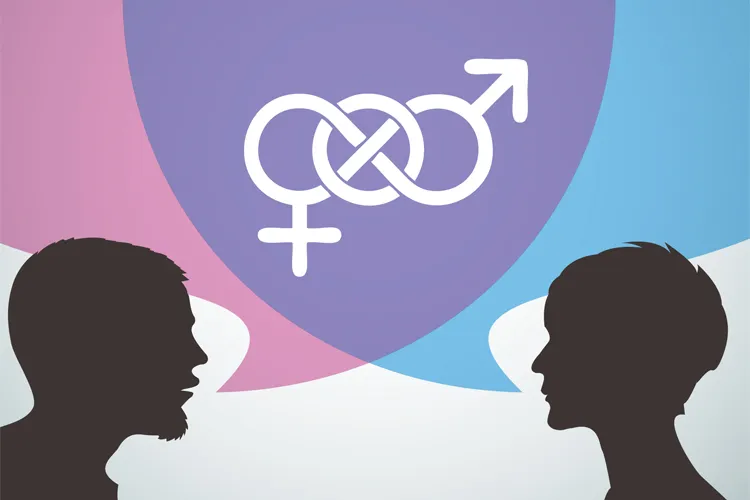
Literary language is not neutral; it holds power. For many years, the words, structure, and traditions of literature were shaped by and for a male-dominated society, often forcing women into roles that supported male control. The struggle over gender power has consistently focused on the fight to define oneself through language. Feminist criticism seeks to answer a foundational question about narrative: Who holds the linguistic authority to tell the story? In the past, literature wasn’t just a mirror of the world; it was often a mirror held up by a system where men historically held most of the power, a system called patriarchy. Feminist criticism looks closely at these dynamics. It shows whose voices are heard and whose are silenced in the stories we read. For centuries, men have dominated the literary world as writers, publishers, and critics. When Nora Helmer slams the door in Ibsen’s 1879 play A Doll’s House, she breaks free from this controlling language.
Similarly, Charlotte Brontë’s Jane Eyre boldly states, “I am a free human being, with an independent will.” This is a significant moment of linguistic defiance. These two works act as essential feminist statements, showing how writers challenge deep-rooted patriarchal power by taking back narrative control and linguistic authority. Both exemplify important feminist actions, displaying how writers challenge innate male power by taking back control of their narratives and language. Traditional language in these texts serves as a way to control and demean. In A Doll’s House, Torvald’s continuous use of cute names like “skylark”, “squirrel”, and “songbird” strips away Nora’s adult agency. This choice of words acts as a tool of power, keeping her in an adorably minor role. Her identity is shaped by his word choices. Similarly, in Jane Eyre, several male characters try to define Jane by her lack of wealth or plain appearance. They force labels like “poor”, “obscure”, and “plain” to limit her spirit. This external, judgemental language reflects the patriarchal effort to write her story for her.
Both authors give a strong, new voice that breaks the boundaries of traditional storytelling to their protagonists.
Also read: Redefining Mardangi: Social media feminism’s impact on masculinity in Pakistan
Brontë’s selection of a first-person perspective allows Jane, a woman without social status, to share her own story. Her inner thoughts provide a quiet but constant struggle. By declaring, “Reader, I married him,” she takes control of her autobiography, directly challenging the often male-dominated, all-knowing narrator. In A Doll’s House, Nora’s rebellion is fiery and driven by dialogue. At the climax, she abandons the “songbird” identity and shifts to formal language. She uses terms like “duty to myself” and “human being”. This change in language marks her fixed rejection of Torvald’s authority.
The ultimate act of power is the protagonists’ ability to name themselves and claim a vocabulary of self-definition. Jane’s famous declaration to Rochester, “I am no bird, and no net ensnares me; I am a free human being with an independent will,” is a direct and concise rejection of the pet names used to belittle women. She proclaims her autonomy using the language of universal human rights. Nora’s equally powerful statement, “I believe that before all else I am a reasonable human being, just as you are,” uses the word “reasonable” to validate her intellectual and moral equality. She demands the language and space to discover who she is outside the roles of “wife” and “mother”.
These literary occurrences were more than character details; they were milestones that showed narrative control is necessary for power in the real world. The contemporary struggle for equality in media representation, in politics, and in the workplace is a modern continuation of the linguistic battle first articulated by Nora and Jane. Their stories remind us that the most effective challenge to established power often comes from a reclaimed, powerful word.
