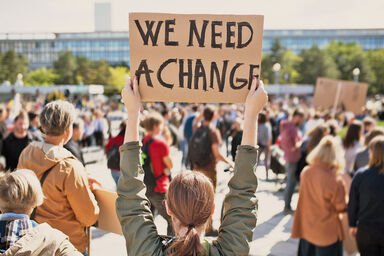
Public issues, which have their source in the social structure and culture of a society, refer to a variety of social issues that affect many people. Problems in society thus help explain the problems that individuals experience. Public affairs are situations affecting all or part of the population in a particular place. They can be economic, social, cultural, or environmental and can arise within a city, state, country, or even globally. For example, water pollution in a local lake is a public concern for the surrounding area and has many side effects for humans and aquatic animals.
War, Crime, Poverty, Global Warming, Healthcare, Media Effects, and much more. Explore some of the biggest challenges facing our world today and what led to these social issues? What impact do they have on our lives and society?
Poverty and homelessness:
Poverty and homelessness are global problems. According to Habitat for Humanity, a quarter of the world’s population lives in conditions that are detrimental to their health and safety. Many have no shelter, which is a basic human survival need. This social issue also goes beyond the 25% of the population directly affected. The lack of shelter for this vulnerable population puts a greater strain on government and social programs, including schools and health systems.
Climate Change:
A warmer, changing climate is a threat to the entire world. Climate change affects the entire world population and the Union of Concerned Scientists calls this social problem “one of the most devastating problems humanity has ever faced”. The 800 million people already living in extreme poverty will be hit hardest. Around the world, people are already noticing warmer winters, heavier storms and rains, and more frequent wildfires. These problems are already burdening governments and systems in many countries.
Overpopulation:
With the growing world population, resources are becoming scarcer. The United Nations reports that the current population of 7.7 billion people is projected to grow in the coming decades, with a forecast of 8.5 billion people by 2030.
The world’s fastest-growing areas, such as sub-Saharan Africa, often face already scarce resources such as agricultural land. When the population becomes too large for the country to bear, people have to move elsewhere to avoid starvation and homelessness. Overpopulation refers to an undesirable condition in which the number of people existing exceeds the Earth’s actual carrying capacity. It has many causes ranging from a drop in mortality rate to early marriages and so on. There are many solutions we can take to prevent overpopulation. The best measure to keep overpopulation in check is family planning.
Immigration Stress:
People move from one country to another and that in itself is not a social problem. However, immigration can strain government programs and welfare systems within a country and be a divisive issue in society. These immigration-related burdens affect many people.
For example, the Pew Research Center reports that the United States has more immigrants than any other country; 13.6% of the US population identify as immigrants. This is a divisive issue among the US public, with some groups calling for stricter immigration laws. Although the majority of US citizens welcome immigrants, a 2019 Gallup poll shows that 23% of people believe immigration is the country’s top social issue.
Civil Rights:
Civil rights, or the right of a country’s citizens to social and political equality, is another of the major social issues in America and around the world. More than 40 years after the Civil Rights Act was passed, nearly 60% of African Americans still live in segregated neighborhoods and 90% of African Americans say racial discrimination is still a major problem. The civil rights movement typically refers to the right that an individual possesses. The civil rights movement was an organized effort by black Americans to end racial discrimination and gain equal rights under the law. It started in the late 1940s. The civil rights movement is one of the most important parts of every country in the world. This demonstrated the cruelty and injustice of discrimination and is unacceptable anywhere in the country. In this way, it helped set an example for minorities around the world.
Gender Inequality:
For years men were the dominant gender while women were in the minority. This was mainly because men earned the money and women cared for the household and children. Nor did they have any rights. However, over time, things slowly began to change. Still, they’re anything but perfect. Gender inequality remains a serious and major problem even today. The biggest problem we face is that many people still see gender inequality as a women’s issue. However, by gender, we mean all genders, including male, female, transgender, and others. Gender inequality is an age problem that cannot be solved in a few days. Likewise, achieving the goal of equality will not be easy. We need to start breaking it up and give it time to go.
A report by the Pew Research Center Fact Tank shows that about 50% of Americans think the country needs to do more to address the gender pay gap. Women still lag behind men in wages and top management positions, although they are now more likely to attain college degrees. The situation is even more extreme worldwide. UNICEF reports that 12 million girls are married before they reach adulthood and 98 million high school-age girls are out of school.
Racism:
Racism is the illogical belief that a particular race has distinctive cultural traits due to genetic factors that make some races inherently superior to others and give them the right to exploit the inferior races. The notion that one race has a natural superiority over the other led to abusive behavior towards members of other races. Racism is so deeply rooted in our conscious and subconscious that we have long since bowed to such irritating ideals and forgotten humanity.
Health care availability:
When people are sick or injured, they need access to medical care to get better. According to the Centers for Disease Control and Prevention (CDC), nearly one in 20 Americans does not receive the medical care they need because of cost concerns. According to the World Health Organization (WHO), 97 million people worldwide are impoverished by seeking medical care. Governments around the world are working on this problem, as are non-profit organizations.
Living in one of the most powerful countries in the world affords most Americans the privilege of relatively good health care. Expectant mothers in the US can receive quality health care throughout their pregnancy, during labor, and beyond. Unfortunately, the same cannot be said of other parts of the world, as some developing countries, such as Pakistan, are still lagging behind in healthcare. We find that ordinary people are not very happy with the health policies of our various governments. They complain that medical care in government hospitals and pharmacies is very poor and inadequate. Also, the private sector is much more expensive and out of the reach of ordinary people. We have a wide network of national health services in the country, controlled by the health ministries, and the national budget provides fixed allocations for national hospitals and clinics, although these are far from sufficient. Thousands of doctors and nurses are in the public service to treat sick people, but the right treatment is not being adequately provided. Solutions must be found for this because everyone deserves good healthcare. health is wealth.
Childhood Obesity:
Some types of social problems are health-related but also affect socio-economic problems. For example, the CDC reports that 18.5% of US children are considered obese and have a body mass index at or above the 95th percentile. However, the childhood obesity epidemic does not affect all children equally. Children in families where parents have higher education and higher incomes are much less likely to be obese than children in families with less education and lower incomes.
Bullying:
Obesity can also impact another important social issue: bullying. The PACER National Bullying Prevention Center notes that obesity and other appearance issues are among the top reasons children report bullying.
Despite recent anti-bullying initiatives, more than 20% of American college students report being bullied. A third of those who are bullied say it happens at least once or twice a month. Additionally, 24% of middle school students say they have been victims of cyberbullying or online bullying.
Bad Leadership:
Many of the social problems in society are subtly interconnected, but all social problems are linked to the governance of countries, corporations, and other groups. An ongoing Gallup poll is asking Americans to rank the country’s top issues and social issues. By far the most significant problem was poor leadership; 28% of respondents cite it as the number one problem.
Fix general social issues:
Although many Americans believe that their leaders are the biggest problem they face, governments, businesses, and communities are working to solve some of the most pressing social issues. These are just some of the actions they take:
Schools run anti-bullying programs that can reduce bullying by up to 25%, according to the PACER National Bullying Preventions Center. Community efforts to reduce childhood obesity include adding salad bars to school lunches, focusing on physical fitness, and adding obesity prevention initiatives in hospitals. The US enacted the Affordable Care Act (ACA) to address challenges in healthcare availability, which remains a significant policy issue.
The European Union is on track to meet its targets to reduce carbon emissions and mitigate the effects of climate change. Other countries are also working hard to make progress.
Create awareness through education:
Discussing social issues can be contentious, but it’s also an important part of making progress on these societal issues. Community and classroom activities on social issues can help raise awareness of these issues. Writing about social issues can also help increase people’s understanding of these important challenges.
Conclusion:
Finally, we have seen a lot of public issues affecting society and countries as a whole. Yes, we definitely have no control over climate change, but the rest of the problems can still be addressed. The government has to work on strategies and the public has to cooperate with the government. Good planning leads to a good future.

4 thoughts on “Public issues and society”
What a great piece of article! 🙌
Well-articulated!
Very well written. You’ve explained it better. Hats off for this content. 👏📌💯
What perfect writing!
Such a great piece,I just loved it.
No words, just applause.
Love everything you write.
You’re the great!
Really appreciate you Dear!👌❣️
Stay Blessed.💙😇