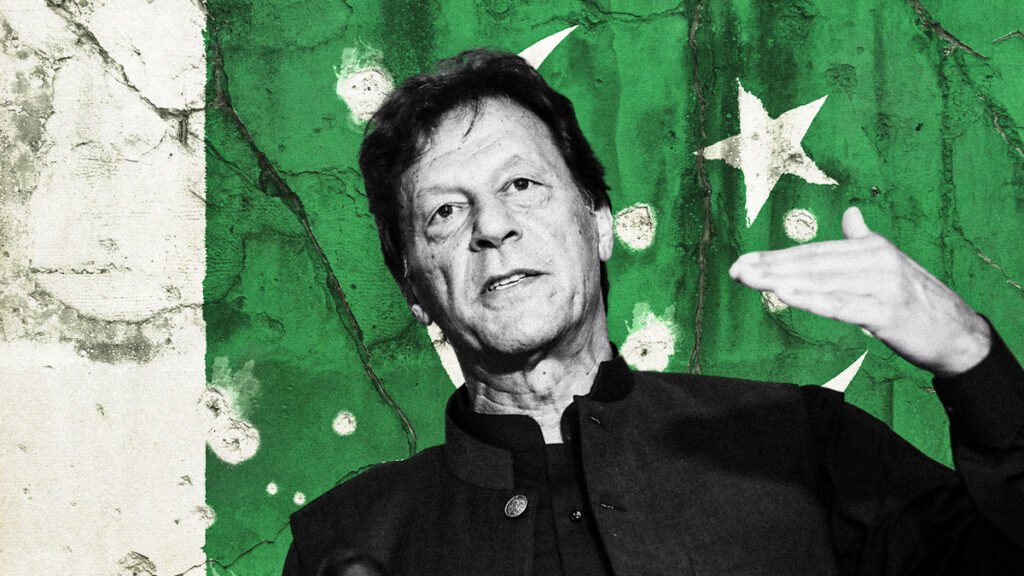
The former Prime Minister, Imran Khan, was ousted from his position on April 9, 2022, through a successful no-confidence motion against him. Subsequently, Mian Muhammad Shehbaz Sharif, former leader of the opposition, was elected as the new Prime Minister of Pakistan on April 11, 2022. After taking oath he formed his 34-member federal cabinet on April 19, which was subject to further expansion.
The former ruling party, Pakistan Tehreek-e-Insaf (PTI), alleged that these changes took place due to a conspiracy designed by a western country in collaboration with some Pakistani politicians. The allegation was based on a diplomatic cable sent to Islamabad on March 07 by the Pakistan ambassador who was, then, placed in the capital city of a western country. The message contained the ambassador’s interaction with high-ranking foreign officials during a luncheon given on March 7. The meeting had taken place when there was some strain in Pakistan’s relationship with a western country due to Imran Khan’s visit to Russia on the eve of the Russia-Ukraine war. During the meeting, the ambassador was told that a no-confidence motion against, then, Prime Minister, Imran Khan, was likely to be placed in the National Assembly Secretariat soon. If the motion succeeded the country would be forgiven. However, if it failed, then there would be consequences for Pakistan.
The message was viewed with concern in Pakistan and it was taken as a clear interference in the internal affairs of the country. However, some people had taken it as a fake episode designed to tackle the growing unpopularity of the PTI government when it was in power.
The matter was thoroughly discussed in two meetings of The National Security Committee (NSC) of the cabinet. The first meeting was held in Islamabad on March 31 presided by the former Prime Minister, Imran Khan, and attended by high-ranking civil and military officials and federal ministers. The minutes of the meeting stated, “the language used by the foreign official amounted to blatant interference in internal affairs of Pakistan by the country in question.” It was also decided in the meeting that “Pakistan would issue strong demarches to the country in question, both in Islamabad and in the country’s capital through proper channel.” The second meeting of the NSC was held on April 21 chaired by the Prime Minister, Mian Muhammad Shehbaz Sharif, and attended by federal ministers and high-ranking civil and military officials. After examining the contents of the diplomatic cable at length the NSC “reaffirmed the decision of the last meeting.
The NSC was again informed by the security agencies that they had completed their investigation and found no evidence of any conspiracy”. The meeting was also attended by former Pakistan’s ambassador to Washington, Asad Majeed Khan, who briefed the participants about “the contents and context of his diplomatic cable” that carried the alleged threat to the former PTI government. In the aforesaid meetings of NSC, no one raised any suspicion concerning the authenticity of the diplomatic cable. However, some people still consider it a fake document and some people believe that it was restricted to threats given to Pakistan’s Ambassador by a senior foreign official during a meeting and nothing beyond that.
While participating in a discussion some time back on a Fox News show US analyst, Dr. Rebecca Grant, told the anchorperson that, “the former prime minister, Imran Khan, was ousted from power partly because he was expanding trade relations with Russia, pursuing neutral policy towards Ukraine and maintaining cordial and closer ties with China. Answering a question as to what the US message to Pakistan should be the analyst added that “Pakistan needs to support Ukraine, stop looking for deals with Russia right now, limit their involvement with China and stop the anti-American policies”. This also supports the genuineness of the threatening diplomatic cable.
Ms. Marriyum Aurangzeb, the Federal Minister for information and broadcasting, disclosed on May 6 that the government had decided to constitute a commission of inquiry to investigate the reported foreign conspiracy designed to dislodge the former government. However, this was outright rejected by the other side. PTI’s Senior Vice President, Chaudhry Fawad Hussain told during his news conference that, “PTI would accept only a commission formed by the independent judiciary which should hold open proceedings.” He further added that “if such commission is not formed, people will take the matter into their own hands”.
Some time back the President of Pakistan wrote a letter to the Chief Justice of Pakistan requesting him to constitute a judicial commission, which preferably should be headed by him, to probe the threatening letter and, presumably, the events that followed it. However, such a commission has not yet been formed.
PTI’s reaction: when Mian Muhammad Shehbaz Sharif was elected as Prime Minister of Pakistan on April 11 the former ruling party, Pakistan Tahreek-e-Insaf (PTA), staged a walkout from the National Assembly session. Then 123 MNAs belonging to PTA tendered their resignations in protest of what they termed as a planned regime change backed by a western country. The resignations are yet to be accepted.
Then the former Prime Minister, Imran Khan, and his colleagues decided to go to the people to get their support. Accordingly, public meetings were arranged in Peshawar, Karachi, Lahore, Mianwali, Jehlum, Mardan, Multan, and other cities on various dates. These meetings attracted a huge and unprecedented crowd indicating that Imran Khan’s narrative on foreign conspiracy was gaining ground. During these meetings, the former prime minister declared that “he would remain on the road until general elections were announced.” He added that “he would utilize all his resources to mobilize people across Pakistan against the imported government in the country.” He further told the audience that, “we would never accept a foreign-installed government”. He also declared that “he was not anti-Indian, anti-European or anti-American. His country just wants to follow a free & independent foreign policy with enmity with none”. He reiterated his stance about the “involvement of a western country and vowed to continue his street struggle”.
He also demanded the “formation of an independent judicial commission to be led by the Chief Justice of Pakistan to probe into the conspiracy revolving around the threatening letter.” He further added, “The only remedy to the mistakes committed by anybody was fresh polls in the country.” Clarifying his visit to Moscow the former prime minister said it was in the interest of Pakistan. Mentioning one of many expected benefits he told the people, “Moscow was ready to provide Pakistan with crude petroleum at 30% cheaper rates than the international prices. We could sell petrol and diesel at 30% cheaper rates to our people”. Imran Khan also said that “our government handled the coronavirus in an exemplary manner saving lives and employment of our people”. He also claimed that “his government was removed from power at a time when the country was progressing and the unemployment level was at its lowest.” He also told the people that “we do not bow to any power and do not need its forgiveness.” In another gathering, he told the audience that they should wait for his call for the long march to Islamabad, which might be given soon.
However, the much-awaited long march to Islamabad, planned to take place on May 25, proved to be futile. The administration made a firm decision that it would not allow the marchers to enter the city. Accordingly, all the entry points to Islamabad, particularly Ravi Bridge & Attock Bridge, were blocked. This led to clashes between marchers and police causing the unfortunate death of five persons and injuries to many others. Consequently, most of the marchers could not enter Islamabad. However, at midnight Imran Khan somehow managed to enter Islamabad with a procession, where, at D.Chowk, he addressed a gathering of several thousand people. Thus the long march could not attain its intended objectives.
Subsequent to the failure of the much-publicized long march Imran Khan concentrated on street protests and public meetings. The latest of such gatherings was organized on July 2 at the Parade Ground, Islamabad, as a protest against high inflation. While addressing the audience the former prime minister bitterly criticized the institutions including the judiciary and the incumbent government. He pointed out that the poor were imprisoned for petty crimes but the powerful people, who looted the country, managed to get NRO-2 by making amendments to NAB Laws. Criticizing the politicians he said that their bank accounts and valued assets were abroad and they did not suffer any monetary loss with the devaluation of the Pakistani Rupee. In all public meetings, warmth and enthusiasm were shown by the audience. He is attracting more and more crowds keenly listen to his speeches, which indicates his popularity among the masses. His firm declaration that he would not bow to any power has lured the people.
As one can note, with the passage of time, the tone of Imran Khan is becoming harsher and more emotional. During his speech through a video link on July 5, he said that he would reveal all the secrets if he was pushed to the wall adding that till now he was silent just in the country’s interest. This speech came in the background when journalists and opponents were being victimized on political grounds and it was feared that such things would continue in the future too.
Now I am coming to some other political issues which have surfaced recently or in the distant past, which have become problematic for the nation:-
FRAGILE COALITION GOVERNMENT: Mian Muhammad Shehbaz Sharif took oath as Prime Minister of Pakistan on April 11 and formed his cabinet on April 19 representing various parties. Thus a fragile coalition government came into being, comprising at least nine political parties. Six parties have only one to seven seats in the national assembly aggregating 20 seats, while three parties namely, PML-N, PPPP & MMA, have 84, 56 & 14 seats respectively. Thus the total strength of the government is restricted to 174 seats against the required number of 172 seats to maintain a simple majority in the house. ANP with one seat has not taken any ministry in the cabinet but it supports the government from the outside. Three MNAs of PML-Q sit on the treasury benches while its two members support the opposition. The figure does not include 4 independent MNAs.
The coalition partners are diversified in ideologies. It comprises secular, Islamist, liberal, socialist & nationalist parties, which have nothing in common with them. There is no binding force behind keeping them united for long. If only three members quit the partnership the fragile coalition government would collapse. Further, the rulers will not be able to make any constitutional amendment because they do not have a two-thirds majority in the house. It is also quite uncertain whether the new government will be able to complete the remaining period of thirteen months or will be forced to dissolve the National Assembly earlier. These factors compounded by the recent no-confidence motion have created political uncertainty in the country with its adverse economic consequences.
INTOLERANCE & UNFAIR POLLS: Pakistan had 31 Prime Ministers including seven care-takers since August 1947. Unfortunately, none of them were able to complete their tenure of five years and had to leave their offices earlier. Few prime ministers even could not stay for one full year. This resulted in the inconsistency of policies with a negative impact on ongoing programs and the overall economy of the country.
Over the years politicians have developed a behavior stemming from intolerance. The opponents’ victory in elections is hardly accepted by them alleging the use of unfair means in the voting process by the winning party and labeling the winners as “selected puppets.” The election results are alleged to be fake and engineered. To many politicians, fair elections mean when their own party ends up victorious. In this scenario, widespread protests are staged creating a law and order situation in the country, which sometimes results in the ouster of the victorious party. Ayub Khan, Zulfiqar Ali Bhutto, and recently Imran Khan had faced similar circumstances which ultimately forced them to quit their offices. In many cases, the allegations appeared to be exaggerated and politically motivated aimed to pave the way for fresh elections creating another chance for the defeated political forces. The reported irregularities often lacked concrete evidence and therefore, in most cases, they were not challenged in election tribunals/ courts of law.
Having said this, it is also true that in many cases the allegation of reported irregularities is partly correct. The current paper balloting system is prone to all sorts of irregularities, particularly in the political environment prevalent in South Asian countries. With some exceptions, the political parties themselves appear to be involved in such irregularities. During the election process, they resort to all sorts of unfair means through their trained workers. Such political workers are rightly called by many as “Thappa Mafia.”(Those widely involved in irregularities). In order to curb this menace, the political parties must change their behavior. They should either go to election tribunals/courts of law to redress their grievances or alternatively accept the victory of their opponents allowing them to complete their tenure. If they deviate from this line the democratic system cannot succeed. Furthermore, the current paper balloting system must be replaced by an electronic voting system to ensure fair and transparent elections.
DISTORTED FORM OF DEMOCRACY: The dynastic reigns or military regimes appear to be dominant in Pakistan. While reviewing the history since 1972, when a new Pakistan emerged after the separation of former East Pakistan, we note that two military rulers and two political families had ruled the country for most of the period. Seven times the elected prime ministers came from the dynasty of two dominant families shaping the system into a mixed form of democracy influenced by the monarchy system.
Most of the political parties in the country are undemocratic in their structure and they are often controlled by political families. The key positions are usually held by the family members, who also get top positions in the government when the party is voted to power. This is the usual pattern in which politics is done in the country. Having said this, it is also correct that few parties in the country are run on purely democratic lines. The party chief and other office bearers are elected by the members with majority votes without considering their family affiliation. In this context, Jamaat-e-Islami appears to be an ideal party, which has created a precedent for others.
In this background, references may be given to Sri Lanka. This beautiful island was dominated and ruled by powerful families, most notably the Rajapaksa family which owns substantial agricultural lands. The family gained immense strength during the presidency of Mahinda Rajapaksa spread over 2005 to 2015. During this period the members of the family enjoyed senior positions in the government. After a short interval, the family’s rule was resumed in 2019, when the former president’s younger brother, Gotabaya Rajapaksa, won the presidential election. During this period five family members were placed in vital ranks including the positions of President & Prime Minister. Since 2019 the country has been facing an economic crisis, which has now worsened. Consequently, on April 12 Sri Lanka became a defaulter due to its inability to pay off its external debt of USD 51 billion. Amidst widespread violent protests & agitations the Prime Minister and his two cabinet ministers, who came from the same family, were forced to resign. Very recently, on or about July 12, the President, Gotabaya Rajapaksa, was also forced to leave the country when the protesters occupied his palace. Subsequently, he tendered his resignation. The people hold the Rajapaksa family responsible for the collapse of the country’s economy and other unfortunate happenings and demand that the family quit politics completely. This has a lesson for other countries too which are ruled by powerful dynastic rulers.
POLITICAL ISSUES IN PUNJAB: The following resignation of Punjab’s former Chief Minister, Usman Buzdar, the no-confidence motion brought against him earlier by the United Opposition, became ineffective. Subsequently, an assembly session was convened on April 16 to elect the leader of the house. Hamza Shehbaz of the United Opposition and Chaudhary Parvez Ellahi, representing the former ruling party PTI & its ally, PML-Q, were contenders for the slot.
From the outset, the session proved to be very tense and troublesome. When the MPAs gathered at the assembly hall unprecedented chaos and outcries were witnessed which developed with the passage of time. The MPAs confronted each other causing injuries to some members. PTI’s members threw plastic-made lotas (turncoats) toward PTI’s dissident MPAs raising slogans “curse on lotas”, “US supporters are traitors” etc. When the deputy speaker, Dost Muhammad Mazari, a PTI dissident, entered the assembly hall he was assaulted and pulled hair by some members.
Ultimately riot police entered the assembly hall and restored order, which took around 3-4 hours. Then the proceedings started at the visitors’ gallery of the assembly hall with Dost Mohammad Mazari, deputy speaker on the chair. On completion of some formalities voting started, in which Hamza Shehbaz secured 197 votes including 25 votes of PTI’s dissidents against the required 186 votes. The opponents boycotted the voting process. Thus Hamza Shehbaz was elected as leader of the house in a very unusual session that had no precedent in the parliamentary history of the country. On April 30, as per the order of the Lahore High Court, the speaker National Assembly, Raja Pervez Ashraf, administered the oath of Punjab Chief Minister-elect. On the same day the Chief Secretary, Punjab, issued a notification confirming the election of Shehbaz Sharif as Chief Minister and refraining the former Chief Minister, Usman Buzdar, from working any further.
Subsequently, on a reference filed by the Speaker Punjab Assembly, the Election Commission of Pakistan on May 20 announced its verdict, under Article 63-A of the constitution of the Islamic Republic of Pakistan, disqualifying 25 PTI’s dissident MPAs who had voted in favor of Hamza Shehbaz contrary to the party’s directions. Accordingly, they were de-seated from the assembly. Earlier, on May 17 the Supreme Court of Pakistan, on a reference filed on behalf of the President of Pakistan seeking some clarification concerning Article 63-A, gave its opinion that “the votes of defecting lawmakers should not be counted and must be disregarded.” This landmark opinion, to some extent, would close the doors of horse trading and defection.
With the de-seating of 25 dissident MPAs the Chief Minister of Punjab has lost its majority in the house and he is now holding his office without any moral justification. Apart from the ruling coalition, no other group has even a simple majority in the house which can replace the present Chief Minister.
Apart from the above, on June 15 two very unusual events happened in Punjab: 1) the Governor of Punjab issued an ordinance placing Punjab Assembly under the control of the Law Department and clipping the powers of the Punjab Assembly Speaker/ Assembly Secretary. These actions practically relinquished the autonomy of the assembly. 2) two assembly sessions were held on June 15 in separate venues, one at Punjab Assembly Hall with Speaker Parvez Ellahi on the chair, when two important businesses were conducted during the session. The other parallel session, called by Punjab Governor, was held on the same day in Aiwan-e-Iqbal with Deputy Speaker, Dost Mohammad Mazari, on the chair. In the session, the provincial Minister, Sardar Awais Laghari, presented the provincial budget of PKR 3.226 billion. The budget session was not attended by the opposition. The session was attended by 160 MPAs of the ruling parties, which once again indicated that the governing coalition has no majority in the house.
The former ruling party had challenged the election of Hamza Shahbaz as Chief Minister of Punjab in Lahore High Court. On June 30 the court gave its verdict ordering the recounting of votes excluding votes of 25 PTI dissident members who had voted in favor of Hamza Shahbaz against the party’s direction. However, the court did not nullify the election itself. The assembly session for recounting of voters was summoned on July 1 at 1600 hrs.
The Lahore High Court’s order was challenged in the Supreme Court of Pakistan on July 1 by the former ruling party, Pakistan Tehreek-e-Insaf, expressing its concern on various issues particularly insufficient time allowed for recounts of the votes. The case was fixed for hearing on the same date before a three-member bench headed by the Chief Justice, Umer Ata Bandial. On completion of counsels’ arguments Punjab’s Chief Minister, Hamza Shehbaz, and Speaker, Chaudhry Pervaiz Ellahi, also joined the hearing through video-link as per the directive of the court. After extensive hearings and with the consent of Punjab Chief Minister, Speaker Punjab Assembly, and PTI’s Chairman, Imran Khan, the court made the following decision:-
a) the date for the run-off election for the slot of Punjab Chief Minister was fixed as July 22 instead of July 1 as scheduled by Lahore High Court.
b) Hamza Shahbaz will continue to work in his present capacity till July 17, the date of by-elections on 20 vacant seats.
The vacant seats of the Punjab Assembly would be duly filled by mid-July. Hence all the MPAs may be able to cast their votes in the run-off election on July 22. While concluding the hearing the Chief Justice, Umer Ata Bandial remarked, “It is good that both the parties have reached an amicable solution with the consensus”. He further added, “It is good for the country and the province that a three-month-long constitutional crisis had been resolved in three sittings”.
Now, both the parties are doing their level best to win the crucial by-polls on 20 vacant seats to get control over the largest province of the country. On July 7 PTI’s Chairman, Imran Khan, while addressing a public gathering at Sargodha and suspecting possible rigging in the by-polls, asked ten courageous youths to guard polling stations in each area to avert the suspected rigging. On July 8, while addressing a rally at Khushab, he said, “these by-polls will decide whether we accept these thieves or we opt for a sovereign and independent Pakistan.”
AMENDMENTS IN ACCOUNTABILITY & ELECTORAL LAWS: In the last week of May the government managed to get two amendment bills, namely the National Accountability (Second Amendment) Bill, 2022 & Elections (Amendment) Bill, 2022 from the upper & lower houses of the parliament. Then the bills were presented to the President of Pakistan for his assent. However, on June 4 he returned the bills with some vital remarks for further deliberation and reconsideration. Subsequently, on June 9 the bills were presented in the joint sitting of the parliament. Then the bills, duly approved in the joint sitting, were again sent to the President for his assent. On June 20 the President returned the accountability bill unsigned stating, “The bill as enacted by the parliament is regressive in nature and will promote corruption by crippling the long arm of the law.” However, the bill became law under Article 75(2) of the constitution assuming that the required assent had been given by the President. These amendments were challenged in the apex court by the former ruling party, Pakistan Tahreek Insaf.
It is not understandable as to why this secondary matter was taken up in such haste and without deliberation with some concerned when the government should have focused on the grave economic issues faced by the country instead of this petty matter. The salient features of the amendments are:
• the amendments in the accountability laws, which now place the accused in an advantageous and relaxed position, have retrospective effects and would be applicable since November 1999. This transpires that many cases now pending with National Accountability Bureau (NAB) could be spoiled.
• the burden of proof has now been shifted to NAB or one who reports the matter to the bureau making it difficult to establish the crimes committed by an accused.
• previously the “assets” were defined as those held by the accused and/or his/her spouse, relatives, and associates. Now, the words “spouse, relatives, and associates” have been deleted making it difficult for an accused to be accountable if he/she holds ill-gotten assets in the names of his/her spouse, relatives & associates.
• the valuation of assets, acquired by an accused by unfair means, would be assessed on the values prevalent at the time of purchase as mentioned on the registered purchase document or as per the rates fixed by the government. This completely ignores the current values which may be substantially higher.
• an accused can now transfer his/her properties to someone even when his/her case is under probe by NAB. This is contrary to the previous position.
• If a public office-holder makes such a decision or takes such action that gives undue benefits to someone. No action can be taken by NAB if the officers involved did not receive any monetary benefit for/her decision/act.
• If NAB files a reference against someone in good faith and with good understanding, but later on it transpires that the reference was actually false and baseless. Under such circumstances, the concerned official may be subjected to five years’ imprisonment. This will discourage NAB officials to file a reference against someone although he/she believes in the genuineness of the case involved.
• the tenure of the NAB Chairman and Prosecutor-general has been reduced from four years to three years and they will not be entitled to any extension or reappointment. This will create inconsistency in policy because no chairman/prosecutor general would be able to dispose of the majority of the cases reported during their tenure.
• NAB can now secure remand of an accused only for14 days instead of 90 days. This will make it difficult for the bureau to complete the interrogation within this limited time.
• Tax-related issues, federal and provincial cabinets’ decisions, irregularities found in development schemes/projects, etc. have been excluded from the bureau’s jurisdiction.
With these amendments, vast powers & authorities of NAB have been curtailed and it is unlikely that this federal institution would be able to play any effective role in the future. Particularly the accountability of influential persons and their relatives would now become extremely difficult, if not impossible. The amendments are likely to benefit accused persons in some high-profile cases.
It is worth mentioning that the National Assembly session was not attended by any real opposition with the exception of the GDA, which has the strength of 3 MNAs only. The bill was passed without deliberation with the majority party in the house. Many people believe that NAB was being used for political engineering, particularly for the victimization of rival politicians. It was also criticized for its practice of plea bargains, which was termed as “institutional corruption” by a court of law in Pakistan. Having said this, it is also true that organized propaganda was being carried out in the country to defame the institution and it had become a fashion to abuse it without establishing any wrong it has done.
AMENDMENTS IN ELECTORAL LAWS: The joint sitting of the parliament, held on June 9, had also passed Elections (Amendment Bill), 2022, which was again presented to the President for his assent. However, on June 19 he once again returned the bill unapproved because not only “the amendments are regressive in nature but it completely excludes the use of technologies in the voting process.” Notwithstanding this, the bill became law under the deeming clause of the constitution assuming that the President had given the required assent.
These amendments scraped the idea of using electronic voting machines in the next general elections and paved the way for paper balloting as usual. The amendments also barred overseas Pakistanis from voting through I-Voting. In the past prolonged agitations and protests were witnessed in the country against the irregularities and use of unfair means in the elections. It is feared that this will continue to happen in the future too because the paper-balloting system is prone to all sorts of irregularities. It will make it very difficult, if not impossible, to conduct fair and transparent elections in the country. The amendments provide for pilot projects to be conducted by the Election Commission of Pakistan in by-elections using EVMs and a bio-metric verification system as well as an I-Voting System for overseas Pakistanis. The outcome of these pilot projects will be shared with the government by EEC.
Although the Law Minister has stated that the parliament is not against the use of technology, it is not clear how long it will take to replace the rustic and manual system of paper balloting with automation.
• POSITIVE DEVELOPMENTS WITH FATF: amidst many adverse happenings in the recent past, there was good and encouraging news for Pakistan from the terror financing watchdog, Financial Action Task Force. The FATF held its plenary session in Berlin on June 14 which continued till June 17. At the close of the session, FATF’s President stated “Pakistani authorities have done a lot of work. Pakistan has now largely addressed all 34 action items.” Although Pakistan’s name has not yet been removed from the grey list it is strongly believed that this will be done in the FATF’s upcoming plenary session likely to be held in October this year.
It may be recalled that Pakistan was nominated for grey listing by FATF in February 2018, for its failure to check money laundering and counter terror financing. Then the country was ruled by the former Prime Minister, Shahid Khaqan Abbasi. Subsequently in June 2018 during the tenure of the Care-taker Prime Minister, Justice (Retd.) Nasir-Ul-Malik, Pakistan was placed on the grey list. The country was required to work on and complete a 27 points action plan which focused on terror financing (CTF). In June 2021 another 7-points action plan, focusing on money laundering, was also handed over to the country for compliance. In aggregate Pakistan had to work on and complete 34 items of two action plans. This was a gigantic and onerous task ever given to any nation.
The former PTI government had formulated a FATF Coordination Committee, headed by the former Federal Minister, Hammad Azhar, to work on the two action plans. Apart from this on the directions of COAS, a special cell was also established at GHQ to ensure compliance with the action plans. The aforesaid committee and the military/ civil bodies worked tirelessly and closely coordinated with each other to achieve the common goal. With their combined efforts they not only completed 32 out of 34 requirements of the two action plans by the end of 2021 but also averted the risk of black-listing. The remaining two requirements were also met by April 2022 paving the way for the removal of the country’s name from the grey list. The former federal minister, Hammad Azhar, and the minister of state for foreign affairs, Hina Rabbani Khar, led their delegations to FATF plenary sessions effectively representing the country. The Prime Minister, Shehbaz Sharif, and other federal ministers during their visits abroad also pleaded the country’s case with FATF.
Before the country finally exists from the grey list a technical team of the task force will visit Pakistan, on dates mutually convenient to both sides, for on-site verification of the completed action plans and their effectiveness & sustainability. During its visit, the team may have discussions with political/military figures and various concerned agencies, ministries & departments. It is believed that, based on the report of the technical team, Pakistan will be excluded from the grey list in FATF’s next plenary session.
SALVAGING THE COUNTRY: Apart from the political issues, Pakistan has been facing aggravating economic crisis as reflected in the economic indicators appended below: –
• Pakistan achieved a GDP growth rate of 5.97% during the fiscal year 2021-22 (July-June), which is slightly higher than the previous year’s growth of 5.74%. This is the only encouraging factor:
• its forex reserves stood at USD 10.309 billion as of June 30, 2022 (including a USD 2.3 billion Chinese Consortium loan received recently), whereas the total liquid reserves held by the country stood at USD 17.48 billion as of 01-04-2022 before the change of the regime;
• the country’s trade deficit reached an all-time high level of USD 48.66 billion on June 30, 2022 against USD 30.96 billion recorded a year ago;
• CPI based Inflation year-on-year basis hit 21.32% as of June 30, 2022, which is the highest level in more than a decade. This was recorded to be 9.7% at the close of the corresponding month previous year;
• US Dollar was trading in the open market at PKR 211.5 on July 16, 2022, whereas it was trading at PKR 186.28 on April 10, 2022, before the regime change. This indicates a sharp decline in the Rupee value;
• the current SBP policy rate has now reached 13.75% making borrowing costs substantially higher.
While looking at the acute economic problems faced by Pakistan it is worth mentioning that the country is in the grip of unbearable inflation. The petroleum and diesel were selling at PKR 230.24 & 236.00 per litre respectively since July 15 which were being sold at PKR 150.00 & 144.15 per litre respectively in April 2022 before the regime change. The prices of these items are likely to increase further in near future. Consequently, the prices of essential commodities have also gone up. Presently rice, flour, edible oil, vegetables, poultry, eggs, beef, mutton, etc. are being sold at much higher rates than before. This has severely hit the people coming from the poor and lower middle classes and pushed them towards the wall. Furthermore, Economic Coordination Committee (EEC) has okayed a 43% to 335% hike in gas prices effective from 1st July, which has been ratified by the federal cabinet. Similarly, National Electric Power Regulatory Authority (Nepra) has also recommended a rise of PKR 7.9 in the base tariff of electricity, which is likely to be enforced in three parts subject to approval by the federal cabinet. Meanwhile, people have been facing long and unscheduled load-shedding of electricity making their lives extremely terrible.
In the federal budget for the fiscal year 2022-23, an additional Super Tax has been imposed on thirteen industries namely, sugar mills, LNG terminals, automobile assemblers, fertilizers, banking, textile, airlines, steel, cigarettes, cement, oil & gas, beverages & chemicals. The Super Tax will be charged at 10% causing a great blow to industries. This extreme measure is bound to retard industrial growth causing unemployment and reduction in production. Apart from this individuals earning more than PKR 150 million annually will have to pay an additional tax varying from 1% to 4%. These are one-time taxation and will not extend beyond the FY 2022-23. Overall the tax burden on most taxpayers will substantially increase.
Pakistan is an agricultural country. Its vast area comprises part of the Indus Plain, which is as fertile as the neighboring Gangetic plains. Once the country was self-sufficient in its food requirements but the position has now changed. Due to rapid urbanization, the cultivable/cultivated land is shrinking causing a shortage of foods. The problems are compounded by the prolonged drought seasons and shortage of water for irrigation and industrial use. Although Pakistan has constructed many dams, the problems could not be fully addressed. It is, therefore, imperative that six new dams, which are in their initial stage of construction, are completed soon. At the same time, concrete efforts should also be made for the construction of additional large dams to ensure the supply of irrigational water during dry seasons and the generation of cheap hydropower, which is badly needed by the country.
Another point of concern is that the country is heavily indebted. With regular intervals, it has to pay huge amounts towards repayment of loans and interest thereon, which heavily strains its available resources. Often it has to borrow just for repayment of previous loans and interest. The country had taken bail-out programs from IMF twenty-two times till 2019. People can get rid of this puzzling situation if they are able to achieve self-reliance through efficient planning and devotion to work. India has already completed this task, which has enabled it to depend on its own resources without borrowing from IMF since the early 1990s.
The economic and political issues now facing the country are rooted in the distant past and spread over decades. Most of them did not originate in the recent past. The so-called land mines, as alleged by some politicians, were actually laid down during the tenure of various former rulers in the distant past, which are now exploding. The reasons for the deterioration in the country’s economy can be summed up as follows:-
• a significant part of the country’s budget is spent on repayment of loans/interest.
• huge amounts are spent on non-development programs/projects.
• improper planning and wastage of national resources.
• corruption/ money-laundering by the elite class.
• substantial and widening deficit in the balance of trade.
• huge amounts are spent on imports of crude petroleum;
• heavy strains on public funds for supporting sick enterprises, like Pakistan Steel Mills, Pakistan International Airlines etc.
• shifting focus from the agricultural sector, which is backbone of the country’s economy.
• slow growth of the industrial sector.
The present coalition government is apparently incapable of handling the aggravating economic and political issues. Now only thirteen months are left for the present regime to complete its tenure. During this short period the gigantic task of steering the country out of the crisis looks extremely difficult, if not impossible, even if all-out & sincere efforts are taken in this direction.
Under these compelling circumstances early elections appear to be the only viable solution. The political parties should now go to the people with their comprehensive plans of navigating the country out of the troubled waters. The party winning the elections, with peoples’ mandate and full tenure of five years, hopefully, would be able to address the peoples’ problems effectively and can lead the country towards its destination. Apparently no other way is now left out.
