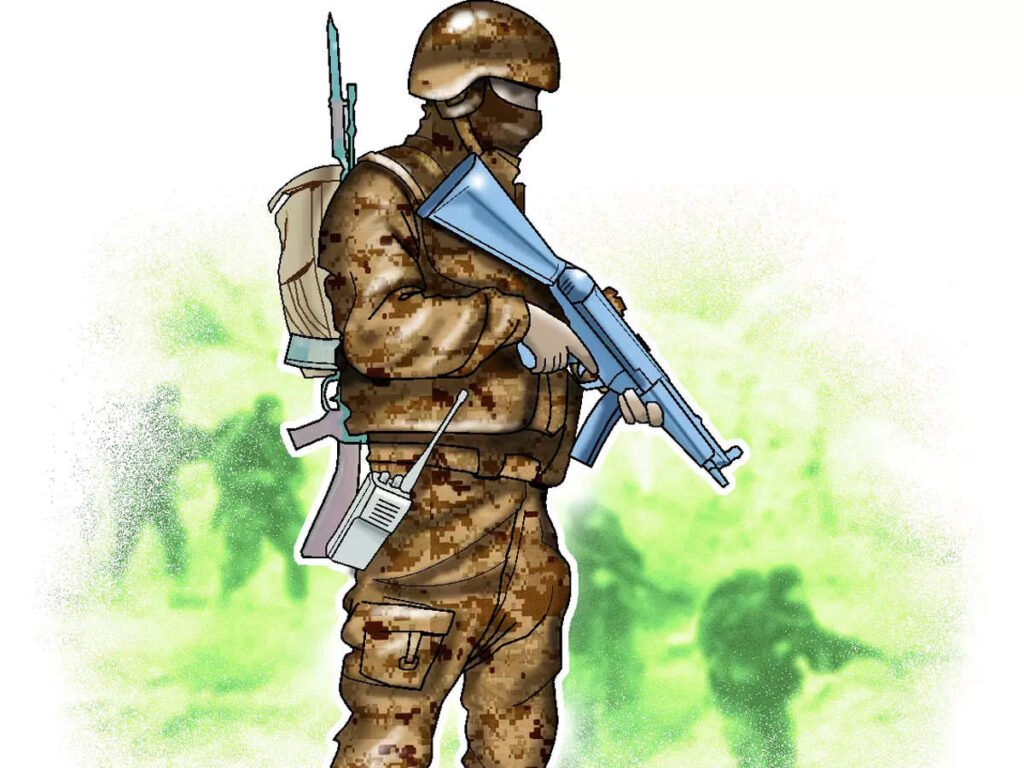
In an unprecedented move, BJP lead Indian government announced a new recruitment scheme in the Army for the tenure of four years which they termed “Agneepath” a Hindi term that means the path of fire. Since the advertisement of this new recruiting scheme, violent protests in major cities of India are being observed. Protesters burnt trains, cast stones on government departments, and caused mayhem in the main cities of India.
To pacify the growing protest, the Indian government on Saturday announced 10% reservations for the ‘Agniveers’ in various Central government jobs after elapsed of the four-year service term in the Agneepath scheme. But this move seems to be in vain as the outcries are still being heard on roads and streets of the world’s second-largest populated country.
The primary aim of this transformational reform scheme as quoted by the Indian defense ministry is to make the Indian Arm more juvenile, diverse, and technologically able. Although this may not be the first exemplar of this kind of recruitment in the military, even modicum analyses of this move in recent political developments in South Asia, recent new world order, and on the verge of the cold war 2 eras, this may have serious and far-reaching implications not only on the politics of south Asia but beyond world’s largest continent.
South Asian countries have proven to be very less fortunate when it comes to beyond-borders ventures for poverty eradication and collective betterment of the world’s most populous region: something observed in sagacious and shrewd leadership of Europe after World War 2. Futile arm race between, Pakistan and arch-rival India, lead millions of already un-provided and unprivileged people of these two nations to the edge where it is hard to distinguish between humans and animals if compared to basic life necessities. Even atomic deterrence in South Asia failed to stop this rate race and still, a humungous amount is consumed to prepare more nukes every year in both countries. Despite this turmoil in south Asia, recruitment reforms will push countries in the proximity of India to determine similar steps which will further militarize the already war-obsessed region.
After the century-worst pandemic of Coronavirus: economies of the world’s most rich nations are even struggling to be back on the track and no exception is in the case of South Asia too, in fact, it is the worst affected region considering the vulnerability and susceptibility of poverty-stricken societies of this region, Economic failure of Sri Lanka will testify this claim: country collapsed in mere two years. Having a better literacy rate among all peers didn’t help in this situation. This leads to the question of why Agneepath’s reforms are even more important than measures that should be taken to heel the economy? Even economic experts resolved it as it will only increase already deteriorating unemployment conditions, how can, a country with millions living well below poverty lines affords to do so.
One possibility of this transit military recruitment scheme can be linked to the Russian invasion of Ukraine.
The timid and insensitive response of European powers mainly compromised economic relations with Russia: the main provider of energy resources and wheat to Europe has emboldened India. Using the leverage of its strong and still growing economic muscles and being one of the biggest markets in Europe, India may also expect the same leniency from world power to claim the disputed territory with a relatively weaker rival, Pakistan. This new recruitment could be a step forward in the direction to achieve a broader purpose.
Sino-Indian relations are soured after clashing between border troops of these two countries a couple of years ago, and the US tilt towards India as and strategic corroborator to contain and counter china in South China Sea politics further added fuels to the flames. Seeing India through the prism of Quads and potential rivals against the cold war with the US, China justifiably may have concerns against these military recruitments reforms.
Since the abrogation of Articles 35A and 370, Muslims in India have apprehension of being marginalized which is raising serious concerns over the internal security and sovereignty of the world’s 6th nuclear power. These transit troops once abandoned from service, could potentially regroup and may find some invisible force to lead them, which can create circumstances similar to those that caused the emergence of ISIS after being out from Guantanamo detention camp.
Last but not the least; India is among the top ten most affected countries by climate change. Natural disasters can undo south Asian countries with meteoric speed more than any other human-enforced war: exception is in the case of nuclear conflict which is very less likely. Priority, therefore, should be to mitigate inevitable climate hazard effects with collaboration with neighboring countries facing similar fortune.
The aforementioned analysis leads us to the conclusion that the mantra of war and hate is the major hindrance on the path of progress in South Asia. Primary and the only victim of this approach are poor people of the subcontinent and if considered on a broader level: every citizen of the war preaching country which significantly compromises fundamentals of life. Being primary and the only prey of this approach, the only power which can stop this is the people who are enduring this.
