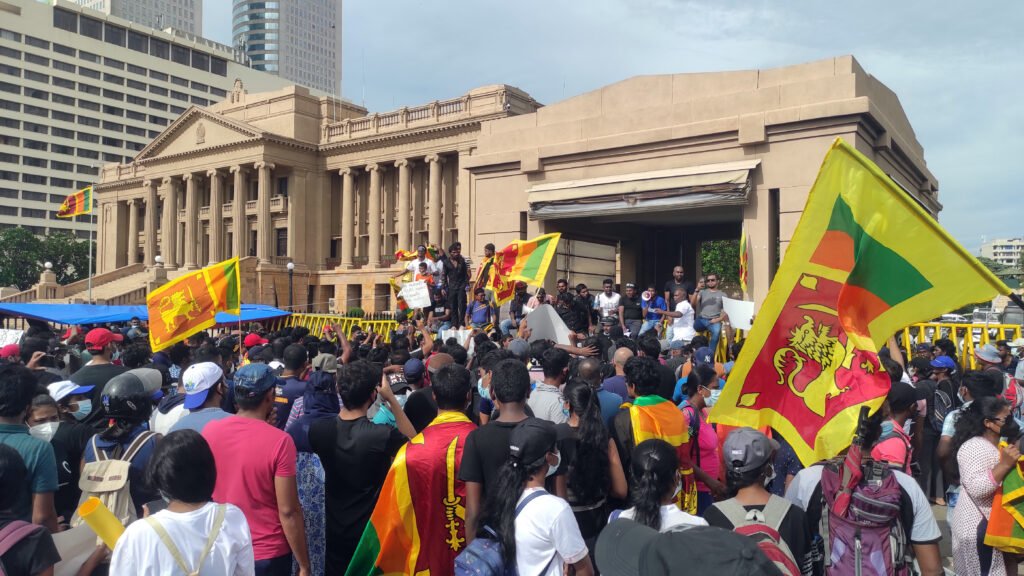
A curfew in central Sri Lanka has been maintained a day after the shooting of an anti-government protester drew international outrage.
On Wednesday, the government pledged an investigation into charges that police used excessive force to disperse protesters across the island who were protesting rising fuel prices and calling for President Gotabaya Rajapaksa’s resignation over the increasing economic crisis.
Sri Lanka is experiencing its worst economic crisis since its 1948 independence, with frequent blackouts, acute fuel and other supplies shortages, and record prices inflicting widespread misery.
According to the AFP news agency, police commander Chandana Wickramaratne said in a statement that “I have already begun an inquiry into the actions of policemen at Rambukkana.” He also imposed an indefinite curfew in the area.
According to police, a throng was preparing to set fire to a diesel tanker in Rambukkana, 95 kilometres (60 miles) east of the capital, when cops opened fire to disperse them.
Officials reported at least 29 people were injured, including 11 police officers, in the first fatal fight since anti-government protests began earlier this month.
Rajapaksa said in a tweet on Wednesday that he was “very grieved” by the tragedy in Rambukkana. “I am confident that a thorough and unbiased investigation will be conducted.”
As Sri Lanka begins bailout talks with the International Monetary Fund in Washington, DC, envoys from the United Kingdom, Canada, and the United States expressed alarm over the police shooting and appealed for moderation on all sides.
Within hours of the shooting in Rambukkana, police used tear gas to disperse another protest in the island’s south, but officials and villagers said there were no immediate reports of casualties.
Residents in Matara, 160 kilometres (100 miles) south of Colombo, reported police had moved in to remove those occupying a vital route and disrupting traffic.
Protests erupted around the country in response to a dramatic increase in fuel prices and a diesel and petrol shortage, as the government seeks three to four billion dollars from the IMF to resolve its balance-of-payments issue and replenish depleted reserves.
Food, cooking gas, fuel, and medicine have all been in short supply for months, with Sri Lankans queuing for hours to buy the very minimal supplies available.
In recent months, fuel prices have risen numerous times, resulting in significant rises in transportation costs and other requirements. Another set of increases was announced earlier this week.
Thousands of demonstrators have occupied the entrance to the president’s seafront office in Colombo since April 9, demanding that he step down.
On Monday, Rajapaksa acknowledged popular outrage over the governing family’s incompetence by forming a new government to try to calm the situation.
Sri Lanka’s economic collapse occurred after the coronavirus outbreak stifled key tourism and remittance money, and the government stated this week that it would default on massive international debt.
