Britain’s Truss expected to be named Conservative leader, new PM
It is believed that Truss will be chosen as the next prime minister of Britain and leader of the Conservative Party.
In Scotland, Queen Elizabeth will meet with the winner and ask them to form a government.
It’s expected that Liz Truss will be chosen as the new leader of the British government’s Conservative Party on Monday. She will take office during a period of crisis for the country, including a recession, rising living costs, and labour unrest.
After weeks of a difficult and frequently tense party leadership race that pitted Truss against a former finance minister named Rishi Sunak, the announcement on Monday at 11:30 GMT will signal the beginning of a transfer from Boris Johnson. After months of scandal, he was obligated to announce his resignation in July.
Tuesday’s flight will take the winner to Scotland to meet with Queen Elizabeth, who will ask that the new monarch form a government.
The party has had four prime ministers since the 2015 election, and Truss has long been seen as the front-runner to succeed Johnson. Over that time, the country has seen a series of crises, and it is currently experiencing what is anticipated to be a protracted recession pushed on by surging inflation, which reached 10.1% in July.
As Boris Johnson’s foreign minister, Truss promised to act quickly to address Britain’s crisis of rising living costs. She said that within a week, she would have a plan in place to address rising energy costs and guarantee future fuel supply.
In a Sunday TV interview, she avoided going into detail about the steps she believes will reassure millions of people who are worried they won’t be able to pay their fuel bills as winter approaches.
During her presidential campaign, she made it plain that she would break with precedent by cancelling tax increases and getting rid of other taxes and fees that some economists said would lead to higher inflation.
Some investors have been prompted to sell government bonds and the pound because of this and a pledge to evaluate the Bank of England’s mandate while maintaining its independence.
The question of whether the next British prime minister will have the power to execute large, long-lasting tax reductions was raised by the Institute for Fiscal Studies last month.
Second-most challenging post-war brief
According to opposition MPs, Truss’ extensive, pricey, and difficult to-do list is the result of 12 years of unsuccessful Conservative administration. Numerous people have called for an early election, which Truss has said she will not allow.
According to senior Conservative lawmaker David Davis in 1979, she would have to deal with “perhaps the second most challenging brief of post-war prime leaders” as the prime minister.
He said that the cost might reach tens of billions of pounds, and that “I honestly don’t think any of the competitors, not one of them going through it, truly realises exactly how massive this is going to be.”
A source close to Truss claims that she will replace the current “presidential-style” of government with a strong cabinet.
The urgent issue of escalating energy prices will be her first point of discussion. It is anticipated that the average annual home electricity bill will rise by 80% in October to 3,549 pounds ($4,084) before climbing to 6,000 pounds in 2023, which will have a terrible effect on people’s personal finances.
The reason why Britain has lagged behind other major European nations in its provision of financial support for consumer energy costs is blamed by the opposition MPs on a “zombie” administration that was helpless to do anything while the Conservatives staged their leadership race.
The government introduced a 15 billion pound support scheme in May to help households with their energy expenditures as a part of its 37 billion pound cost-of-living support programme.
Over 52 billion euros ($51.75 billion) have been allocated to Italy’s aid budget so far this year. Electricity rate rises are limited to 4% in France, and Germany declared on Sunday that it will invest at least 65 billion euros to protect consumers and businesses from rising inflation.
It is believed that Truss will be chosen as the next prime minister of Britain and leader of the Conservative Party.
In Scotland, Queen Elizabeth will meet with the winner and ask them to establish a government.
Reuters
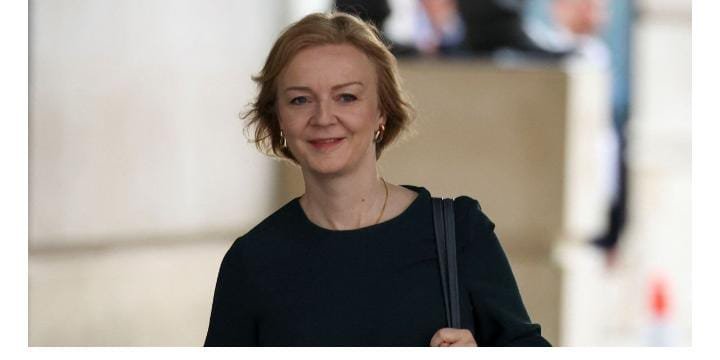
Before appearing on the Sunday with Laura Kuenssberg show, Liz Truss, a likely contender for the conservative leadership in 2022, arrives at the broadcasting facility in London. britain 4.09.2022, Reutersc andidate for president who is conservative Liz Truss arrives to Broadcasting House in London, England, on September 4, 2022, in anticipation of her appearance on the BBC’s Laura Kuenssberg show.
Liz Truss is expected to be chosen as the leader of the ruling Conservative Party and Britain’s next prime minister on Monday, at a time when the country is dealing with a crisis in the cost of living, industrial unrest, and a recession.
After weeks of a difficult and frequently tense party leadership race that pitted Truss against a former finance minister named Rishi Sunak, the announcement on Monday at 11:30 GMT will signal the beginning of a transfer from Boris Johnson. After a scandal that lasted for several months, he was forced to announce his resignation in July.
Tuesday’s flight will take the winner to Scotland to meet with Queen Elizabeth, who will ask that the new monarch form a government.
The party has had four prime ministers since the 2015 election, and Truss has long been seen as the front-runner to succeed Johnson. Over that time, the country has seen a series of crises, and it is currently experiencing what is anticipated to be a protracted recession pushed on by surging inflation, which reached 10.1% in July.
As Boris Johnson’s foreign minister, Truss promised to act quickly to address Britain’s crisis of rising living costs. She said that within a week, she would have a plan in place to address rising energy costs and guarantee future fuel supply.
In a Sunday TV interview, she avoided going into detail about the steps she believes will reassure millions of people who are worried they won’t be able to pay their fuel bills as winter approaches.
During her presidential campaign, she made it plain that she would break with precedent by cancelling tax increases and getting rid of other taxes and fees that some economists said would lead to higher inflation.
Some investors have been prompted to sell government bonds and the pound because of this and a pledge to evaluate the Bank of England’s mandate while maintaining its independence.
The question of whether the next British prime minister will have the power to execute large, long-lasting tax reductions was raised by the Institute for Fiscal Studies last month.
Second-most difficult brief since the war
According to opposition MPs, Truss’ extensive, pricey, and difficult to-do list is the result of 12 years of unsuccessful Conservative administration. Numerous people have called for an early election, which Truss has said she will not allow.
According to senior Conservative lawmaker David Davis in 1979, she would have to deal with “perhaps the second most challenging brief of post-war prime leaders” as the prime minister.
He said that the cost might reach tens of billions of pounds, and that “I honestly don’t think any of the competitors, not one of them going through it, truly realises exactly how massive this is going to be.”
A source close to Truss claims that she will replace the current “presidential-style” of government with a strong cabinet.
The urgent issue of escalating energy prices will be her first point of discussion. It is anticipated that the average annual home electricity bill will rise by 80% in October to 3,549 pounds ($4,084) before climbing to 6,000 pounds in 2023, which will have a terrible effect on people’s personal finances
The reason why Britain has lagged behind other major European nations in its provision of financial support for consumer energy costs is blamed by the opposition MPs on a “zombie” administration that was helpless to do anything while the Conservatives staged their leadership race.
The government introduced a 15 billion pound support scheme in May to help households with their energy expenditures as a part of its 37 billion pound cost-of-living support programme.
Italy’s aid budget has received more than 52 billion euros ($51.75 billion) so far this year. France has put a 4% cap on power price increases, and Germany said on Sunday that it would invest at least 65 billion euros to shield consumers and businesses from rising inflation.
