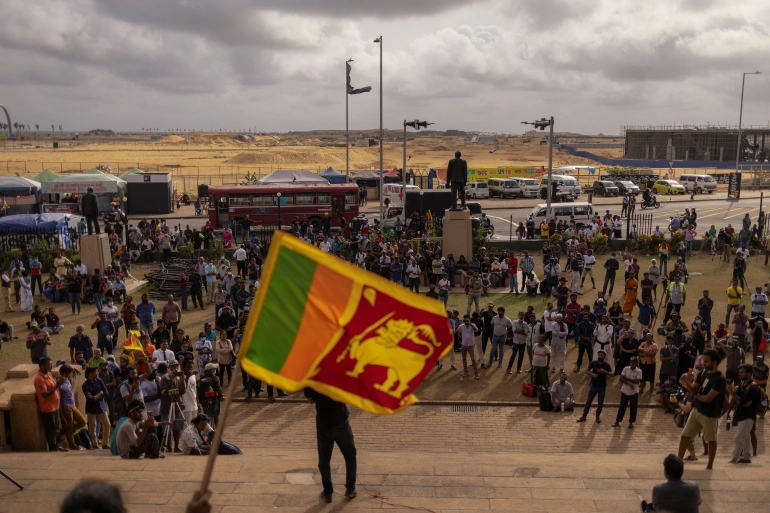
After parliament elected interim leader Ranil Wickremesinghe as the new president of the country, anti-government protestors have returned to the streets of Sri Lanka’s capital and claim they will continue their weeks-long protest.
On Wednesday, hundreds of protestors gathered at the GotaGoGaming spot in Colombo, where just a week prior they had met to celebrate Gotabaya Rajapaksa’s exit from office.
Speaking to the crowds, protest organizers said they would not recognize 73-year-old Wickremesinghe, who has served as prime minister six times, as the nation’s new leader and blamed him in part for the unheard-of economic and political catastrophe.
Wasantha Mudalige, the head of the Inter University Student Federation, addressed the audience, saying, “As you know, the parliament elected a new president today, but that president is not new to us, it is not the people’s mandate.”
He said, “We were able to remove Gotabaya Rajapaksa from office, who received 6.9 million votes, but Ranil Wickremesinghe has now taken that seat from the rear seat. The people’s mandate is on display in the streets, so Ranil is not our president.
In reference to the 134 parliamentarians that voted in favor of Ranil Wickremesinghe, artist Jagath Manuwarna said, “Ranil Wickremesinghe should know that millions in the streets are far bigger than 134.”
No similar festivities greeted Wickremesinghe’s appointment; instead, dozens of his supporters were seen cheering in the streets. Last week, when Sri Lankans learned Rajapaksa had resigned days after fleeing the country, they heard celebratory firecrackers in various parts of the country.
Dullas Alahapperuma, Wickremesinghe’s primary opponent in today’s election, similarly failed to win over many Sri Lankan protestors because he has expertise running a massively indebted nation that is in need of an IMF bailout.
In the midst of an unprecedented economic collapse that puts the nation on the verge of bankruptcy and increasingly unable to pay for food, fuel, and medicine, Sri Lankans have been protesting for weeks.
