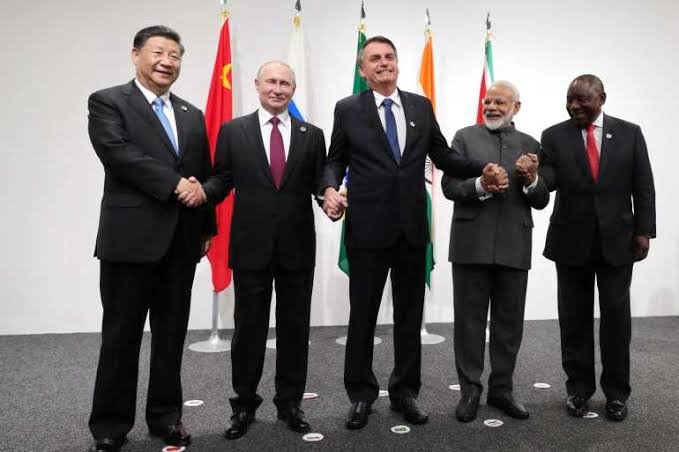
China will hold the 14th BRICS Summit on Thursday. Analysts see Beijing as an opportunity to strengthen its governance and development models during times of global instability.
China’s President Xi Jinping will video-link leaders from Brazil, India, Russia and South Africa to discuss common concerns at the summit, which heralds the arrival of a “new era” in which world development is discussed. Prior to the Beijing Summit, China’s state media promoted “multilateral cooperation with non-Western styles, forms and principles” and the BRICS (five emerging economies that make up about a quarter of the world economy). The importance of the block when “the United States is leading Western allies to’rebels’ against globalization”.
In May, Xi called on the group to “reject the Cold War spirit and collective conflict and work together to build a global security community for all.”
Despite these important differences, the leaders of the five countries maintain a certain distance from the US-led free order.
None of the leaders of Brazil, China, India, or South Africa openly condemned Russian President Vladimir Putin for his country`s invasion of Ukraine earlier in the year. Set against a complex geopolitical backdrop that includes war in Europe and growing economic decoupling between China and the US, the 2022 summit provides Beijing with a timely platform to promote its vision for how international relations should be conducted, according to analysts.
“BRICS is a kind of diplomatic counteroffensive by China to both the revival of NATO and the increase in Indo-Pacific mechanisms that are designed to keep its power in check,” Huang Yanzhong, a senior fellow for global health at the Council on Foreign Relations, told Al Jazeera.
“Beijing is feeling increasingly isolated right now, as tensions with the US and its allies continue as a result of its tacit support for Russia`s invasion.”
Phar Kim Beng, former director of the Political-Security Community at ASEAN`s secretariat in Jakarta, said Beijing would use the summit to “highlight and criticise the ubiquitous nature of American sanctions that are imposed on thousands of individuals and entities around the world”.
