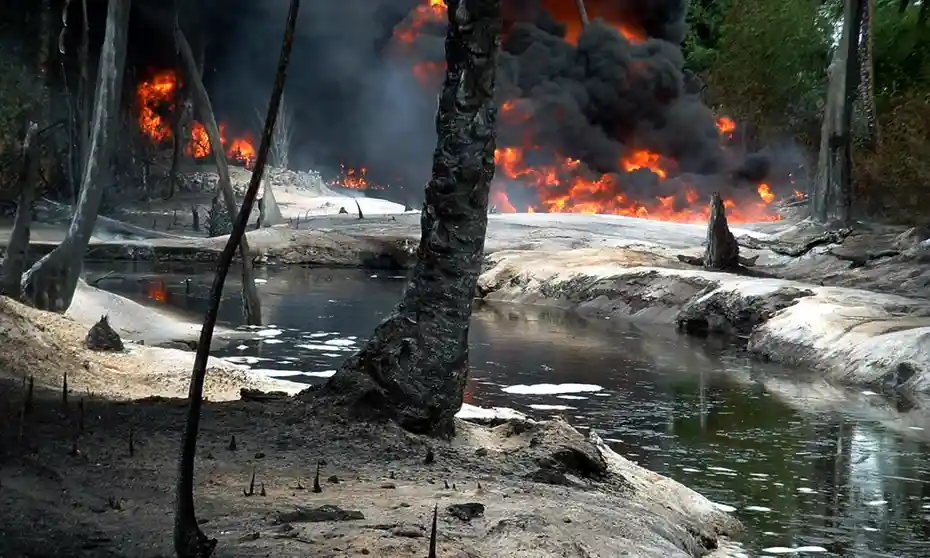
An explosion at an illegal oil processing plant in Nigeria’s Rivers state killed more than 100 people overnight, according to a local government official and an environmental group.
“The fire broke out at an illegal bunkering site, affecting over 100 persons who were charred beyond recognition,” said Goodluck Opiah, the state commissioner for petroleum resources.
Because of the unemployment and poverty in the oil-producing Niger Delta, illegal crude refining has become a lucrative enterprise, but it has terrible repercussions. Crude oil is extracted through a network of pipes controlled by large oil firms and processed into products in improvised tanks.
The risky method has resulted in a number of fatalities and has damaged a region already plagued by oil leaks in fields, streams, and lagoons.
Several automobiles in a line to acquire illegal fuel were torched in the explosion, according to the Youths and Environmental Advocacy Centre.
International News Agency’s Fidelis Mbah said that there are dozens of illegal oil businesses scattered around southern Nigeria.
“The unemployed youth are trying to produce oil on their own in order to sell to survive,” he said, speaking from Abuja. “The youths know that this is dangerous but because of the poverty levels, they have taken to [working in] illegal refineries.”
“The government said the owner of the illegal refinery is presently on the run and they have declared him wanted,” Mbah added. “They’re hoping that if he’s apprehended, they will find out exactly what happened.”
In October, an explosion and fire at another illicit refinery in Rivers state killed at least 25 people, including several children.
Local authorities announced in February that they had begun a crackdown to try to stop the refining of stolen petroleum, but with little apparent result.
Nigeria, Africa’s largest oil producer and exporter, is estimated to lose 200,000 barrels of oil a day – more than 10% of production – to those tapping or vandalising pipelines, according to government officials.
As a result, oil companies have been obliged to declare force majeure on oil and gas shipments on a regular basis.
