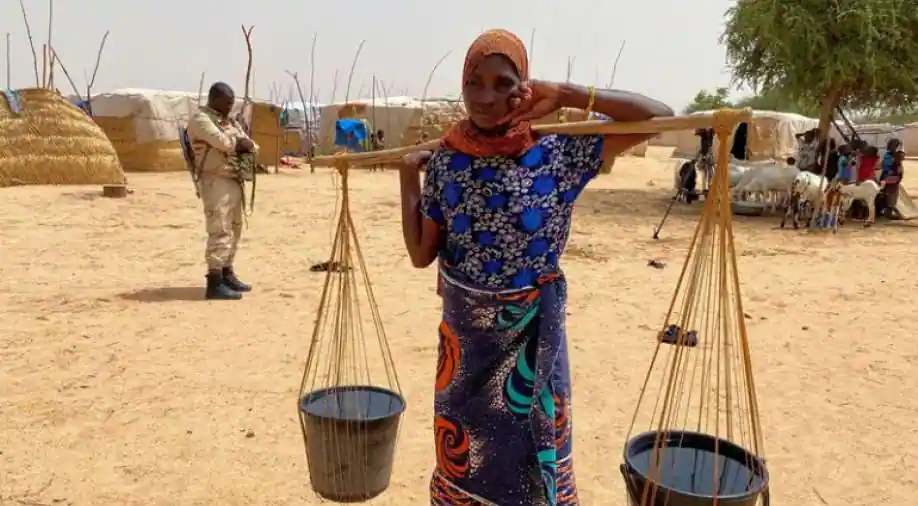
According to international aid organisations, about 27 million people in West Africa are hungry, making it the region’s worst food crisis in a decade.
Eleven prominent international organisations, including Oxfam, ALIMA, and Save the Children, issued a devastating statement on Tuesday warning that the amount could potentially grow to 38 million by June.
They warned that unless immediate action is taken, the growth will signal “a new historic level” and a jump of more than a third over the previous year.
The warning comes a day before a virtual conference on the Sahel and Lake Chad food and nutrition crisis.
Since 2015, the number of people in the area – which includes Burkina Faso, Niger, Chad, Mali, and Nigeria – who require emergency food assistance has nearly quadrupled, rising from seven to 27 million.
Drought, floods, conflict, and the economic repercussions of COVID-19, which has displaced millions and is “driving them to the verge,” according to Assalama Dawalack Sidi, Oxfam’s regional director for West and Central Africa.
“There isn’t enough food, much less food that is nutritious for youngsters.” We must act quickly to assist them since their health, future, and even lives are in jeopardy,” said Philippe Adapoe, Save the Children’s West and Central Africa director.
According to the United Nations, 6.3 million children aged 6 to 59 months would be chronically malnourished this year, up nearly 30% from 2021.
“I was almost out of milk, so I fed my baby something else.” He frequently refused to take it and as a result, he lost weight. He also had diarrhoea, which made his health worse,” said Safiatou, a mother who had to abandon her community in Burkina Faso due to unrest.
Families’ food supplies are becoming increasingly scarce, especially in the central Sahel, and families are increasingly being compelled to sell their properties, jeopardising their productive ability and their children’s future.
Girls are dropping out of school or being coerced into early marriage, as is common during times of crisis.
“Rainfall was scarce. There is no longer any food available. The sheep are becoming thinner due to a shortage of grass, forcing us to sell them at a loss. Ramata Sanfo, a herder from Burkina Faso, remarked, “I used to have 12 sheep, but now I just have one left.” “I’d like my cattle back so that I can have enough money to send my kids back to school.”
To make matters worse, experts believe that Russia’s invasion of Ukraine will raise global food costs by 20%, “an unsustainable increase for an already vulnerable population.”
The dispute is expected to restrict wheat supply in the six West African countries that import at least a third, if not more, of their consumption volumes from the fighting countries.
Denmark has declared that it will defer almost half of its bilateral development assistance to Burkina Faso and Mali this year in order to cover the reception of persons displaced from Ukraine, according to the statement.
