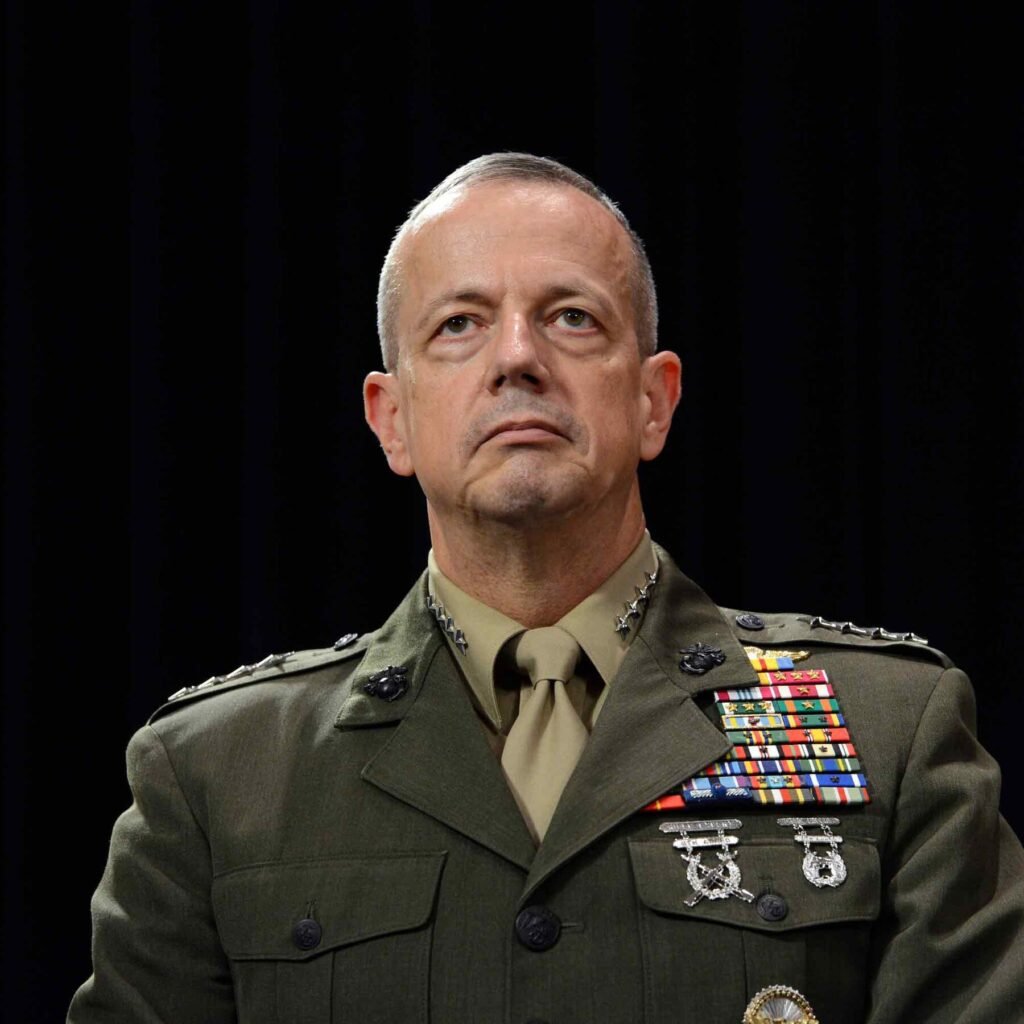
Authorities say a retired four-star general suppressed “incriminating” documents and lied about his role in an unlawful foreign lobbying campaign on behalf of Qatar. The FBI has seized his computer data.
Former Marine General John R Allen, who led US and NATO forces in Afghanistan before being appointed to run the renowned Brookings Institution think-tank in 2017, is facing a potential criminal charge, according to new federal court files released Tuesday.
It’s part of a broader probe that includes Richard G Olson, a former ambassador to the United Arab Emirates and Pakistan who pled guilty to federal charges last week, and Imaad Zuberi, a well-known political fundraiser who is serving a 12-year sentence for corruption. As part of the investigation, several members of the US Congress have been interviewed.
The court documents outline Allen’s alleged behind-the-scenes efforts to assist Qatar influence US policy in 2017, when the gas-rich Persian Gulf monarchy and its neighbours were embroiled in a diplomatic dispute.
According to the documents, Zuberi “viewed the diplomatic crisis as a business opportunity” and began working on selling lobbying services to Qatar. He contacted Olson, who in turn brought in Allen.
“If we can do this, we will own half of Qatar,” Zuberi wrote to Olson in a WhatsApp message cited in the filing.
US federal law stipulates that an individual lobbying for a foreign government must register with the Department of Justice.
“There is substantial evidence that these FARA violations were willful,” FBI agent Babak Adib wrote in a search warrant application, referring to the Foreign Agents Registration Act.
Allen allegedly lied to US officials about his role in the lobbying campaign and neglected to disclose “that he was simultaneously pursuing multimillion-dollar commercial partnerships with the government of Qatar,” according to Adib.
During a 2020 interview with law enforcement officials, the FBI claimed Allen offered a “false account of events” about his work for Qatar and neglected to produce key email exchanges in response to an earlier grand jury subpoena.
The fresh filings elicited no response from Allen. He has previously denied ever operating as a Qatari agent, claiming that his attacks on Qatar in 2017 were driven by a desire to prevent a Gulf conflict from erupting, putting US troops at danger.
Last Monday, Allen’s spokesman, Beau Phillips, told The Associated Press that Allen “voluntarily assisted with the government’s inquiry into this subject” and that he “did not receive any compensation for his services.”
Financial incentives
Saudi Arabia, the United Arab Emirates, and other Gulf countries imposed a diplomatic and economic boycott on Qatar in June 2017 over alleged ties to “terrorist” organisations and other concerns.
President Donald Trump appeared to lean against Qatar shortly after the boycott was established.
The court papers said Allen played an important role in shifting the US’s response.
Allen allegedly pressured then-National Security Adviser HR McMaster to have the Trump administration adopt a more Qatar-friendly tone, according to officials.
Allen stated in an email to McMaster that the Qataris wanted the White House or the US Department of State to release a statement urging all parties involved in the Gulf diplomatic crisis to “act with moderation.”
Two days later, then-Secretary of State Rex Tillerson issued a statement calling on other Gulf countries to “lift the blockade against Qatar” and asking “that there be no further escalation by the parties in the area,” according to federal law enforcement officials.
The Qatari foreign ministry and the Qatari embassy in Washington, DC have both declined to comment on the incident.
According to federal law enforcement officials, Olson and Allen travelled to Qatar to meet with the country’s emir and other high officials as part of the lobbying operation.
Allen intended to “have a conversation” with Olson and Zuberi about his salary before they travelled to Doha, according to the affidavit.
Even though he wasn’t giving a speech, Allen recommended in an email that he be given a $20,000 “speaker’s fee” for the weekend trip, and that they later “work out a fuller arrangement of a longer-term connection,” according to the affidavit.
According to the affidavit, Zuberi funded Allen’s first-class flight to Qatar, but there is no evidence that the speaker’s fee was paid.
Allen also had other financial incentives for helping the Qataris and maintaining strong ties to its top leaders, the FBI said.
“At the same time he was lobbying US government officials on behalf of Qatar, Allen pursued at least one multimillion-dollar business deal with the Qatari government on behalf of a company on whose board of directors he served,” the affidavit said.
