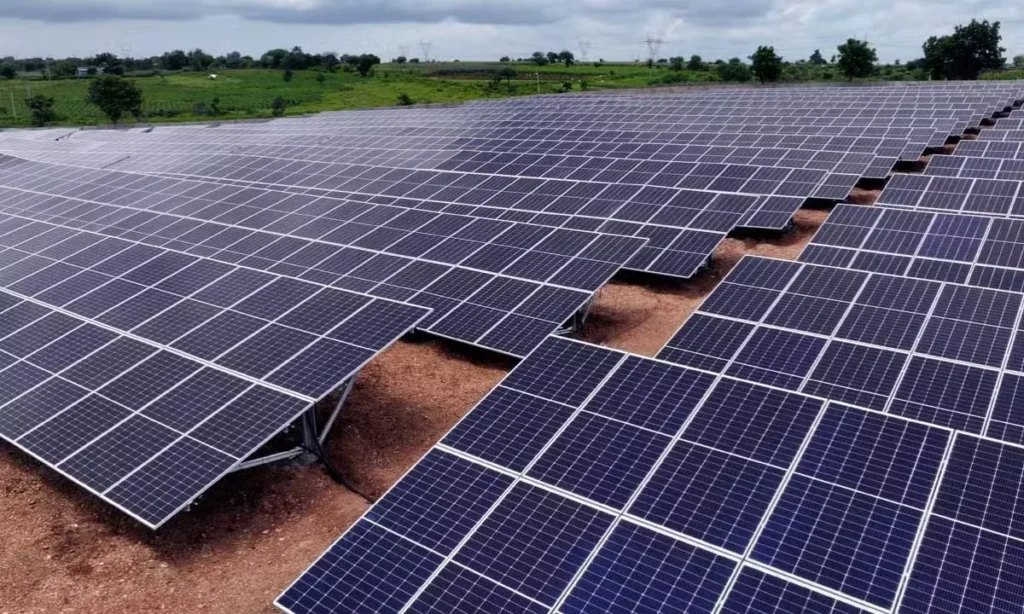
The Punjab government has approved the second phase of its CM Solar Panel Scheme, increasing the programme’s target from 90,000 to 100,000 households as Chief Minister Maryam Nawaz Sharif seeks to expand access to solar energy and help consumers reduce electricity expenses.
The decision was taken during a special meeting chaired by Maryam Nawaz, where Provincial Minister Faisal Khokhar and the Energy Secretary briefed the chief minister on the scheme’s progress and future plans.
The expansion will allow an additional number of households to benefit from solar power as the provincial government continues its efforts to reduce dependence on conventional electricity supplies.
Officials told the meeting that the first phase attracted more than 350,000 applications, reflecting strong public interest in the initiative. A total of 89,869 households received solar panels under the programme, while beneficiaries reported lower electricity bills after switching partly to solar energy.
According to the Punjab Energy Department’s public survey, participating households experienced a significant reduction in their electricity expenses.
The meeting was also informed that some beneficiaries reported savings approaching half of their previous bills, although actual savings vary according to electricity consumption and household usage.
The scheme is part of Punjab’s broader effort to promote renewable energy at the household level and reduce the financial pressure of electricity costs on consumers. The government has previously extended the application deadline following strong demand for the programme.
Beyond household installations, Maryam Nawaz approved a pilot project to distribute 5,000 solar panels in Cholistan. She also granted in-principle approval to convert water supply schemes at 40 locations in the region to solar power, aiming to improve access to electricity for essential water infrastructure.
The chief minister also directed authorities to conduct energy audits of major public hospitals across Punjab. Solar installations will be planned according to the electricity requirements of individual hospitals, allowing officials to assess their energy consumption before determining the appropriate system capacity.
The provincial government has also made progress in introducing renewable energy at educational institutions. Officials reported that 76 schools have already been shifted to solar power under a pilot initiative.
The government intends to use the experience gained from these installations when considering further expansion.
In another development, the meeting gave in-principle approval to a pilot project aimed at generating electricity from 3,000 tonnes of waste.
Authorities were directed to prepare a broader plan for waste-to-energy and biofuel initiatives in collaboration with the Suthra Punjab programme.
Officials informed the meeting that Punjab generates approximately 490,000 tonnes of animal waste, which could potentially produce 7.15 billion cubic metres of biogas.
They also estimated that animal, agricultural and municipal solid waste combined could support electricity generation of around 1.6 billion units.
A separate briefing covered a proposed biorefinery in Nankana Sahib that would use rice straw, paddy residues and other agricultural waste as raw materials. The project could provide another route for converting agricultural leftovers into useful energy resources.
The latest decisions indicate that Punjab’s renewable energy programme is expanding beyond residential solar installations to include hospitals, schools, water supply infrastructure and waste-based energy production.
However, the second phase’s implementation schedule, beneficiary selection process and distribution arrangements have yet to be detailed.
