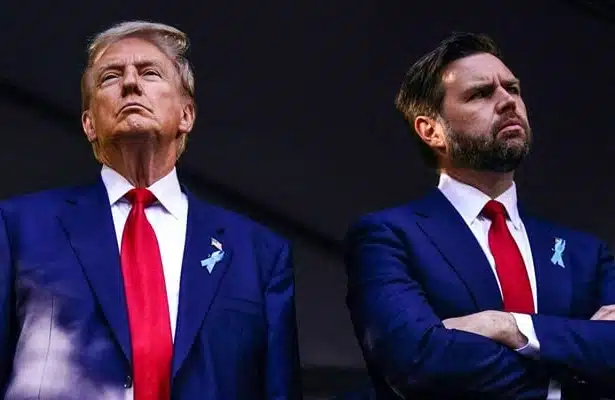
US Vice President JD Vance has rejected speculation about a growing disagreement with President Donald Trump over Washington’s approach to the war with Iran, insisting that both leaders remain fully aligned despite mounting political and economic pressure surrounding the conflict.
Speaking in an interview with Fox News host Laura Ingraham on Monday, November 16, Vance addressed questions about his earlier criticism of the war and its impact on the Republican Party’s performance in the 2026 midterm elections.
The vice president’s comments followed a controversial social media post earlier this month in which he blamed the conflict with Iran for the Republicans’ significant electoral losses, raising questions about possible differences within the Trump administration.
When asked directly whether he disagreed with the president over the Iran conflict, Vance dismissed the speculation, saying there was no difference between their positions.
“There’s no daylight,” Vance told Ingraham, adding that disagreements and policy discussions were normal within an administration but that the president ultimately made the decisions.
His remarks were reported by NBC News, which highlighted the vice president’s attempt to clarify his position following his unusually direct assessment of the political consequences of the war.
Vance also discussed Trump’s recent instructions regarding his responsibilities within the administration. According to reports, the president had told him that Washington did not need an agreement with Iran and wanted him to concentrate instead on alleged corruption and crime in Democrat-governed cities and states.
Trump had publicly directed Vance to give his full attention to investigating alleged wrongdoing in Democratic-led areas, including Minnesota, California and Illinois.
The directive came after Vance suggested that the Iran conflict had become a major political liability for Republicans and that the administration needed to understand why voters had turned against the party.
Despite defending his alignment with Trump, Vance acknowledged that the war had carried a significant political cost, particularly because of rising petrol and energy prices across the United States.
He said higher fuel costs had affected American households and contributed to public dissatisfaction with the administration.
However, the vice president argued that the increase in energy prices could not be attributed entirely to the Middle East conflict. He also pointed to decades of insufficient investment in America’s domestic energy infrastructure.
Vance specifically questioned why the United States had not built a new oil refinery since the 1970s, arguing that inadequate investment in domestic refining capacity had contributed to higher energy costs.
The vice president’s latest comments followed a November 4 post on X in which he openly blamed the Iran war for the Republican Party’s midterm defeat.
In that statement, Vance argued that many Americans who supported Trump and him in the 2024 presidential election had switched their support to Democratic candidates in 2026.
He identified opposition to the Iran war, concerns about inflation and the cost of living, demands for an America-first approach and dissatisfaction with US relations with Israel as important factors behind the shift in voter support.
His comments attracted considerable attention because they represented an unusually direct assessment of the administration’s foreign policy and its domestic political consequences.
According to CBS News, Vance argued that Republicans needed to acknowledge the impact of the conflict rather than ignore voters’ concerns.
Trump subsequently indicated that he did not disagree with Vance’s assessment that the war and its economic consequences had contributed to the Republican losses. However, the president maintained that military action against Iran had been necessary.
The disagreement over the political consequences of the conflict has fuelled speculation about the relationship between the president and his deputy, particularly as Vance is considered a potential Republican contender for the 2028 presidential election.
Nevertheless, Vance used his latest Fox News appearance to reinforce his loyalty to Trump and clarify that recognising the political costs of the war did not mean opposing the president’s decisions.
He also stressed that the administration would not allow the conflict to develop into another prolonged American military commitment.
Vance said Trump was considering his available options for bringing the conflict to an end, including diplomatic efforts and additional military or economic pressure on Tehran.
He expressed confidence that the president would ultimately find a way to conclude the war without allowing the United States to remain involved indefinitely.
The interview comes at a challenging time for the Trump administration, which faces growing pressure over energy prices, the economic impact of the Middle East conflict and the political consequences of its foreign policy decisions.
While Vance continues to acknowledge the electoral damage caused by the Iran war, he has made it clear that he does not consider himself to be at odds with Trump over the administration’s broader approach.
For now, the vice president appears focused on putting an end to speculation about an internal policy dispute while defending the administration’s commitment to avoiding a prolonged war with Iran.
