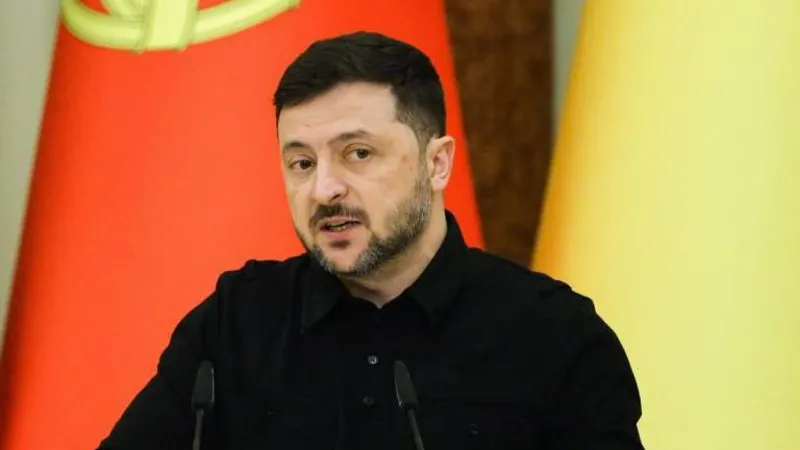
Ukrainian President Volodymyr Zelensky has revealed that US negotiators raised the possibility of Ukraine withdrawing from the eastern Donbas region in exchange for NATO membership during recent peace negotiations with Russia in Abu Dhabi.
The unexpected question reportedly emerged during two days of US-mediated discussions involving Ukrainian, Russian and American delegations. Zelensky described the idea as dangerous, warning that territorial concessions and changes to Europe’s security arrangements could create further instability.
According to a report by Reuters, Zelensky disclosed the details in comments released by his office on Saturday, November 14.
The Ukrainian president said American representatives asked what would happen if Ukraine became a NATO member and whether Kyiv would then consider withdrawing from Donbas.
He indicated that this was the first time Washington had directly raised the possibility of connecting Ukraine’s NATO membership with territorial concessions during the negotiations.
Zelensky believes such an arrangement could create serious risks for European security, particularly if Russia uses territorial disputes to weaken NATO’s position and influence the continent’s future security structure.
Despite the discussion, Ukraine has maintained that it will not voluntarily surrender its territory to Russia. Zelensky also stressed that he does not have the authority to make such a significant national decision independently.
He explained that if Western partners presented a comprehensive agreement containing acceptable security guarantees and other essential conditions, he would consider putting the proposal to a national referendum.
According to the Ukrainian president, any potential agreement would need to include meaningful security guarantees from NATO and the European Union, continued support for a strong and properly funded Ukrainian military, and financial assistance for the country’s reconstruction.
He also reiterated that Ukraine would not legally recognise Russian sovereignty over territories currently occupied by Moscow.
The possibility of alternative security arrangements was also discussed during the negotiations. However, American officials reportedly indicated that guarantees modelled on NATO’s collective defence provisions would not necessarily involve deploying US troops on Ukrainian territory.
The latest developments followed two days of negotiations in Abu Dhabi on November 10 and 11, where US special envoys Steve Witkoff and Jared Kushner participated in discussions aimed at finding a path towards ending the war.
The talks brought together representatives from Ukraine, Russia and the United States but failed to produce a major breakthrough on territorial disputes or a broader ceasefire agreement.
One of the few positive outcomes was an agreement in principle to organise a large-scale prisoner exchange involving more than 1,000 people from each side. The final numbers and arrangements were still being discussed following the meetings.
However, efforts to secure a separate ceasefire covering energy infrastructure reportedly made little progress.
Zelensky said Russian representatives were unwilling to agree to a halt in attacks on energy facilities, adding that Moscow appeared to be concentrating its efforts on the coming winter campaign.
The Ukrainian president also accused Russian President Vladimir Putin of using humanitarian arrangements around the contested city of Kostyantynivka in Donetsk region as a negotiating tool.
According to The Associated Press, Zelensky also raised concerns about Moscow’s attempts to reshape Europe’s wider security arrangements before resolving the war in Ukraine.
He rejected the idea of negotiating a completely new European security framework while fighting continues, arguing that ending the war should come before broader discussions about the continent’s future security structure.
European leaders have also expressed support for Ukraine’s position that the continent should have a direct role in negotiations concerning its security.
During meetings in Dublin, European representatives discussed plans to ensure that major European countries participate in future rounds of negotiations rather than remaining outside discussions between Washington and Moscow.
Zelensky also rejected proposals that would require Ukraine to formally adopt permanent neutrality. Such a move would involve changing the country’s constitution and would represent a major shift in its foreign and security policy.
The Ukrainian president’s comments followed meetings with European leaders in Denmark and Ireland, where he discussed the ongoing diplomatic efforts and the need for stronger international support.
Meanwhile, the Abu Dhabi negotiations have highlighted the considerable differences that remain between Ukraine and Russia, particularly over territorial control, NATO membership and future security guarantees.
Although the proposed prisoner exchange represents progress on humanitarian issues, disagreements over the future of Donbas and the conditions for ending the war remain unresolved.
For now, the possibility of Ukraine exchanging territorial withdrawal for NATO membership remains a question raised during diplomatic discussions rather than an agreed settlement. Kyiv continues to reject surrendering its land, while Zelensky maintains that any eventual peace agreement must provide credible protection against future Russian aggression.
