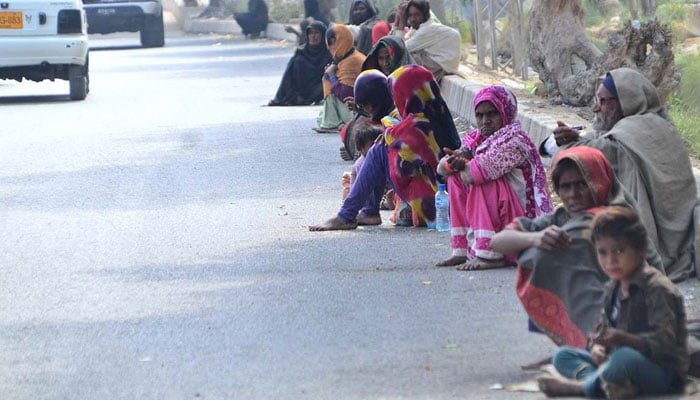
The Punjab Assembly’s Committee on Home Affairs has unanimously approved legislation proposing tougher penalties for parents and guardians who use children for begging or allow others to exploit them for the purpose.
The Punjab Vagrancy (Amendment) Bill, 2026, proposes imprisonment ranging from three months to three years and fines between Rs. 100,000 and Rs. 300,000 for those found involving children in begging or negligently failing to prevent their exploitation.
The committee approved the bill during a meeting chaired by MPA Safdar Hussain Sahi on Tuesday. Assembly members and officials from relevant government departments also attended the meeting.
The proposed amendments seek to strengthen legal protections for children, improve enforcement against organised begging networks and establish a coordinated system for monitoring and rehabilitating individuals taken into custody.
Punjab Proposes Raising Child Protection Age to 16
One of the major changes proposed in the legislation is an increase in the protected age of children under the Punjab vagrancy law from 14 to 16 years.
Under the proposed amendments, parents and guardians could face criminal penalties if they employ children for begging, permit other individuals to use them for the purpose or negligently fail to prevent their exploitation.
The proposed punishment includes imprisonment of three months to three years, along with fines ranging from Rs. 100,000 to Rs. 300,000.
The changes seek to extend legal protection to older children who may be exposed to exploitation through street begging and organised networks.
The bill proposes amendments to the Punjab Vagrancy Ordinance, 1958, incorporating provisions introduced through an earlier amending ordinance issued in 2026.
Social Welfare Director General to Oversee Anti-Begging Operations
The proposed legislation also introduces changes to the administrative structure responsible for tackling begging across Punjab.
It designates the director general of Social Welfare and Bait-ul-Maal, Punjab, as the controller responsible for coordinating anti-vagrancy operations and overseeing rehabilitation activities.
The proposed responsibilities include:
- Coordinating anti-begging operations among relevant government departments.
- Inspecting welfare and rehabilitation centres.
- Maintaining a centralised database of individuals taken into custody and subsequently rehabilitated.
- Issuing standard operating procedures for enforcement activities.
- Supervising rehabilitation and reintegration programmes.
The centralised system is intended to improve coordination between government departments and strengthen monitoring of people placed in welfare and rehabilitation facilities.
It would also provide authorities with a mechanism to maintain records and assess the progress of rehabilitation programmes.
Proposed Law Targets Child Exploitation and Organised Begging
The amendments are intended to address the involvement of children in begging, including cases in which families or organised networks use minors to collect money from the public.
Child begging can expose minors to exploitation, unsafe working conditions, interrupted education and other risks associated with street-based activities.
The proposed legislation seeks to strengthen accountability by extending responsibility to parents and guardians who involve children in begging or allow others to exploit them.
However, the effectiveness of the measures will depend on how authorities distinguish deliberate exploitation from situations involving severe economic hardship.
Adequate rehabilitation facilities, trained staff, educational support and financial resources will also be necessary to support children removed from begging activities.
Bill Awaits Further Legislative Process
The unanimous approval by the Committee on Home Affairs represents a step forward in the provincial legislative process, but it should not be confused with final enactment of the proposed amendments.
The bill must proceed through the remaining legislative requirements before its provisions can become part of provincial law in their proposed form.
The legislation would replace the earlier amending ordinance issued in 2026 and incorporate its provisions into the Punjab Vagrancy Ordinance, 1958, through the legislative process.
Once approved through the required process, the amendments would provide authorities with an updated framework for addressing child begging, coordinating enforcement and supervising rehabilitation across Punjab.
