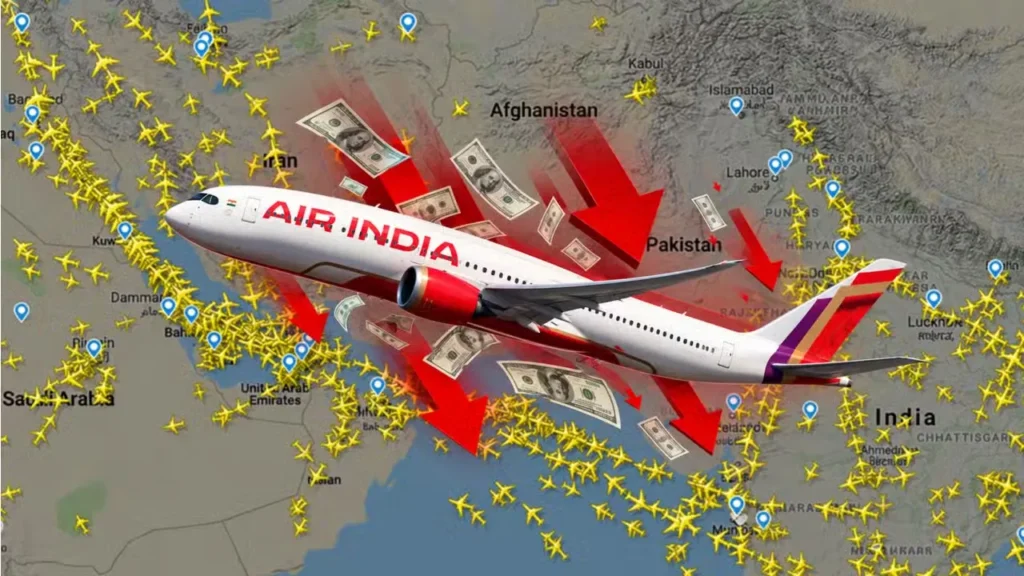
India’s aviation industry is facing mounting financial pressure from longer flight routes and higher operating costs following Pakistan’s closure of its airspace to Indian aircraft in April 2025, with industry losses estimated at around $2 billion, according to media reports.
The impact is becoming more visible as Air India prepares to suspend its Delhi–Vienna service from October 31 and its Delhi–Birmingham route from November 1.
The airline is also reviewing parts of its international network as it deals with rising jet fuel prices, maintenance requirements and limited aircraft availability.
According to Aviation Week’s October 14 report, the two routes are being removed from Air India’s winter 2026-27 schedule. The changes affect direct connections between New Delhi and the two European cities.
Air India Faces Higher Operating Costs
Air India’s route reductions come amid pressure from several operating challenges, including longer flight paths caused by airspace restrictions, higher fuel expenses and aircraft undergoing maintenance or cabin refurbishment.
The airline has also announced broader international schedule adjustments. In an earlier official statement on its international network, Air India cited an exceptional operating environment and outlined changes to services across several regions.
Reports cited by Express News put Air India’s annual losses associated with the Pakistani airspace closure at between $455 million and $591 million. The figures have not been independently verified here and should be understood as reported estimates rather than audited losses attributable solely to the restriction.
The airline is also dealing with limited availability of Boeing 787 aircraft, as maintenance and cabin upgrades affect its operating capacity. These factors, combined with higher fuel costs, have contributed to pressure on its international operations.
Pakistan’s Airspace Restrictions Force Longer Routes
Pakistan closed its airspace to Indian aircraft on April 23, 2025, following the Pahalgam attack and the subsequent deterioration in relations between the two countries.
The restrictions have forced affected Indian airlines to avoid Pakistani airspace on certain international routes, requiring some flights to travel through alternative corridors, including routes over Iran or Central Asia.
The longer journeys increase flying time and fuel consumption, raising operating costs for airlines serving Europe and North America. Industry reports have estimated that some affected flights take between 30 minutes and three hours longer, depending on the destination and route.
A report published by Dawn in September 2026 documented a further extension of Pakistan’s restrictions through October 24. The report on the airspace ban provides background on the restrictions and their implementation through a Notice to Airmen (NOTAM).
The estimated $2 billion in industry losses reflects reported financial effects across Indian aviation. It should not be interpreted as a confirmed figure for Air India alone or as a measure of losses caused exclusively by the airspace closure.
More International Route Changes Under Consideration
Air India is reportedly considering further adjustments to its winter schedule, including possible changes to services between Delhi and Copenhagen and reductions in flights to London Gatwick and San Francisco.
The airline’s network decisions come as carriers balance demand, fuel costs, aircraft availability and the economics of operating long-haul routes.
The suspension of Delhi–Vienna and Delhi–Birmingham services will reduce direct travel options between India and those destinations during the winter schedule period. Passengers booked on affected flights should confirm rebooking arrangements and alternative travel options directly with Air India.
Pakistan Maintains Restrictions on Indian Aircraft
Pakistan’s airspace restrictions have affected aviation operations on both sides of the border.
In August 2025, Pakistan’s Defence Ministry informed the National Assembly that the Pakistan Airports Authority had recorded a revenue shortfall of Rs4.1 billion between April 24 and June 30, 2025, following the loss of overflight revenue from Indian aircraft.
The figures were reported by Dawn in its coverage of the parliamentary response. The report on Pakistan’s aviation revenue shortfall provides a separate measure of the financial impact on Pakistan’s aviation authorities.
The continued restrictions illustrate how the aviation consequences of the dispute extend beyond diplomatic relations, affecting airline operating costs, passenger connections and airport revenue.
The full financial impact on Indian airlines will depend on how long the restrictions remain in place, the routes affected and the extent to which carriers can adjust their schedules and operations.
