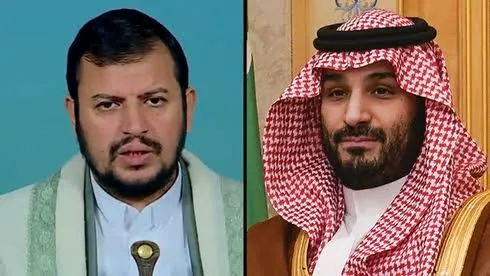
In recent weeks, the fighting in Yemen has taken a drastic turn. The Iran-backed Houthi Militia has taken over strategic Mokha port from forces aligned with Yemen’s internationally recognized government after fierce fighting. The Houthis now control the Bab el-Mandeb Strait, a vital chokepoint for global trade.
The Houthis have announced that the strait is open for international shipping while imposing an embargo on Saudi-linked vessels. With the original goal of avoiding the threat posed by the Strait of Hormuz, Saudi Arabia has an east-west crude oil pipeline that can move oil from the eastern oil reserves to the Red Sea coast. With the Houthis now gaining strategic control over the Red Sea, Saudi’s oil trade has come under increasing pressure.
So why has the Houthi-Saudi conflict resumed? How far are the allies of Saudi Arabia willing to go to defend it? Can the new Mecca Joint Defense Agreement provide meaningful security support to Saudi Arabia? And finally, why is Saudi Arabia’s biggest ally, the United States, opening a diplomatic channel with the Houthis during this conflict?
The Houthi takeover of Sana’a in 2014 and the Saudi-led intervention that followed in 2015 are the origins of the ongoing crisis in Yemen. Millions of people have been displaced by the fighting, and millions more are in need of humanitarian aid, creating one of the worst humanitarian disasters in history. Saudi Arabia’s 1,300-kilometre border with Yemen and its belief that the Houthis are an Iranian-aligned militia and a security threat have also motivated Saudi Arabia to become involved.
Riyadh supported Yemen’s internationally recognized government (the PLC from 2022) following the intensification of the civil conflict in 2014 and Riyadh’s perception of the Houthis as an Iranian-aligned security threat. As a result, it went beyond financial and political backing to act militarily.
Leading a coalition of Arab nations, Saudi Arabia began a military intervention in Yemen on March 26, 2015. The initial goal of the campaign was to reverse Houthi advances and reinstate the internationally recognized government. Over 25,000 coalition air attacks were recorded by the Yemen Data Project between 2015 and 2022, demonstrating the length of the Saudi-led air campaign.
Although it did not result in a long-term political settlement, the UN-mediated truce in April 2022 brought about a notable decrease in violence. Nevertheless, after years of relative de-escalation and political stalemate, the conflict has been reignited.
On July 13, Yemeni government forces backed by Saudi Arabia struck Sana International Airport. The Houthis’ response was immediate. The de-escalation that had followed the 2022 UN-brokered truce was declared to be over by the Houthis, and they sent a retaliatory missile strike at Abha International Airport in Saudi Arabia.
The Houthis declared a naval blockade on Saudi Arabia and Saudi-affiliated commercial vessels in the Red Sea on July 20.
The fighting soon escalated. In early September, the Houthis initiated a large-scale offensive against the Saudi-backed Yemeni force along the Red Sea coast. Saudi Arabia also carried out at least 54 air strikes on different Houthi strongholds. In response, the Houthis attacked Saudi territories, especially the regions surrounding Abha and Khamis Mushait, using missiles and drones.
Now, Bab el-Mandeb has become “Achilles Heel” for Saudi Arabia’s oil trade. An Iraqi militia’s drone attack heavily damaged Saudi’s East-West Crude Oil pipeline. Not only is Saudi Arabia losing access to one path, but the alternatives it developed to get around one vulnerability are now being targeted.
Within Saudi Arabia, Houthis have carried out coordinated missile and drone attacks. Abha, Jazan, Khamis Mushait, and Najran were struck by Houthi drone and missile attacks. Saudi Aramco had to halt operations when fires broke out at domestic energy plants. There were 73 civilian injuries. A drone was seized at low altitude over structures close to King Khalid Air Base. In the surrounding city, windows broke.
Despite having a sizable military, Saudi Arabia is becoming more strategically vulnerable due to the conflict’s geographic location, which is straining its energy infrastructure, and the uncertainty surrounding the level of outside security assistance.
According to two regional sources, Saudi Arabia has requested air defense assistance from France, Britain, and Egypt because it is running low on missile interceptors. Riyadh accused the Houthis of attempting to target the holiest city in Islam with a drone. The region condemned the attack but showed no signs of providing military assistance. This is a clear sign that no allies of Riyadh are willing to get involved in this conflict.
Saudi Arabia is facing isolation on the battlefield. The recent Mecca Security Pact’s members, which are Pakistan and Türkiye, have also shown restraint to get involved in this heightened escalation. Riyadh reached Pakistan for military help; however, last week, Pakistan’s Foreign Office stated that Islamabad will take action “when time comes” and that no military reaction was currently being discussed under the agreement.
“For Saudi Arabia to be struck from both the south and the north and targeted by attackers based in Iraq is not acceptable,” Turkish Foreign Minister Hakan Fidan stated, referring to the drone attack on the East-West pipeline by an Iraqi militia and Houthi attacks from Yemen.
Both the partners in this strategic pact are cautious about any military move. Let that be deploying troops or providing air support.
Additionally, Pakistan and Türkiye are thought to be unenthusiastic about getting directly involved in hostilities because they want to continue serving as mediators in the disputes raging throughout the Middle East. Additionally, a Pakistani military official emphasized that Pakistan is still working with regional allies to find “a negotiated, peaceful outcome” to the regional crisis brought on by the war on Iran by the United States and Israel.
These ambiguities have put this collective defense commitment on a vital test.
The last concern that Riyadh has to deal with is the USA’s approach. A significant Middle Eastern security ally of the United States is Saudi Arabia. But the same state has not shown any interest in getting into this conflict.
Furthermore, the Omani government hosts a private backdoor diplomatic channel in the U.S. Embassy in Muscat that is used by the Houthi movement and the United States. Both President Donald J. Trump and JD Vance have publicly acknowledged the meeting taking place.
Nabeel Khoury, a former deputy US ambassador to Yemen, claimed that the Trump administration and the Houthis had reached a “kind of tacit understanding”.
“The Houthis are promising the American administration that American and international navigation will not be affected in the Red Sea, but the only danger is to Saudi ships or those carrying Saudi oil,” Khoury continued.
The US and the Houthis are willing to keep the 2025 ceasefire. It seems that Washington is making a distinction between directly supporting Riyadh and defending its fundamental maritime interests.
In this renewed conflict, Riyadh has somewhat fallen short of securing any help from its partners. It has a regional influence; still, no state has publicly committed to providing support militarily. This has left Saudi in a complicated situation. They claimed the Houthis targeted Mecca, the holiest site of Islam, which hasn’t been echoed by Middle Eastern states.
For Riyadh, this is a sobering reminder that military might and regional influence do not guarantee allies’ willingness to fight alongside it. More significantly, as the Houthis gain control over Bab el-Mandeb, Saudi Arabia’s allies appear increasingly focused on containing the conflict rather than entering it.
