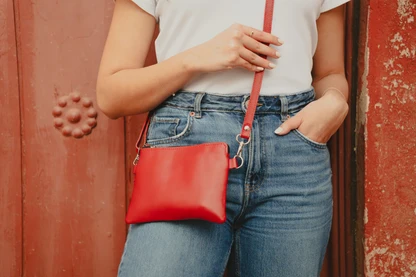
Nasreen clutched the red purse, her fingers bloodless. It was an old, worn red purse of her dowry, its zipper long broken and held together now by a safety pin, and there was a small pension and borrowed cash that was the source of her family livelihood.
“Ammi, will they expel me from the school?” Mehtab asked, his voice barely above a whisper.
Nasreen fixed his collar. “Hush, beta. I have it covered.”
“But the teacher shouted today,” Mehtab whispered, looking at his shoes. “He said if the last two months’ fees are not paid by noon, I cannot come to school. He said, “I’m a burden.”
“He will not bar you from school,” Nasreen replied with a shaking voice. “I won’t let him.” She cast eyes on her son, observing how thin his shoulders were, and something in her tightened. “Wear your shoes and come with me. Let him utter those words again, in front of me.”
As Mehtab rushed to find his shoes, she checked her red purse. The notes inside were folded into little squares, each one already spoken to someone: the grocer, the school, and the landlord’s son, who came every first of the month too ashamed to meet her eyes.
For twenty years she had been a wife, a mother, a woman perpetually owing everything except Nasreen. She couldn’t remember the last time someone had spoken her name for its own sake. She recalled Abdul Jabar’s weary gaze, the way he used to sit on the charpai as twilight came, rubbing his thumbs against his temples as if he were trying to force his burden back into his skull.
She recalled the creditors banging on the door in the week following his death, seven years back, and how she had stood at the threshold in her white dupatta, promising men she did not know that every rupee would be repaid. She had said it with such conviction that they trusted her. She almost had faith in herself.
“Is there sufficient, Ammi?” Mahjabeen enquired, leaning against the doorframe. Sixteen now, she had started to watch her mother the way one watches a lamp due to low oil.
“It has to be,” Nasreen replied.
“You look worn out.”
Nasreen released a soft hum. “Mmm. Just thinking about the market.”
It was not the market. It was the roof that dripped over where the young ones’ bed was. It was Mahjabeen’s college application, folded inside a schoolbag, which Nasreen pretended not to have seen.
It was Kehkashan’s cough and the cure that cost more than three days of wheat flour. But a mother’s cares were like the dough she kneaded each morning: flattened down, folded, and never allowed to rise where the children could notice.
“Fasten the door behind us, jaan,” she said. “Mind your sister.”
She stepped out into the midday heat with Mehtab’s palm gripped in hers. The lane was a chaos of grit and shouting. A vegetable hawker argued with a rickshaw driver, a radio crackled a cinema melody from somewhere above, and the odor of frying oil hung over everything like a dense mist. Every step felt more burdensome than the last, the weight of four children’s futures bearing down on her spine.
“Ammi, you’re griping too tightly,” Mehtab said.
“Sorry, beta.” She eased her fingers but did not let go. She glanced at the red purse once more. The bills were rumpled, moist from the sweat of her palms. It was enough. It was enough, and not one rupee extra.
She would ask the headmaster for a bit more time for the rest of the month. She would fold her hands if necessary. She had folded them for smaller troubles.
Honk. A van came down the lane too fast, the driver leaning on the horn as if noise could clear the road. Nasreen saw it late, much too late. She did not think. Her free hand shoved Mehtab hard toward the wall, and he stumbled and fell against the gutter, scraping both knees.
She did not catch the sound of the tyres. Then she found herself on the asphalt, and the sky pressed very close. It was the same sky she had once used to name her children, and it had gone the colour of ash. Mehtab, the moonlight. Mahjabeen, the one with the moon’s face.
Kehkashan, the galaxy. She had christened them on the roof at night, when Abdul Jabar was still breathing and the future still felt like something within one’s grasp.
She attempted to breathe. Something in her chest produced a faint wet sound, like a tap running dry.
“Ammi!” Tiny feet came running. Then his hands were on her face, his bruised knees leaving red marks into the road. “Ammi, get up. Ammi, please.”
Feet gathered around them: sandals, a bare heel scored with dirt. Someone’s shadow crossed her face and drifted away. Voices reached her from a distance, like the murmur of people at Friday prayers.
“Don’t touch her. Wait for the ambulance.”
“Is she still drawing breath?”
“Beta, who is she?”
Mehtab gazed up at the circle of strangers. His voice quivered, but it did not break. “She is my mother,” he replied.
She caught it. Of all that the day carried, the horns and the shouting and the squeal of the tyres, she heard that. It sounded odd in his small mouth, like a word from a language she had spoken only as a girl.
Her legs were gone from her, but her hand felt curiously weightless. She turned her eyes and located the red purse a few feet away, where it had slithered. A dark stain was spreading up the red cloth, and the crimson and the blood were becoming a single colour. The safety pin had come open. The tip of a note lifted in the hot wind and dropped again, like a small wounded sparrow.
“Red purse,” she whispered. “Mehtab… the red purse.”
He crawled to it and returned with it, holding it against his chest with both arms. He pressed it into her fingers. They closed around it, and then went slack.
“It’s all here, Ammi,” he said. “I went through it. It’s all here.”
She looked at him then, at his scraped knees and his tear-streaked face and the collar she had smoothed that morning. She had not lingered on the debts or the creditors or on the twenty years.
She thought only that he was alive. And the last thing she felt, beneath the noise of the street, was a small unfamiliar buoyancy, the weight of the red purse rising from her hand.
Somewhere across the city a school clock struck noon. Mehtab did not lift his head at the chime. He sat in the dust with the red purse in his lap, holding it the way she had gripped it, and he did not let go.
