
HUM TV drama Gulbahar has sparked debate among viewers after its latest storyline linked a married couple’s struggle with infertility to the decision to pursue a second marriage.
The plot has prompted questions on social media about how Pakistani television portrays childlessness, women’s choices and family relationships.
Written by Aliya Bukhari and directed by Mehreen Jabbar, the drama stars Sanam Saeed, Emmad Irfani and Komal Meer. Its story centres on relationships and personal challenges, but the latest development has drawn attention to the way infertility is addressed within the narrative.
Why Gulbahar’s Storyline Has Drawn Criticism
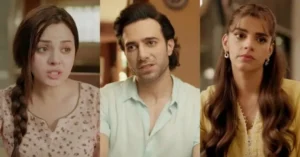
The drama follows Sheheryar and Sara, a couple whose relationship is portrayed as loving despite their difficulty conceiving a child.
In the latest plot development described by viewers, Sara arranges for her husband to marry an orphaned teenage girl in the hope of having a child. The decision has become a central point of discussion among the drama’s audience.
Some viewers have questioned why the story takes this direction instead of exploring other possibilities for parenthood or examining the couple’s emotional response to infertility in greater depth.
The criticism focuses not simply on the inclusion of a second marriage but on how the decision is framed and what it suggests about the expectations placed on women who cannot conceive.

Viewers Raise Questions About Infertility and Women’s Choices
Reactions shared online reflect differing views about the drama’s treatment of a sensitive subject. Some viewers have argued that the storyline risks reinforcing the idea that a couple’s difficulties conceiving must be resolved through another marriage.
Others have expressed disappointment with the project’s lead actors, particularly Sanam Saeed, whom some audiences associate with strong female characters and stories involving women’s independence.
Personal accounts shared by viewers have also highlighted the emotional challenges associated with infertility. Such responses illustrate why portrayals of childlessness can resonate strongly with audiences who have experienced similar circumstances.
However, criticism of a fictional storyline does not by itself establish the intentions of its writers or actors. The way the drama develops its characters and addresses the consequences of their decisions will shape how its message is ultimately understood.
The Significance of Introducing a Teenage Bride
The proposed marriage involving an orphaned teenage girl has added another dimension to the debate. Viewers have questioned the circumstances of the decision and the position of the young character within the relationship.
The development raises narrative questions about consent, personal agency, age and the balance of power within family arrangements. How these issues are handled on screen will be important to understanding the direction of the story.
At this stage, the available account of the controversy does not establish whether the drama will challenge the characters’ choices or present them as a resolution to their problems.
What the Controversy Says About Pakistani Television
The reaction to Gulbahar highlights the scrutiny Pakistani television dramas can face when addressing marriage, infertility and women’s roles within families.
Fictional dramas can explore controversial social practices without necessarily endorsing them. Their treatment of sensitive issues, however, depends on context, character development and the consequences shown on screen.
For viewers, the central question is whether Gulbahar will explore the emotional and social costs of its characters’ decisions or leave the second-marriage storyline largely unquestioned.
The drama’s subsequent episodes may provide greater clarity. Until then, the online reaction reflects viewers’ concerns about the storyline rather than a definitive conclusion about the message the production intends to convey.
About Tamoor Ahmed

Tamoor Ahmad has been covering politics since 2022.
