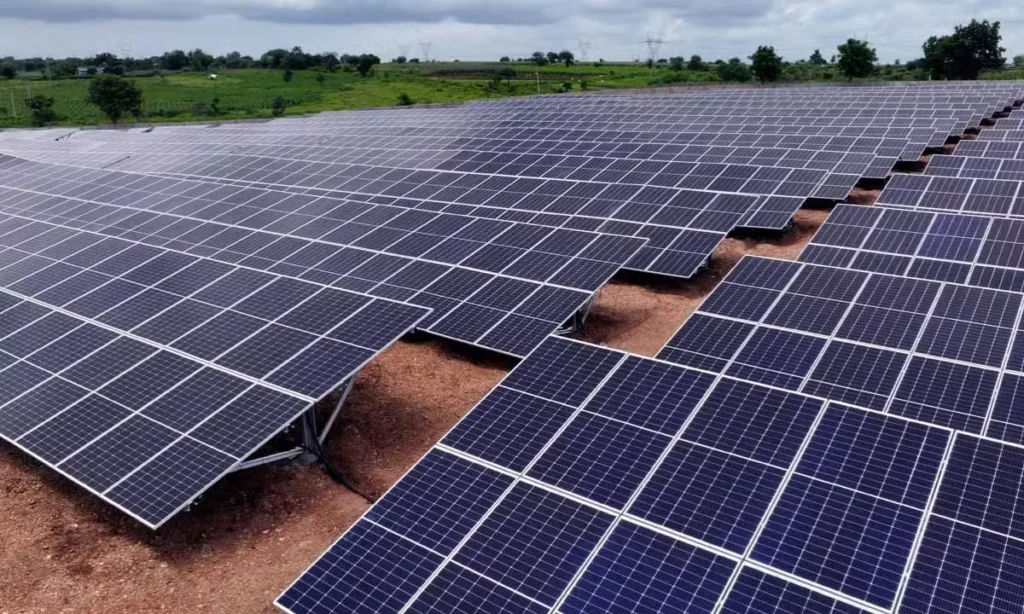
Pakistan’s solar power generation overtook nuclear energy by a wide margin in 2025, making solar the country’s largest electricity source, while nuclear generation also reached a record high, according to the World Nuclear Industry Status Report 2026.
The report estimates that Pakistan generated 36.3 terawatt-hours (TWh) of electricity from solar in 2025, around 61 percent more than its nuclear output. Nuclear generation increased 3.7 percent year-on-year to a record 22.5 TWh, compared with 21.7 TWh in 2024.
Solar Becomes Major Source of Electricity
The report estimates that solar accounted for around 21.6 percent of Pakistan’s total gross electricity generation in 2025 after output increased by 85 percent during the year.
However, the actual contribution of solar power could be even higher because a substantial amount of privately installed solar capacity operates behind the meter and is not recorded through the public electricity grid.
The rapid expansion of rooftop and private solar systems has also contributed to a decline in recorded electricity consumption, despite broader economic growth.
Pakistan’s Nuclear Output Hits Record High
While solar has expanded rapidly, Pakistan’s nuclear power plants also produced their highest-ever annual output in 2025.
Pakistan currently operates six nuclear reactors with a combined net capacity of around 3.3 gigawatts. All six reactors were built by China National Nuclear Corporation (CNNC).
The fleet includes the K-2 and K-3 reactors near Karachi and four CNP-300 units at the Chashma Nuclear Power Generating Station.
Pakistan is also expanding its nuclear capacity through the construction of the 1,000-megawatt Chashma-5 reactor. Construction formally began in December 2024, with completion expected by 2030.
According to the report, Chashma-5 is CNNC’s only ongoing nuclear new-build project outside China and one of only two non-Russian nuclear construction starts outside China during 2020-2025.
Pakistan Imports More Solar Panels
The scale of Pakistan’s solar expansion is reflected in the country’s imports of Chinese photovoltaic equipment.
Pakistan imported more than 58 gigawatts of solar panels from China between early 2017 and mid-2026. Around 40 GW, or 69 percent, arrived between 2024 and mid-2026 alone.
The report said Pakistan became China’s second-largest single-country market for solar panels, behind the Netherlands.
It also estimated that Pakistan installed roughly twice as much solar capacity over five years as France installed over a decade.
Nuclear Plants Face Higher Financing Costs
Despite the record nuclear generation, the report highlighted the financial costs associated with Pakistan’s newer nuclear facilities.
The Pakistan Economic Survey 2025-26 noted that debt repayment accounts for a significant portion of the cost of nuclear electricity, particularly for the K-2 and K-3 plants.
Their debt repayment period is estimated at 12 years, compared with an expected economic operating life of around 60 years.
Pakistan’s electricity mix is therefore changing rapidly, with privately installed solar expanding much faster than the country’s nuclear generation. The figures also highlight the growing role of distributed solar power outside the traditional grid while Pakistan continues investing in large-scale nuclear generation.
