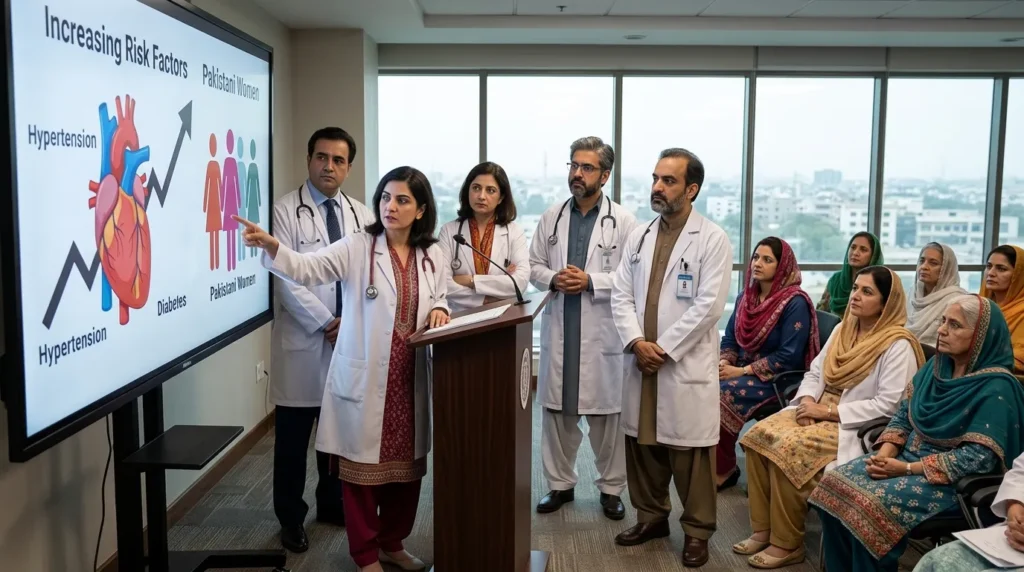
Pakistani women had the highest age-standardised death rate from ischaemic heart disease among five South Asian countries studied, according to health experts and a 2026 study based on Global Burden of Disease estimates.
Cardiologists, physicians and gynaecologists warned that high blood pressure, diabetes, obesity and physical inactivity are increasing cardiovascular risks among women, while poor screening and limited follow-up continue to leave many cases undetected.
The experts spoke at a press conference at the Karachi Press Club ahead of World Heart Day. The event was organised by Discovering Hypertension in collaboration with the Pakistan Cardiac Society, the Society of Obstetricians and Gynaecologists of Pakistan, the Pakistan Society of Internal Medicine and Go Red for Women.
Heart Disease Risk Often Overlooked in Women
Prof Dr Mansoor Ahmed of the Karachi Institute of Heart Diseases said the belief that women are less likely to develop heart disease has been disproved.
He said women often put their own health behind household responsibilities, while families may also give less attention to their medical needs. Limited physical activity further adds to cardiovascular risk.
Dr Mansoor said diabetes has become a major public health problem in Pakistan and frequently occurs alongside cardiovascular disease. He recommended regular screening for women with diabetes, high blood pressure or obesity.
Pregnancy Can Reveal Hidden Heart Problems
Prof Dr Tazeen Abbas, secretary general of the Society of Obstetricians and Gynaecologists of Pakistan, said women’s cardiovascular health requires attention during pregnancy, after childbirth and after menopause.
She said some women stop prescribed medicines during pregnancy or discontinue blood pressure treatment after delivery without consulting their doctors. She advised patients to seek medical guidance so medicines can be adjusted safely rather than stopped independently.

Dr Abbas also warned that high blood pressure diagnosed during pregnancy may be overlooked after childbirth even though associated health risks can continue.
She said pregnancy-associated cardiomyopathy can become serious if it is not identified and treated promptly. Anaemia and closely spaced pregnancies can also place additional strain on women’s health, making family planning, birth spacing and follow-up care important.
She advised women to exercise regularly and reduce their intake of bakery products, fried foods, soft drinks and sugary juices.
Screening Could Help Detect Heart Disease Earlier
Senior obstetrician and gynaecologist Dr Halima Yasmeen said heart disease had been detected in around 4% of pregnant women screened through her clinical service.
She said pregnancy can provide an opportunity to identify high blood pressure and previously undiagnosed heart conditions. Women identified with cardiovascular problems may require coordinated care involving obstetricians, physicians and cardiologists.
Prof Dr Shabnam Naveed, head of medicine at Jinnah Postgraduate Medical Centre and Jinnah Sindh Medical University, identified inadequate screening as one of the major barriers to prevention.
She said more than 90% of women attending the diabetes clinic at JPMC had cardiovascular risk factors, highlighting the relationship between diabetes, hypertension, obesity and heart disease.
Pakistan Records High Female Heart Disease Burden
Pakistan Cardiac Society General Secretary Prof Dr Fawad Farooq said stress can also contribute to cardiovascular disease.
He said Pakistan lacks an effective primary and secondary cardiovascular care network, resulting in specialised hospitals handling large numbers of patients with heart attacks and chest pain.
He also warned that some patients stop taking prescribed medicines soon after angioplasty, potentially increasing the risk of further complications. He called for stronger primary care, regular follow-up and continued adherence to prescribed treatment.
The concerns are supported by a 2026 study published in JACC: Asia, which compared Pakistan, India, Bangladesh, Nepal and Bhutan using Global Burden of Disease estimates.
The study found that Pakistan recorded the highest age-standardised death rate from ischaemic heart disease among women in 2021. It also found that Pakistan was the only country in the comparison where deaths relative to estimated cases were higher among women than men.
High blood pressure and diets low in vegetables and fibre were identified as leading contributors to heart disease deaths among Pakistani women.
PharmEvo Director Marketing Samar Iqbal said the Discovering Diabetes and Discovering Hypertension initiatives are helping identify people who may not know they have these conditions.
He said the campaign is now focusing on women’s heart health and bringing medical organisations together to encourage screening, prevention and timely treatment.
