Summary
- New US immigration rules taking effect on September 15 will change how international students are admitted and how long they can remain in the country, requiring students to keep closer track of their authorised stay.
- Existing students will not face an immediate deadline. The new rules do not mean that all international students currently studying in the US must submit a new application or leave the country on September 15.
- Columbia and Cornell have also provided students with guidance on the transition arrangements, while Stanford has noted that F-1 and J-1 students will no longer be admitted under the previous “duration of status” notation once the new system takes effect.
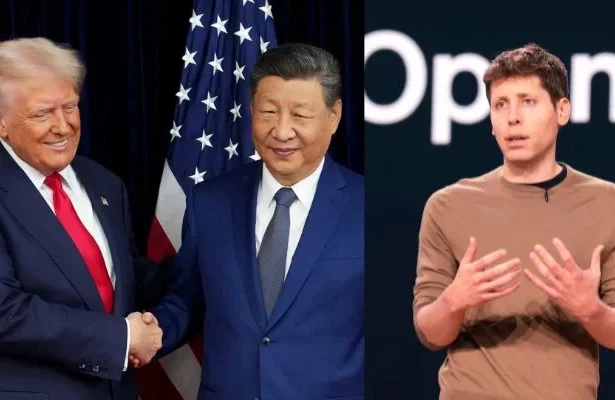
A potential U.S.-China pact on artificial intelligence guardrails could be momentous enough to warrant a Nobel Peace Prize, according to OpenAI CEO Sam Altman.
Speaking with Fortune, Altman suggested that the world’s two primary AI powerhouses establish a foundational agreement to prevent labs from taking excessive risks during the development of frontier systems.
Rather than pursuing an intricate international treaty, Altman advocated for a straightforward framework grounded in joint safety standards and evaluation protocols. He noted that both Washington and Beijing should easily align on defining acceptable boundaries for AI development risks.
Altman pointed to unified testing protocols as the cornerstone of this idea, noting the concept is simple enough to fit into a short document.
The OpenAI leader acknowledged that fierce AI rivalry between the United States and China is inevitable and vital for both economic and strategic reasons. However, he maintained that high-stakes competition shouldn’t rule out baseline cooperation on existential risks.
In Altman’s view, both superpowers can aggressively compete for tech dominance while simultaneously agreeing on guardrails to mitigate the broader dangers of advanced AI.
His remarks arrive just before U.S. President Donald Trump and Chinese President Xi Jinping meet at the White House on September 24—a high-stakes summit set against a backdrop of intense friction over trade, technology, and global leverage.
Floating the idea of a Nobel Peace Prize adds an intriguing political angle to the proposal, particularly given Trump’s well-documented desire for the honor.
If realized, a joint commitment to AI safety would mark a rare patch of common ground between two superpowers otherwise locked in a fierce battle for technological leadership.
