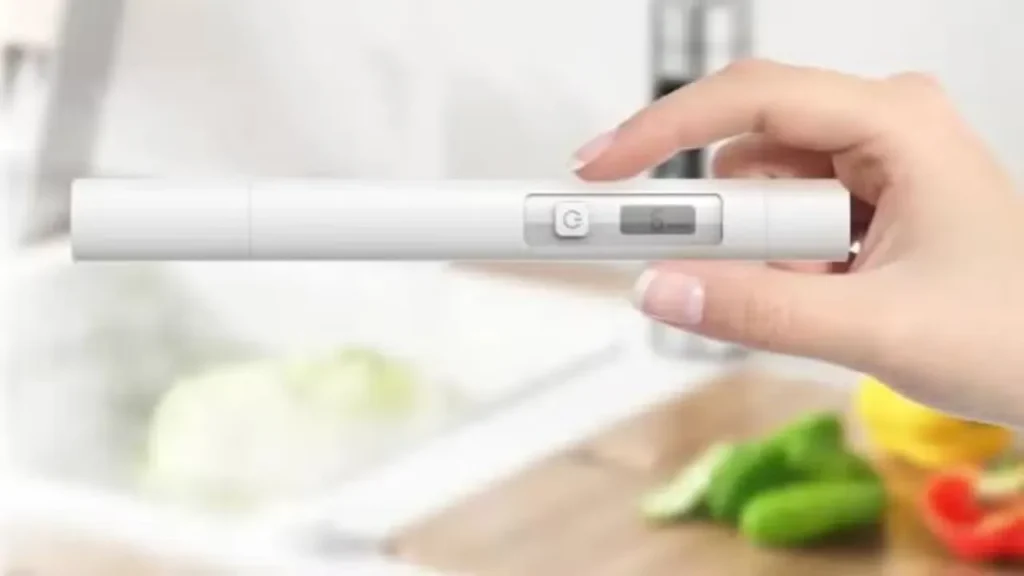
Compact digital TDS meters, commonly sold as water-testing pens, are becoming increasingly popular among households in Islamabad as consumers look for quick ways to check drinking water and monitor the performance of home filtration systems.
The pocket-sized devices can display a Total Dissolved Solids (TDS) reading within seconds and are widely available through online shopping platforms across Pakistan. Basic models generally sell for around Rs1,000 to Rs2,000, while more advanced multifunction devices cost more.
The growing interest comes as households increasingly rely on filtration plants, bottled water and reverse-osmosis (RO) systems and seek simple ways to monitor their water at home.
What Does a TDS Meter Measure?
A TDS meter estimates the concentration of dissolved substances in water, including salts and minerals, and typically displays the result in parts per million.
Consumers commonly use the devices to compare water from different sources or check whether an RO or filtration system is reducing dissolved solids.
However, water-quality specialists caution that a TDS reading should not be treated as a complete assessment of drinking water safety.
A TDS meter measures the overall amount of dissolved material but cannot identify the individual substances present in the water.
Low TDS Does Not Mean Safe Drinking Water
Saiqa Imran, Director of the National Water Quality Laboratory at the Pakistan Council of Research in Water Resources (PCRWR), said TDS is only one of several parameters used to assess water quality.
She said a handheld TDS meter cannot detect contaminants such as arsenic, nitrate, fluoride, heavy metals, bacteria, viruses and other disease-causing microorganisms.
This means water can have a seemingly acceptable TDS reading while still containing harmful contaminants.
Similarly, a very low TDS reading does not automatically indicate that water is of the highest quality.
According to Imran, domestic RO systems can remove dissolved minerals from water, leading some consumers to mistakenly assume that extremely low TDS readings are proof of purity.
She said readings such as 14, 20 or 30 milligrams per litre should not automatically be interpreted as evidence that drinking water is safer or better.
Why Laboratory Water Testing Still Matters
TDS meters can be useful as an initial screening tool for monitoring dissolved salts and minerals, but laboratory analysis is required to determine whether drinking water meets applicable quality standards.
Imran said water can contain bacteria or viruses even when its TDS level falls within an acceptable range. Chemical contaminants such as arsenic and nitrate also cannot be identified through a basic TDS measurement.
PCRWR recommends testing water for relevant parameters based on the contamination risks associated with a particular area.
For example, nitrate testing can be important in Rawalpindi and Islamabad, while arsenic, fluoride and other contaminants may require greater attention in areas where they are known to occur.
What Consumers Should Know Before Buying a TDS Meter
Households using TDS meters should understand what the device can—and cannot—tell them about their drinking water.
A TDS meter can help consumers:
- Compare dissolved-solids levels between water sources
- Monitor changes after installing an RO or filtration system
- Identify significant changes in dissolved mineral content
- Perform basic, preliminary water-quality checks
But it cannot confirm whether water is free from:
- Bacteria and viruses
- Arsenic
- Lead and other heavy metals
- Nitrates
- Fluoride
- Pesticides
- Other specific chemical or biological contaminants
Imran urged households using domestic filtration systems to understand which contaminants their equipment is designed to remove and to have drinking water tested periodically by a qualified laboratory.
She also called for greater public awareness about the limitations of TDS meters, noting that consumers often receive the devices with RO systems without adequate information about what their readings actually mean.
Ultimately, TDS is only an indicator of dissolved mineral and salt content. Laboratory testing remains necessary to determine whether drinking water is safe and complies with relevant drinking-water quality standards.
