The hospitality industry is increasingly recognized as a key contributor to environmental sustainability. From food waste and water consumption to plastic pollution and carbon emissions, professional kitchens have both a responsibility and an opportunity to become leaders in climate action.
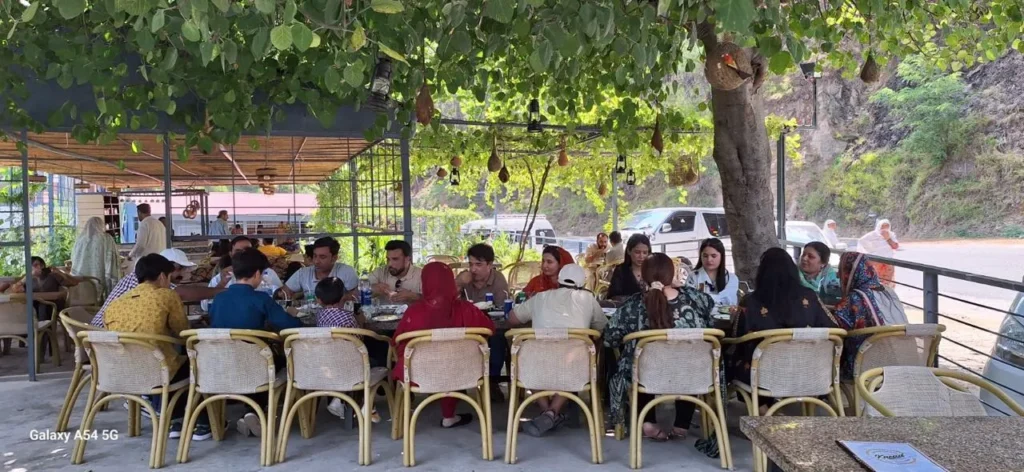
Nestled in the picturesque town of Balakot, at the foothills of the Himalayas in northern Pakistan, Knead Café was established with a vision that extends far beyond serving quality food. Developed as a flagship project of Skills Valley Foundation, the café serves as a practical training centre where culinary excellence, hospitality education, and environmental stewardship are seamlessly integrated.
Rather than treating sustainability as an optional initiative, Knead Café has adopted a zero-waste philosophy, where every resource is carefully managed and every waste stream is viewed as an opportunity for recovery and reuse. The café functions as a living laboratory, demonstrating that environmentally responsible hospitality can also be commercially viable and educationally impactful.

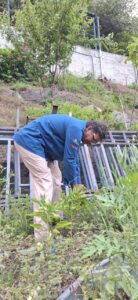
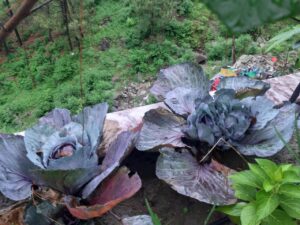
Our farm-to-table approach begins with a culinary garden and fruit orchard, where seasonal vegetables, herbs, and fruits are grown using environmentally responsible practices. Additional ingredients are sourced from local farmers, reducing transportation emissions while strengthening community livelihoods and preserving regional food traditions.

One of the most innovative features of the project is the integration of a free-range chicken and goat farm into the café’s circular food system. Suitable organic kitchen leftovers are safely utilized as feed for the livestock, significantly reducing food waste while naturally producing fresh organic eggs and naturally raised livestock for the café. The manure generated by the animals is then used as organic fertilizer in our culinary gardens and fruit orchards, creating a closed-loop food system that returns valuable nutrients to the soil. Recyclable materials are systematically sorted and diverted from landfill, while single-use plastics are minimized through reusable alternatives and sustainable procurement practices that reduce unnecessary packaging and improve resource efficiency across our operations.
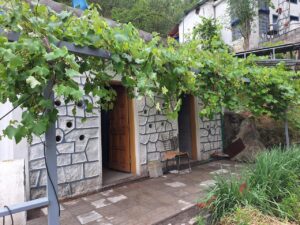
Water stewardship is equally important. Rainwater harvesting systems supplement kitchens and restrooms, while a natural wastewater treatment system treats greywater before it is safely reused for landscape irrigation and plantation. This reduces freshwater consumption, protects the surrounding environment, and demonstrates practical solutions for sustainable hospitality operations, particularly in environmentally sensitive regions.

Beyond its environmental practices, Knead Café serves as a centre for green hospitality education. Students at Skills Valley – Institute of Hospitality Management receive practical training in sustainable food preparation, responsible sourcing, waste segregation, composting, circular economy principles, water conservation, and environmentally responsible kitchen management. Sustainability is not taught as theory alone but is embedded into everyday culinary operations.
The project also empowers young people and women by combining hospitality education with entrepreneurship and employment opportunities. Graduates leave not only with professional culinary skills but also with a deeper understanding of how chefs can become ambassadors for environmental sustainability within their communities.
As culinary professionals, our influence extends well beyond the plate. Every purchasing decision, every menu, every recipe, and every kilogram of food waste prevented contributes to a more sustainable future. Professional kitchens can become powerful platforms for climate action by embracing local sourcing, circular food systems, resource efficiency, and responsible waste management.
Knead Café is not presented as a finished model but as an evolving demonstration of what is possible when culinary excellence and environmental responsibility work hand in hand. Our experience shows that sustainability is not a limitation on creativity—it is a catalyst for innovation.

The future of gastronomy will not be defined solely by flavour or presentation, but by the responsibility with which we use the world’s resources. As chefs, educators, and industry leaders, we have an opportunity to inspire this transformation—one kitchen, one meal, and one generation at a time.
