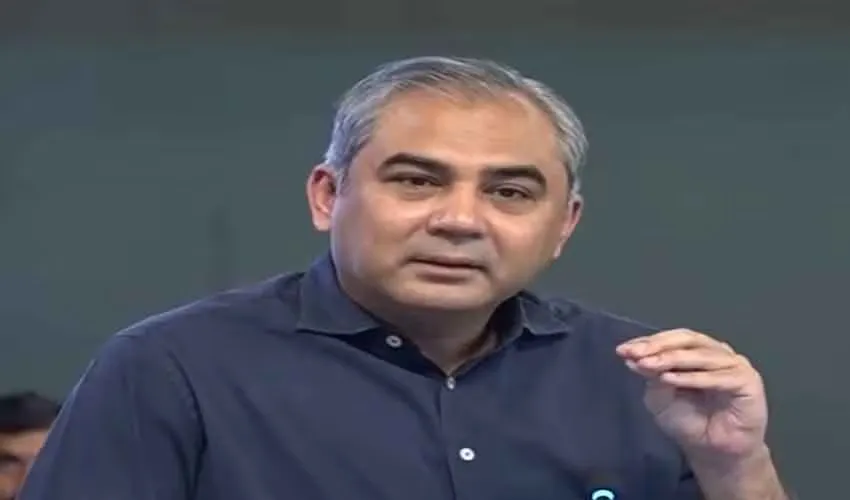
Pakistan is preparing to overhaul its policing system with a series of reforms aimed at modernizing law enforcement, improving investigations, and strengthening public safety.
Interior Minister Mohsin Naqvi announced that the government will establish a China-style Law Enforcement Investigation Centre in Islamabad, alongside introducing advanced surveillance technologies, specialized police training, and new operational standards.
The reforms are significant because they reflect Pakistan’s broader effort to modernize its police force by adopting international best practices. If implemented successfully, the changes could improve crime investigation, reduce case delays, and enhance the capacity of law enforcement agencies to tackle evolving security challenges.
Key Details
The announcement was made during a meeting with Assistant Superintendents of Police (ASPs) who recently returned after completing specialized policing courses in China and Türkiye.
The officers briefed the interior minister on modern policing methods they observed abroad, including advanced surveillance systems, digital investigation tools, and technology-driven approaches to crime prevention and public security.
Naqvi said overseas training would become a permanent feature of the professional development of Pakistani police officers.
Major reforms announced
The proposed policing reforms include:
- Establishment of a China-style Law Enforcement Investigation Centre in Islamabad.
- Integration of detention, investigation, and summary trial facilities under one roof for minor offences.
- Expansion of foreign training programs for police officers.
- Deployment of advanced surveillance technologies.
- Induction of modern drones into the Ministry of Interior’s Aviation Wing.
- Creation of specialized investigation rooms at the National Police Academy.
- Introduction of interrogation as a dedicated academic subject in police training.
- Launch of new police uniforms designed for modern operational requirements.
China-Style Investigation Centre
One of the most significant announcements was the planned pilot project for a Law Enforcement Investigation Centre in Islamabad.
According to the interior minister, the facility will combine detention, investigation, and summary trial functions in a single location. The objective is to speed up the handling of minor criminal cases while reducing procedural delays and improving coordination among law enforcement agencies.
Officials said the pilot project will help determine whether similar centres can be established elsewhere in the country.
Modern Technology to Strengthen Policing
Naqvi said Pakistan’s police force must adopt modern technology to respond more effectively to emerging security threats.
The government plans to introduce advanced surveillance systems and add state-of-the-art drones to the Ministry of Interior’s Aviation Wing to improve monitoring, intelligence gathering, and law enforcement operations.
The reform package also focuses on strengthening investigative skills through specialized training aligned with international policing standards.
Background
Pakistan has increasingly sought international cooperation to improve policing standards, particularly in areas such as cybercrime investigations, forensic science, surveillance, and counterterrorism.
In recent years, police officers have participated in professional training programs in several countries, including China and Türkiye, to gain exposure to modern law enforcement techniques.
The latest reforms build on these efforts by incorporating international practices into Pakistan’s policing framework.
What This Means
The proposed reforms could significantly reshape policing in Pakistan by emphasizing technology, professional training, and faster investigations.
Experts believe centralized investigation facilities and enhanced surveillance capabilities could improve operational efficiency, although the long-term effectiveness of the reforms will depend on implementation, funding, legal safeguards, and institutional capacity.
The initiative also signals closer cooperation between Pakistan and China in the field of law enforcement and public security.
What’s Next?
The government is expected to begin work on the Islamabad pilot project while expanding overseas training opportunities for police officers.
Authorities will also develop the new investigation curriculum, establish specialized training facilities at the National Police Academy, and prepare for the introduction of new police uniforms and surveillance equipment.
Senior officials from the National Police Academy, the Federal Investigation Agency (FIA), and the Ministry of Interior are expected to oversee the implementation of the reforms.
“Pakistan will benefit from internationally proven policing models to make its law enforcement system more effective, responsive, and technology-driven,” Interior Minister Mohsin Naqvi said.
FAQ
What is the China-style Law Enforcement Investigation Centre?
It is a proposed facility that will combine detention, investigation, and summary trial functions under one roof to speed up the handling of minor criminal cases.
What other police reforms has the government announced?
The reforms include foreign police training, advanced surveillance systems, drones, specialized investigation rooms, modern interrogation training, and new police uniforms.
Why is Pakistan introducing these reforms?
The government says the reforms are intended to modernize policing, improve investigations, strengthen crime prevention, and equip law enforcement agencies to deal with emerging security challenges.
