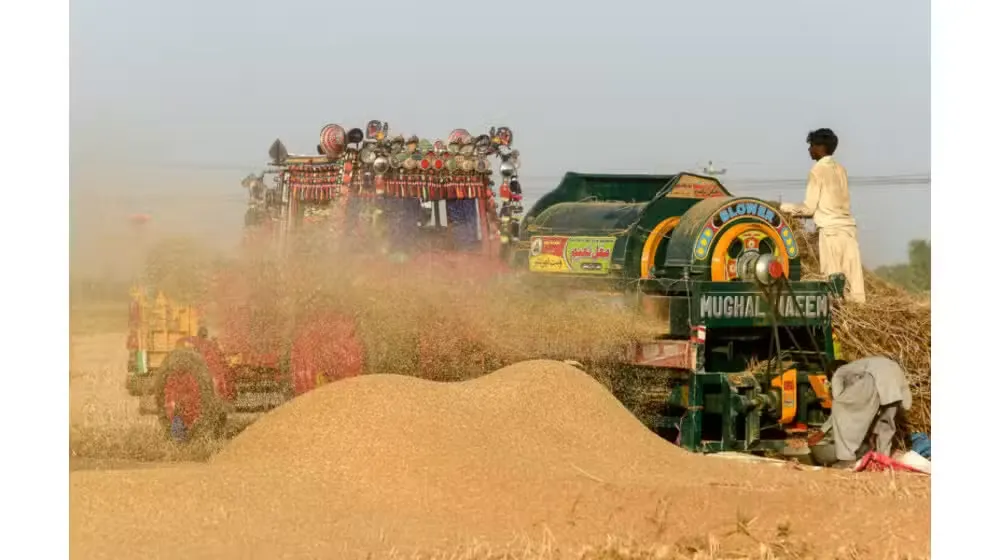
The federal government has approved the import of one million tonnes of wheat to address a growing wheat shortage in Pakistan, marking the first official acknowledgment of a significant supply-demand gap in the country’s staple grain market.
Federal Minister for National Food Security and Research Rana Tanveer Hussain confirmed the decision on Thursday, saying the move was made in response to requests from provincial governments.
“The wheat import will help stabilize wheat and flour prices across the country,” the minister said.
The decision comes as wheat prices in Pakistan and flour prices continue to climb, raising concerns over food inflation and the availability of essential commodities.
Wheat Prices Continue to Rise Across Pakistan
According to official data for the first week of July 2026, the average wheat price in Pakistan increased to Rs. 4,611 per 40 kilograms (Rs. 115 per kg), up from Rs. 4,516 a week earlier.
Provincial wheat prices are currently:
- Punjab: Rs. 4,423 per 40kg
- Sindh: Rs. 4,625 per 40kg
- Khyber Pakhtunkhwa: Rs. 5,100 per 40kg
- Balochistan: Rs. 4,800 per 40kg
The continued increase reflects tightening supplies and growing pressure on the domestic wheat market.
Flour Prices Also Climb
The rise in wheat costs has pushed flour prices in Pakistan higher.
The national average price has reached Rs. 1,288 per 10kg (Rs. 129 per kg), compared with Rs. 1,268 recorded previously.
Province-wise flour prices include:
- Punjab: Rs. 1,224 per 10kg (lowest)
- Balochistan: Rs. 1,378 per 10kg (highest)
Analysts warn that prices could increase further if additional wheat supplies are not made available.
Wheat Shortfall Identified Months Earlier
Government officials first identified a potential wheat supply gap on April 29, 2026, when preliminary crop estimates projected a deficit of approximately 1.2 million tonnes for the 2026-27 wheat marketing year.
However, more recent assessments suggest the actual shortfall could be substantially larger.
Flour Millers Estimate a Bigger Deficit
The Progressive Flour Millers Group (PFMG) estimates that Pakistan could face a 2.5 million-tonne wheat shortage during the current season.
According to PFMG President Majid Abdullah, Punjab produced around 19.5 million tonnes of wheat this year, with a marketable surplus of approximately 5.85 million tonnes.
He said Punjab’s available wheat has already been allocated for:
- Flour mills
- Wheat aggregators
- Seed companies
- Supplies to Khyber Pakhtunkhwa
- Previous months’ consumption
This leaves approximately 1.55 million tonnes available in the open market against an estimated requirement of 4 million tonnes over the next eight months, resulting in a projected deficit of 2.5 million tonnes in Punjab alone.
Official Assessment Shows Nationwide Supply Gap
A separate government assessment for the period May 1, 2026, to April 30, 2027 also indicates a substantial Pakistan wheat supply shortage.
With an estimated population of 268.13 million, the country’s total wheat requirement has been calculated at 34.33 million tonnes, including:
- 30.83 million tonnes for human consumption
- 1.5 million tonnes for feed and seed
- 2 million tonnes for strategic reserves
Meanwhile, total wheat availability is estimated at 31.78 million tonnes, consisting of:
- 29.6 million tonnes from domestic production
- 2 million tonnes in carryover stocks from the previous season
This leaves an estimated deficit of 2.55 million tonnes.
The projections are based on annual per capita wheat consumption of 115 kilograms.
Government Aims to Stabilize Food Prices
The decision to import one million tonnes of wheat is intended to ease pressure on domestic supplies and help stabilize wheat and flour prices in Pakistan.
However, industry stakeholders say additional policy measures may still be required to bridge the remaining supply gap, improve market availability, and protect consumers from further food inflation.
Economists also stress the importance of strengthening wheat procurement, improving storage capacity, and enhancing agricultural productivity to reduce reliance on imports in future seasons.
As the 2026-27 wheat season begins with a significant supply deficit, policymakers will be closely monitoring domestic inventories, international wheat prices, and market demand to ensure stable supplies throughout the year.
