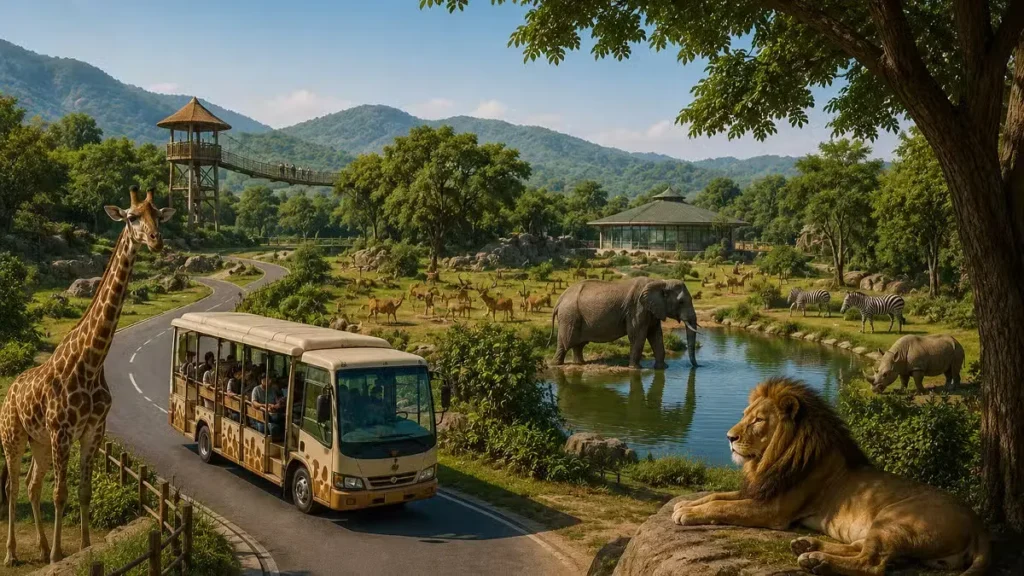
The Capital Development Authority has unveiled an ambitious plan to develop Pakistan’s first modern, world-class wildlife safari park in Islamabad, marking a major step toward promoting conservation, eco-tourism, and family-friendly recreation in the federal capital.
The proposed safari park will be developed in the Malpur Forestry Park area near Bara Kahu and Murree Road and will cover approximately 350 acres of land.
Natural forest land to remain protected
CDA officials said the selected site consists of natural forest land and assured that the existing ecosystem will be preserved throughout the development process.
According to the authority, the project is designed to integrate wildlife facilities within the natural landscape, ensuring minimal environmental disturbance. Officials stressed that no large-scale deforestation or ecological damage would be allowed during construction.
Planning completed as project moves toward construction
Authorities confirmed that the feasibility study and conceptual design of the safari park have already been completed. The project will now move into the tendering phase, where contractors will be selected for construction work.
Once completed, the park is expected to house around 3,605 animals across 10 carefully planned safari and wildlife sanctuary zones. Each zone will be designed to closely replicate the animals’ natural habitats to support welfare and conservation goals.
Ungulate safari to be the park’s largest attraction
The master plan includes a 1,000-kanal ungulate safari, which will be the largest zone within the park.
This area will feature guided safari tours, wildlife viewing points, nature trails, and a glass soft-wheel train that allows visitors to observe animals while minimizing disturbance. Officials said the ungulate safari will serve as the park’s centrepiece.
Big cat and wildlife sanctuary zones planned
A separate 180-kanal big cat zone will house species such as lions, tigers, bears, hyenas, and African wild dogs. Each species will be kept in dedicated enclosures designed according to international animal welfare standards.
In addition, around 340 kanals have been allocated for wildlife sanctuaries that will accommodate animals including crocodiles, rhinoceroses, elephants, and hippopotamuses.
Dedicated wildlife care and veterinary facilities
Animal welfare has been highlighted as a core component of the project.
A 100-kanal wildlife care complex will be developed, featuring international-standard veterinary, treatment, and quarantine facilities. The complex will also include a dedicated safari park veterinary clinic to ensure continuous health monitoring and care of animals.
Visitor facilities designed for families and tourists
The safari park will include a wide range of visitor amenities aimed at making it a full-day destination for families and tourists.
Planned facilities include a Safari Pavilion for ticketing and visitor information, along with a 400-kanal Safari Village featuring safari lodges, dining areas, and recreational spaces.
A dedicated Safari Village restaurant and a 50-kanal Safari Food Street connected directly to Murree Road are also part of the plan. The food street will host themed eateries such as Safari Grill, Jungle Bites, Baobab Cafe, Wild Wraps, and Bushman’s Kitchen.
Recreational and educational attractions included
The central landscape of the park will offer multiple recreational and educational attractions.
These include an immersive wildlife museum, jungle-themed play areas for children, a koi fish pond, shaded sitting areas, and a zipline adventure.
Visitors will also be able to walk along a one-kilometre elevated forest canopy walk, offering panoramic views of the forest ecosystem. A digital immersive museum will provide interactive experiences focused on wildlife conservation and environmental education.
Eco-tourism features to boost Islamabad’s profile
Additional attractions proposed under the project include a 10-kanal natural lake, bridge walks, guided safari tours, and a two-kilometre safari chairlift track.
CDA officials believe these features will help transform Islamabad into a leading wildlife tourism destination in the region while raising public awareness about biodiversity and conservation.
Long-term vision for conservation and tourism
According to the CDA, the safari park is intended not only as a recreational facility but also as a long-term investment in conservation, education, and sustainable tourism.
Officials said the project reflects Islamabad’s growing focus on environmentally responsible urban development and could set a new benchmark for wildlife tourism in Pakistan.
About Tamoor Ahmed

Tamoor Ahmad has been covering politics since 2022.
