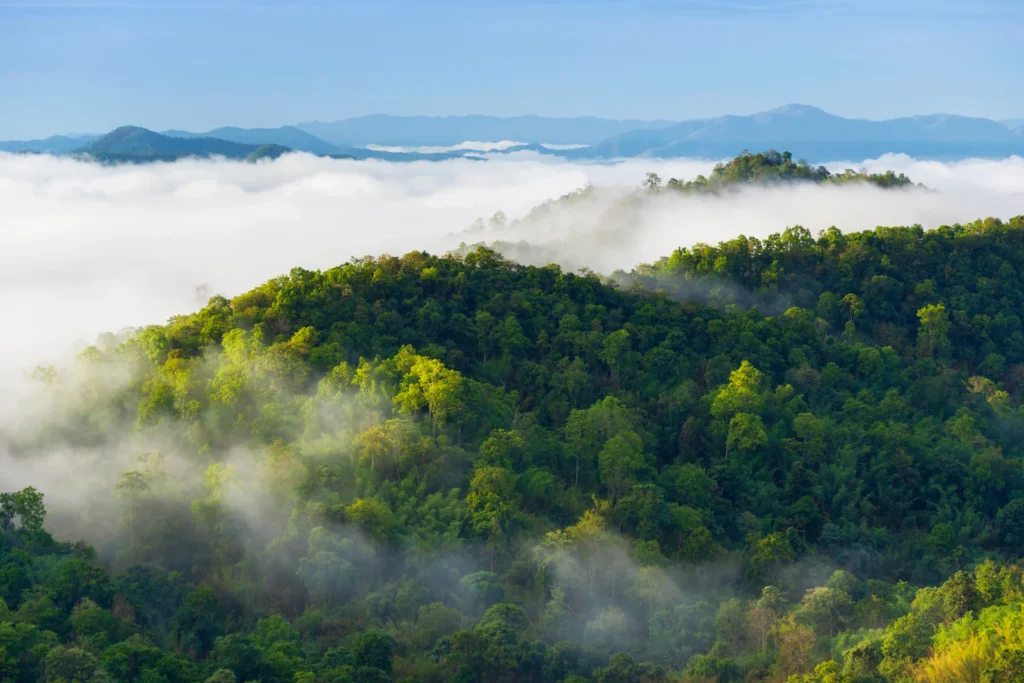
Pakistan is losing an estimated 11,000 hectares of forest land annually due to continued deforestation, according to findings released in the Pakistan Economic Survey 2026, highlighting growing risks to the country’s ecological stability and climate resilience.
The survey warns that the steady decline in forest cover is undermining environmental balance at a time when Pakistan is already among the world’s most climate-vulnerable countries.
Official data shows that Pakistan’s total forest area currently stands at approximately 4.11 million hectares, accounting for just 4.7 percent of the country’s total landmass.
According to the survey, coniferous forests form the largest share of Pakistan’s forest cover. These are followed by scrub forests, riverine forests, mangroves, and irrigated plantation forests. Despite their critical ecological role, the report notes that all forest types remain under intense pressure from human activity and land-use change.
“These forest resources are essential for environmental protection, biodiversity conservation, water regulation and rural livelihoods, yet they continue to shrink at an alarming rate,” the survey stated.
To address deforestation and strengthen climate resilience, the Ministry of Climate Change and Environmental Coordination is coordinating with provincial and territorial governments on large-scale afforestation and ecosystem restoration initiatives.
At the centre of these efforts is the Green Pakistan Program, which remains the government’s flagship forestry and climate action initiative. Backed by a budget allocation of Rs. 122.15 billion, the programme has overseen the planting, regeneration or distribution of nearly 2.26 billion plants across the country, according to official figures.
Also read: Google to buy carbon credits from major Amazon forest project
Despite these measures, the survey cautioned that Pakistan continues to face severe climate risks. It attributed the country’s vulnerability to low forest cover, rapid land-use changes, population growth, widespread rural poverty and heavy dependence on natural resources.
While the forestry sector directly contributes only around 0.5 percent to Pakistan’s Gross Domestic Product, the survey emphasised that its broader economic value is far greater. It estimated the value of forest ecosystem services at 11.48 percent of GDP.
These services include environmental protection, flood and water regulation, biodiversity support and livelihood benefits for millions of people, particularly in rural and mountainous regions.
The report concluded that although commercial logging adds relatively little to the national economy, Pakistan’s long-term environmental sustainability and economic well-being are closely linked to protecting and restoring its shrinking forest resources.
Experts say the findings underscore the urgent need for stricter enforcement against illegal logging, sustainable land-use planning and long-term investment in forest conservation to prevent irreversible ecological damage.
