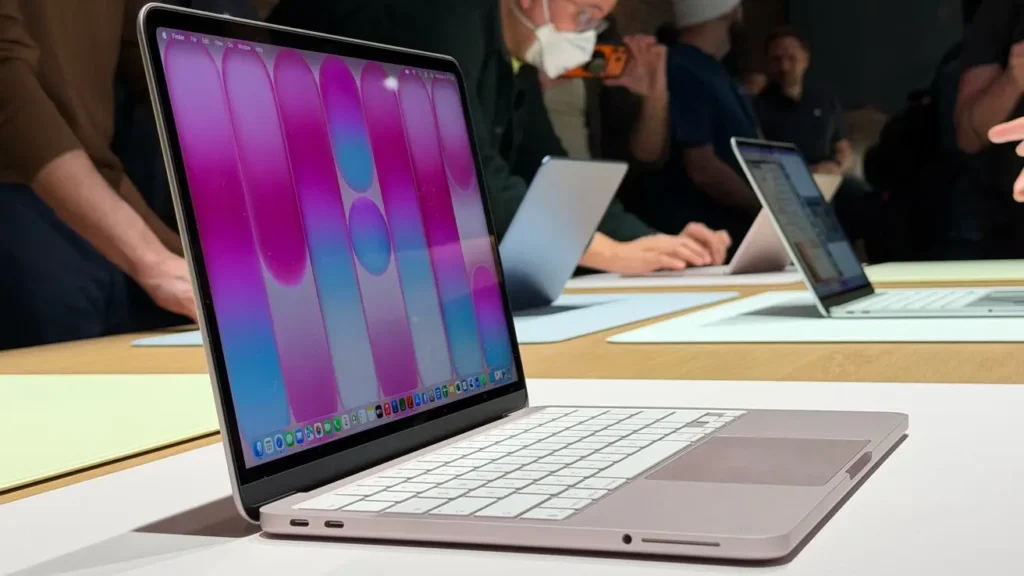
TAIPEI: Apple’s MacBook Neo has reshaped expectations in the budget laptop market, prompting major Windows PC manufacturers to accelerate the launch of thinner, more premium devices in the $600 to $800 price range.
At Computex 2026, brands including Dell, Asus, Acer and MSI unveiled new laptops designed to rival Apple’s lower-cost macOS machine with improved displays, stronger materials and better connectivity.
The new Windows models are expected to hit retail shelves ahead of the global back-to-school buying season.
Dell XPS 13 targets MacBook Neo buyers
Dell showcased the latest Dell XPS 13, positioning it as one of the closest competitors to the MacBook Neo.
The redesigned XPS 13 features a premium aluminum chassis and is described by Dell as the thinnest and lightest XPS laptop to date. Pricing starts at $699, while students can purchase the base model for $599.
The entry-level configuration includes Intel’s new Wildcat Lake processor, 8GB RAM and 512GB storage. Higher variants support up to an Intel Core Ultra 7 Series 3 chip and 32GB RAM.
Unlike Apple’s budget laptop, the XPS 13 offers a 120Hz touchscreen with an anti-reflective coating, USB-C ports on both sides, a backlit keyboard and Windows Hello facial recognition.
Asus Zenbook 14 highlights OLED display
Asus is competing directly with Apple through the Asus Zenbook 14, which starts at $799 and focuses heavily on display quality.
The laptop features a 120Hz OLED panel, giving it a significant visual advantage over the MacBook Neo. It uses Asus’ Ceraluminum body, a ceramic-aluminum hybrid material, and weighs approximately 2.6 pounds.
The Zenbook 14 will be available with Intel, AMD and Qualcomm Snapdragon processors, with Asus indicating that the Snapdragon version will be the most affordable. Battery life claims reach up to 21 hours, depending on configuration.
The device also includes two USB-C ports, one USB-A port and a full-sized HDMI port.
Acer Swift Air 14 focuses on battery size
Acer’s Acer Swift Air 14 enters the segment at a starting price of $699.
Built with an all-metal chassis, the Swift Air 14 uses Intel Core Series 3 Wildcat Lake processors and comes with a 14-inch 120Hz display. Memory starts at 8GB, with support for up to 16GB.
A standout feature is its 70Wh battery, nearly double the capacity of the MacBook Neo’s battery, though real-world endurance will depend on optimisation. Connectivity includes two Thunderbolt 4 ports and a USB-A 3.2 port.
MSI Modern 14S AI Plus adds durability
MSI introduced the MSI Modern 14S AI Plus as another MacBook Neo alternative.
The laptop features an aluminum alloy chassis, weighs around three pounds and uses Intel’s Wildcat Lake platform. It offers a wide range of ports, including HDMI, Ethernet, USB-A and dual USB-C connections.
An OLED display and MIL-STD-810H durability certification are key selling points, positioning the device as a reliable option for students and frequent travelers.
Budget Windows laptops become more competitive
Industry analysts say the MacBook Neo has forced Windows manufacturers to rethink their budget offerings.
Instead of plastic builds and basic screens, the new generation of Windows laptops focuses on premium materials, high-refresh-rate displays and better port selection.
The Dell XPS 13 stands out as the closest all-round competitor, while the Asus Zenbook 14 leads on display quality. Acer’s Swift Air 14 emphasizes value and battery capacity, and MSI’s Modern 14S AI Plus combines OLED visuals with durability.
For buyers seeking a premium Windows laptop at MacBook Neo pricing, Computex 2026 signals a far more competitive market in the months ahead.
