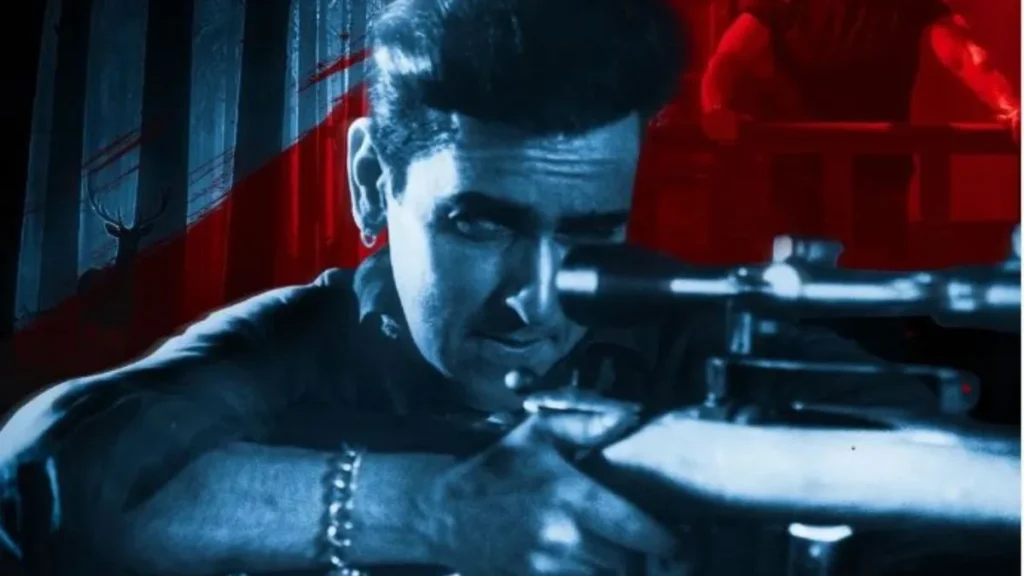
A newly announced Bollywood project has triggered one of the most heated film controversies of 2026, placing cinema, celebrity rights, and an unresolved court case on a direct collision course.
The film, titled Kala Hiran: The Battle for Legacy, is inspired by the 1998 blackbuck poaching case involving Bollywood superstar Salman Khan.
Within days of its first promotional poster being released, Khan’s legal team issued a formal notice demanding that the project be stopped immediately.
The notice has set off a public standoff between one of India’s biggest movie stars and a producer known for courting controversy.
What Is Kala Hiran: The Battle for Legacy About?
According to its makers, Kala Hiran is not a biopic of Salman Khan. Producer Amit Jani has stated that the film focuses on the Bishnoi community, their cultural beliefs, and their long-standing commitment to wildlife conservation.
The film is being directed by Bharat S. Shrinate and is expected to be shot across Moradabad, Sambhal, and other locations in Uttar Pradesh.
However, the controversy erupted after the film’s poster was unveiled on May 29, 2026. The visual shows a man resembling Salman Khan holding a rifle and wearing a turquoise bracelet, an accessory widely associated with the actor’s public image. The makers also announced a trailer launch date of June 20.
Multiple industry reports suggest that characters inspired by actors who were present during the 1998 Jodhpur shoot of Hum Saath Saath Hain may also appear. These reportedly include Saif Ali Khan, Tabu, and Sonali Bendre.
The 1998 Blackbuck Case Explained
The roots of the dispute lie in events from September and October 1998, when Salman Khan was in Jodhpur filming Hum Saath Saath Hain.
On the night of October 1–2, two blackbucks, a protected and endangered species, were shot dead near Kankani village. Members of the Bishnoi community, known for their reverence for wildlife, reported hearing gunshots and later identified Salman Khan as the shooter.
A trial court eventually convicted Khan and sentenced him to five years in prison. Four other accused actors were acquitted. Khan spent two nights in Jodhpur Central Jail before securing bail and appealing the verdict.
Nearly 28 years later, the case remains pending before the Rajasthan High Court. That unresolved legal status forms the backbone of Khan’s objection to the film.
Why Salman Khan Issued a Legal Notice
The legal notice was sent to the film’s casting director, Akshay Pandey. In it, Salman Khan’s lawyers describe the project as “defamatory in nature” and a “gross violation of personality rights”.
The notice argues that producing and releasing a film inspired by a sub judice matter amounts to interference with the administration of justice and could prejudice Khan’s right to a fair trial.
It also states that the actor has not authorised the use of his name, likeness, or any incident linked to him. The notice demands an immediate halt to production and removal of all promotional material.
The Producer’s Public Response
Producer Amit Jani responded by making the notice public on social media. In a Hindi post, he accused Salman Khan of using legal pressure to intimidate filmmakers and quoted poet Rahat Indori to suggest a pattern of threats against critics.
Jani said he would not withdraw the film and framed the dispute as a battle between creative freedom and celebrity power. Director Bharat S. Shrinate echoed those claims, citing their earlier legal struggle with Udaipur Files.
That 2025 film, based on the murder of Udaipur tailor Kanhaiya Lal, faced a last-minute legal stay and was eventually released with multiple court-mandated edits.
The Bigger Legal Question: Personality Rights vs Cinema
Beyond the personalities involved, Kala Hiran has reignited debate over personality rights in Indian law. Courts have increasingly recognised that public figures retain control over the commercial and narrative use of their identity.
Salman Khan’s legal position rests on the argument that even fictionalised portrayals, if clearly identifiable, can harm reputation and influence ongoing legal proceedings.
The filmmakers counter that real-life court cases involving public figures are part of the public record and therefore legitimate subjects for cinema. Indian jurisprudence offers no clear-cut answer, placing the dispute in a legal grey zone.
What Happens Next?
The teaser launch scheduled for June 20, 2026, now hangs in the balance. No court hearing has been announced yet, and the film does not have an official release date.
Salman Khan’s team has remained silent beyond the legal notice. The filmmakers show no sign of backing down.
As the teaser deadline approaches, Kala Hiran: The Battle for Legacy is shaping up to be not just a film controversy, but a defining test case for how far Bollywood can go when real life, unresolved justice, and cinema collide.
