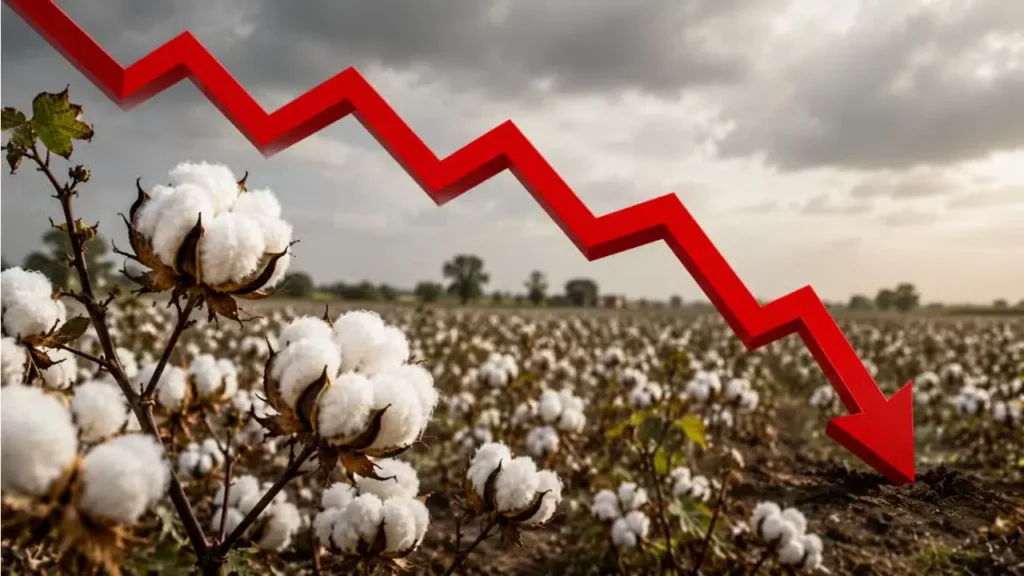
Pakistan remained the largest buyer of United States cotton for the second consecutive week, underlining the textile industry’s growing reliance on imported raw materials even as domestic cotton and phutti prices declined sharply during the Eid ul-Adha holidays.
According to the latest industry data, Pakistani textile mills purchased 68,030 bales out of the 112,000 bales sold by the United States in the most recent reporting week.
Alongside US shipments, mills are also continuing large-scale imports from Brazil as local cotton availability continues to shrink, raising concerns about long-term supply sustainability.
The surge in imports came despite a noticeable fall in domestic prices. In Sindh, cotton prices dropped by Rs. 2,000 per maund to around Rs. 21,000, while Punjab markets recorded a decline of Rs. 1,000 per maund, bringing prices to roughly Rs. 22,000.
Phutti prices also weakened, falling by Rs. 1,500 per maund to about Rs. 10,500 per 40 kilograms, reflecting subdued buying activity during the holiday period.
Industry representatives linked the softening trend partly to falling international cotton prices. Global rates have reportedly declined by nearly 10 cents per pound in recent days, increasing pressure on local markets already struggling with weak demand and high operating costs.
Chairman of the Cotton Ginners Forum, Ihsanul Haq, said a recently imposed tax on the movement of cotton and phutti from Sindh to Punjab has widened the price disparity between the two provinces.
He noted that the levy has made cotton more expensive in Punjab, distorting normal trade flows and adding to uncertainty for ginners and spinners alike.
These developments come against the backdrop of a long-term decline in Pakistan’s cotton sector. Once counted among the world’s leading cotton producers, the country has increasingly turned to imports to feed its export-orientated textile industry due to falling domestic production, climate-related disruptions, and shrinking inventories.
Also read: Qasai Rates in Lahore, Karachi & Islamabad for Eid ul Adha 2025
In contrast, India has adopted a more aggressive policy approach to secure raw material supplies for its textile sector. From June 1 to October 31, New Delhi has temporarily abolished all duties and taxes on imported cotton, including the cumulative 11 percent import duty and the Agriculture Infrastructure and Development Cess.
The move allows Indian mills to access cheaper cotton during peak demand months.
The policy shift is already supporting India’s expanding textile exports, particularly to China. Industry estimates indicate that India has been exporting roughly 30,000 tonnes of cotton yarn to China every month since late 2025, a sharp rise from around 600 tonnes per month a year earlier.
Cotton analyst Sajid Mahmood said India’s decision highlights how targeted policy support can strengthen textile exports by ensuring uninterrupted access to competitively priced raw materials. He added that Pakistan needs a more responsive and coordinated policy framework to restore competitiveness across its textile value chain.
Industry bodies, including the All Pakistan Textile Mills Association and the Pakistan Cotton Ginners Association, have urged federal and provincial governments to provide relief in upcoming budgets through tax rationalisation, lower energy tariffs, and reduced financing costs.
The sector continues to face mounting pressure from high electricity and gas prices, elevated borrowing rates, and the super tax on large industries. According to industry estimates, nearly 500 cotton ginning factories and more than 150 textile mills across Pakistan have either shut down completely or are operating below capacity.
