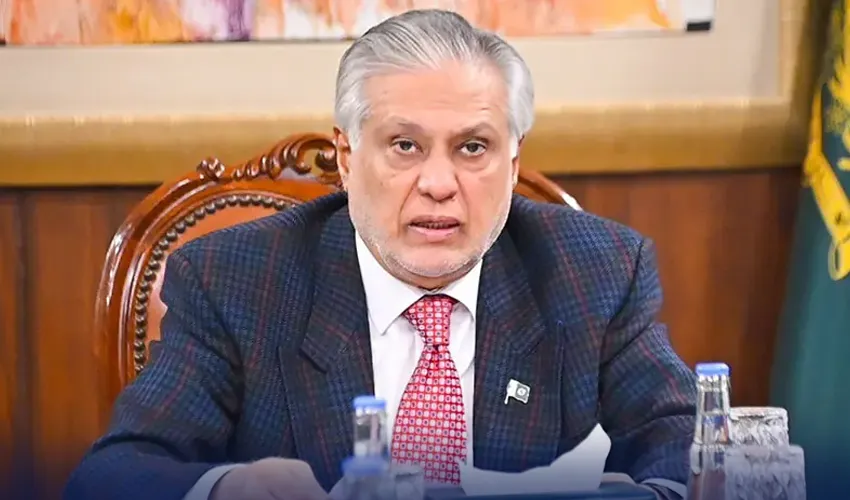
Deputy Prime Minister and Foreign Minister Ishaq Dar has firmly rejected any unilateral suspension of the Indus Waters Treaty, warning the international community that the use of water as a political weapon sets a dangerous precedent and violates established principles of international law.
Speaking during a high-level debate at the United Nations Security Council, Dar said Pakistan would not accept actions that undermine binding international agreements.
He stressed that treaties governing shared natural resources cannot be altered or suspended at the discretion of one party.
According to Dar, selective adherence to international obligations weakens the global legal order and threatens regional stability, particularly in already sensitive regions like South Asia.
He said Pakistan’s position on the Indus Waters Treaty remains consistent, lawful, and rooted in international norms governing transboundary water management.
Addressing broader global issues, Dar said Pakistan supports reforms within the United Nations that are fair, democratic, and reflective of the interests of all member states rather than a limited few.
He noted that meaningful multilateralism depends on equal respect for sovereignty, international law, and collective decision-making. Pakistan, he added, remains committed to working with all nations for the effective implementation of the UN Charter.
The deputy prime minister highlighted Pakistan’s diplomatic engagement beyond South Asia, pointing to Islamabad’s efforts to ease tensions between Iran and the United States during a period of heightened instability in the Middle East.
He acknowledged the importance of dialogue over confrontation and thanked friendly countries for supporting Pakistan’s peace-oriented approach.
Dar also acknowledged China’s role in facilitating timely discussions at the United Nations, calling such engagement critical in the current global climate.
Reaffirming Pakistan’s long-standing positions, Dar said unresolved disputes continue to pose serious risks to international peace.
He referred to the Kashmir issue, describing it as a decades-old conflict that remains unresolved despite repeated calls for peaceful settlement.
He also reiterated Pakistan’s support for the rights of unarmed Palestinians, emphasising that justice, self-determination, and peaceful conflict resolution are core obligations under the UN Charter.
The remarks reinforce Pakistan’s broader diplomatic stance that international treaties, water security, and conflict resolution must be governed by law, dialogue, and mutual respect rather than unilateral actions.
