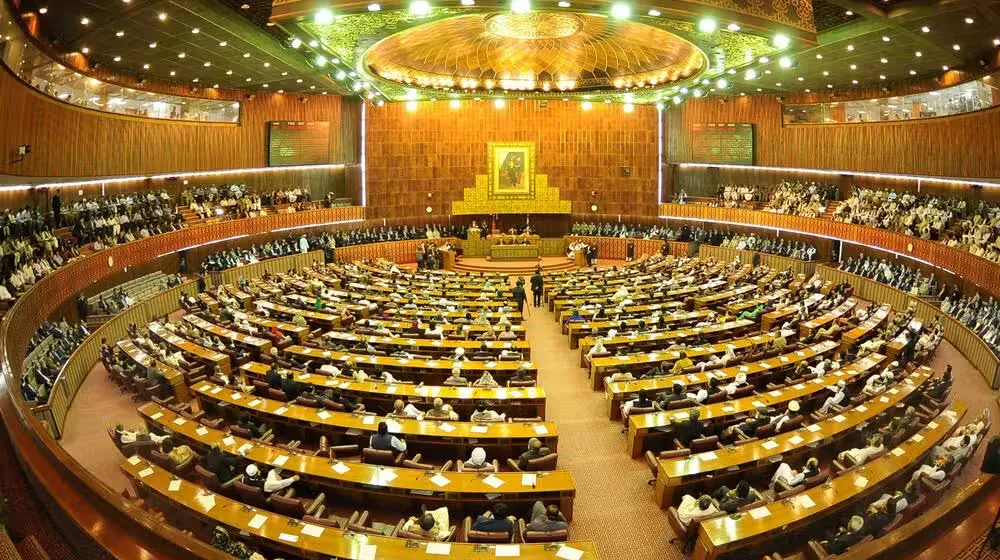
Pakistan has taken a major step toward digital governance as the National Assembly of Pakistan officially became the country’s first AI-enabled legislature with the launch of an AI Parliament module and an AI-powered Speaker’s Office.
The soft launch ceremony was held at Parliament House and marks a significant milestone in the broader shift toward technology-driven public administration.
The initiative has been developed by the National Information Technology Board, which is responsible for implementing digital transformation projects across government institutions.
The system is designed to introduce artificial intelligence into parliamentary workflows, reduce dependency on paper-based documentation, and strengthen secure digital communication across legislative functions.
During the launch event, Speaker of the National Assembly Sardar Ayaz Sadiq said the adoption of AI tools reflects a long-term vision to modernize legislative operations.
He noted that Parliament has already transitioned to the e-Office system and is now moving toward a more advanced phase where artificial intelligence will assist in research, documentation, and administrative efficiency.
Also read: National assembly passes bill against domestic violence
Federal Minister for IT and Telecommunication Shaza Fatima Khawaja said the government’s digitalization drive began immediately after the current administration took office under Prime Minister Shehbaz Sharif.
She explained that multiple ministries have already shifted toward paperless workflows, and Parliament’s adoption of AI represents the next stage of this transformation.
She added that the National Assembly has also made institutional history by becoming the first parliament to establish a Sustainable Development Goals Secretariat and by moving toward green energy solutions within its operations.
According to her, these reforms are aimed at reducing inefficiencies, cutting down on paper consumption, and improving transparency in decision-making processes.
Officials highlighted that parliamentary work traditionally generates large volumes of printed material, particularly during budget sessions when lawmakers receive extensive documentation.
The new AI-driven system is expected to significantly reduce this dependency by enabling digital access to legislative data and reports.
Speaker Ayaz Sadiq acknowledged that adapting to new technologies may initially be challenging for some members, particularly those less familiar with digital tools.
However, he emphasized that the long-term benefits include improved efficiency, easier access to information, and more structured parliamentary debates supported by AI-assisted research capabilities.
Plans are also underway to develop a dedicated AI data center for the National Assembly, which is expected to begin after budget allocations in the coming fiscal cycle.
Officials say this infrastructure will support secure storage, processing, and deployment of AI-based legislative tools.
Chairman of the National Assembly Standing Committee on IT Syed Amin Ul Haque described the development as a historic advancement in Pakistan’s parliamentary modernization.
He stressed that all members of Parliament would benefit from AI integration, particularly in research and policy analysis, and called for accelerated development of secure digital communication systems for lawmakers.
The introduction of AI in Pakistan’s legislature signals a broader move toward AI-enabled governance in Pakistan, positioning the National Assembly as a key testing ground for future digital public sector reforms.
About Tamoor Ahmed

Tamoor Ahmad has been covering politics since 2022.
