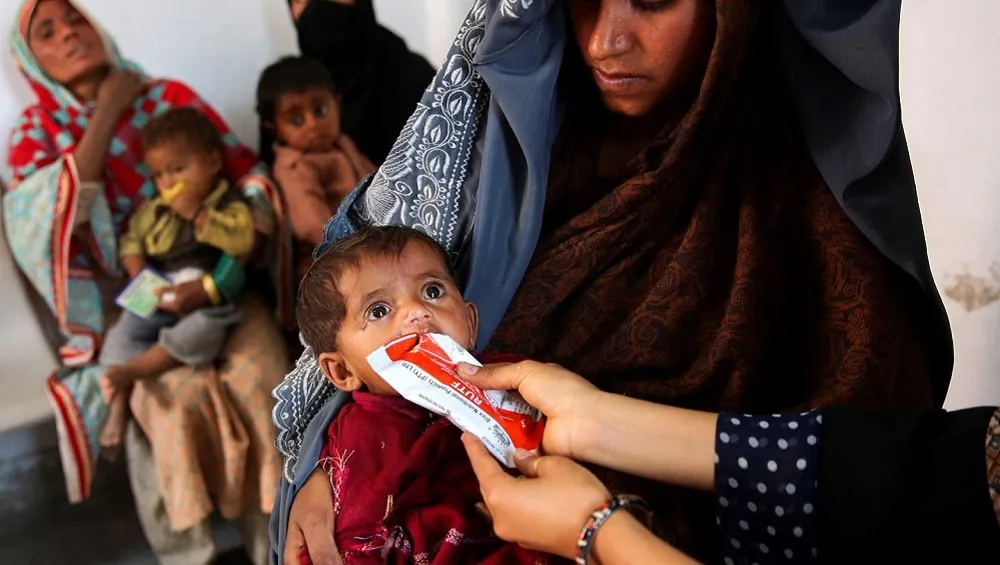
The University of Health Sciences has partnered with UNICEF to roll out the first phase of a capacity-building initiative designed to embed nutrition and child health interventions into the MBBS curriculum across Punjab, marking a significant shift in undergraduate medical education.
The program was formally launched with a three-day training workshop focused on Community-Based Management of Acute Malnutrition, commonly known as CMAM.
The sessions brought together medical educationists, pediatricians, public health specialists, and healthcare trainers from medical colleges and teaching hospitals operating throughout the province.
Organizers said the strong cross-institutional participation reflects growing recognition of malnutrition as a frontline public health emergency.
Managed by the UHS Department of International Linkages, the initiative is structured as a four-phase program scheduled to run between May and June 2026.
Each phase targets a different dimension of child nutrition and early life health, with the aim of ensuring that future doctors graduate with practical, community-oriented skills rather than purely theoretical knowledge.
Officials involved in the program said upcoming specialized trainings will address acute malnutrition management, infant and young child feeding practices, early childhood development, and the use of multiple micronutrient supplementation.
These components are being aligned with technical guidance issued by the World Health Organization and UNICEF to bring Pakistan’s medical education standards closer to global best practices.
The ongoing CMAM workshop is placing particular emphasis on early identification of malnutrition, appropriate referral pathways, stabilization care, supplementary feeding protocols, and long-term community-based follow-up for children diagnosed with severe or moderate acute malnutrition.
Health experts noted that such hands-on training is critical in a country where delayed diagnosis often leads to preventable child deaths.
Global and national data underline the urgency of the initiative. According to WHO estimates, nearly 45 million children under the age of five worldwide suffer from acute malnutrition.
UNICEF data indicates that in Pakistan alone, roughly one in three children experiences malnutrition or growth-related challenges, contributing to long-term health, cognitive, and economic consequences.
Addressing the participants, UHS Vice Chancellor Ahsan Waheed Rathore said nutrition and early childhood health can no longer be treated as peripheral subjects in medical education.
He stressed that Pakistan’s rising burden of malnutrition and preventable childhood illnesses demands a new generation of doctors trained to recognize nutritional deficiencies early and intervene at the community level.
Echoing these concerns, Prof. Najaf Masood of Allama Iqbal Medical College described acute malnutrition as a silent emergency that often goes unnoticed until it reaches a life-threatening stage.
He emphasized that timely screening and decentralized care models are essential to reducing avoidable child mortality.
Meanwhile, Prof. Dr. Shahid Mahmood Sethi highlighted the broader social dimensions of nutrition, arguing that undergraduate medical training must help future doctors understand how poverty, maternal health, and food insecurity intersect to shape child health outcomes.
By integrating nutrition and child health into the MBBS curriculum, UHS and UNICEF aim to create a sustainable pipeline of healthcare professionals equipped to tackle one of Pakistan’s most persistent public health challenges.
Officials believe the program could serve as a national model for medical education reform focused on prevention, early intervention, and community resilience.
About Tamoor Ahmed

Tamoor Ahmad has been covering politics since 2022.
